Tough Enough: World’s Toughest Row
As a researcher of teams in extreme environments, UCF psychology student Andres Käosaar rowed 3,000 miles across the Atlantic Ocean.













Inspired by nature, Professor Debashis Chanda has developed a novel method to make pigment-free, energy-efficient paint.
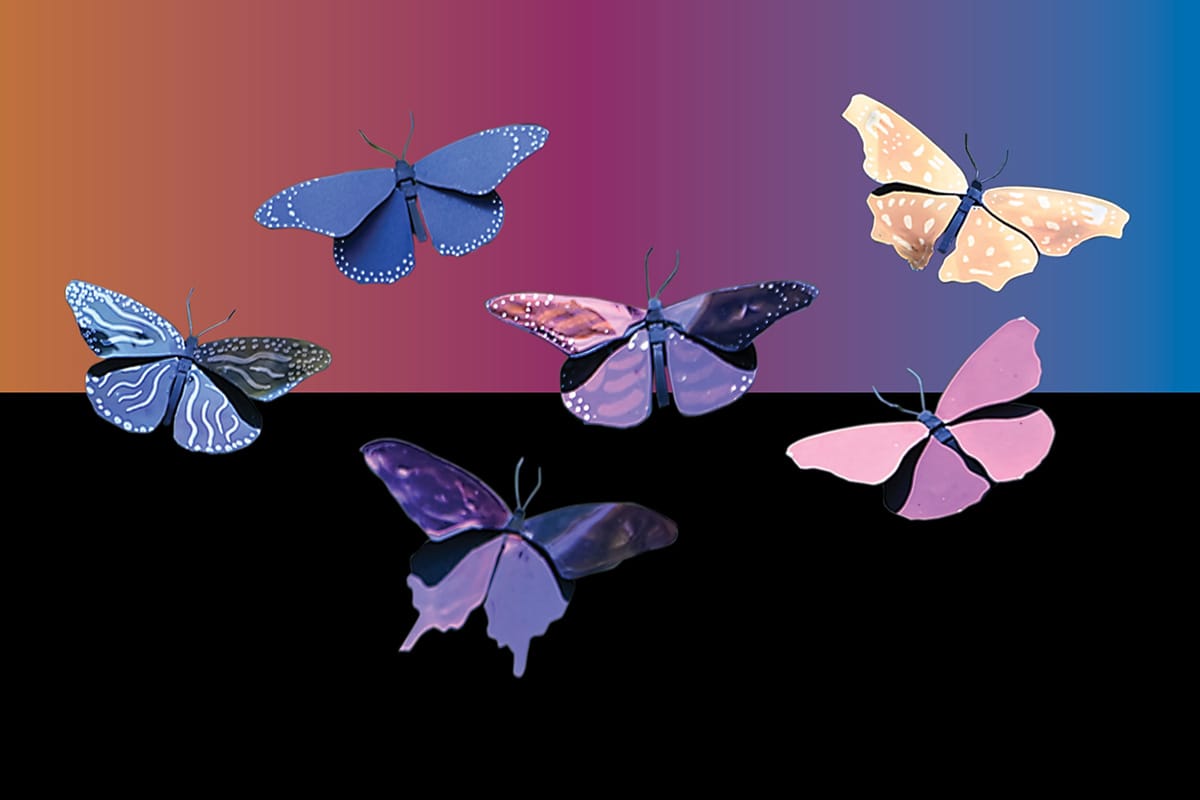
Humans have long sought to recreate the magnificent colors seen in nature. From crafting Paleolithic cave paintings to developing the first synthetic dyes in the mid-19th century to the futuristic shine of present-day shades, the hunt for purer, fade-resistant colorants has remained very active. But humans’ quest for color has proven harmful in some regards. Most paints today are made of mineral- and chemical-based pigments that contain heavy metals. Making paint also requires a vast amount of water and can cause a strain on resources.
However, a new kind of paint — inspired by the vibrancy of butterflies — could provide a beautiful fix to these concerns. Created by researchers at UCF, these first ever structural color photonic pigments are ultra lightweight, energy-saving and non-toxic.
Look for these incredible colors to one day grace the wings of commercial airliners, the fastest luxury cars on the road or the tallest skyscrapers in the world.
The color perceived when looking at an object depends on which wavelengths of visible light are absorbed and which are reflected or transmitted.
Traditional paint and pigment colorants control light absorption based on electronic properties of the pigment material. Every color needs a new, artificially synthesized molecule.
Structural color is different — it’s not a pigment. Instead, it’s color produced by microscopically structured surfaces that are fine enough to interfere with visible light.
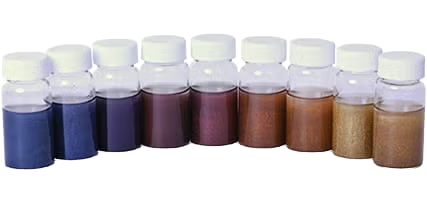
Mimicking nature, UCF researchers developed a new method to create structural colors that use light reflection from nanoparticles which are self-assembled on a multilayer-stack. These plasmonic paints are made from colorless materials: aluminum and an inert oxide, similar to sand. Debashis Chanda, professor of physics and a member of UCF’s NanoScience Technology Center and College of Optics and Photonics, discovered a new way to combine these ingredients and harvest micrometer-sized flakes that can be mixed with a commercial binder to form long-lasting paints of all colors.
“Normal color fades because pigment loses its ability to absorb photons,” Chanda says. “Here, we’re not limited by that phenomenon. Once we paint something with structural color, it should stay for centuries.”
Chanda’s start-up company, e-Skin Displays Inc., is in the process of scaling up the plasmonic paint production for commercialization with the venture capital funding support.
“The temperature difference plasmonic paint promises would lead to significant energy savings.”
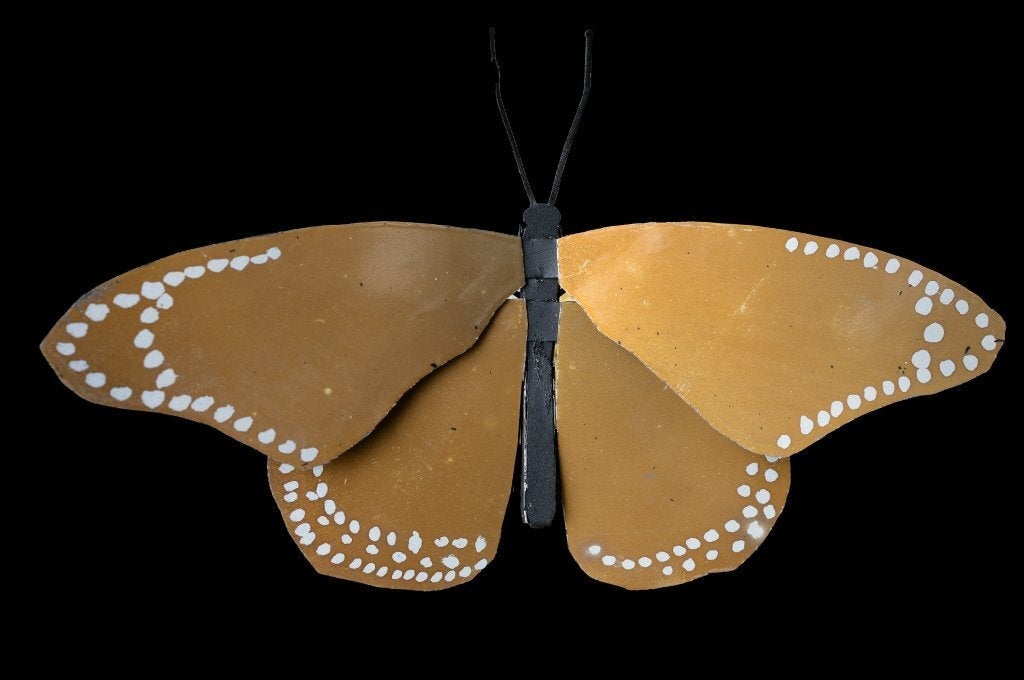
The same structural color that gives a butterfly wing its iridescence could soon cool our uniforms, our cars, our buildings, and our skies. Hover over a wing to explore.
Infrared Reflection
Fade-Resistant Color
Increased Cooling
Lighter Coatings
Plasmonic paint has the potential to transform many industries including aerospace, automotive, construction and defense.
Hover over a wing or select a benefit below to learn how.
Conventional dyes absorb heat and glow in infrared imagery — a liability in hot climates and on modern battlefields. Plasmonic pigments reflect the entire infrared spectrum, which could reduce soldiers’ thermal signature.
“The temperature difference plasmonic paint promises would lead to significant energy savings.” — Debashis Chanda, NanoScience Technology Center Professor
Paint is notorious for oxidizing under sunlight. However, structural color doesn’t rely on light-absorbing molecules, so it doesn’t fade. A plasmonic finish on vehicles could allow them to remain showroom-vivid for centuries.
“Normal color fades because pigment loses its ability to absorb photons. Here, we’re not limited by that.” — Debashis Chanda, NanoScience Technology Center Professor
For structures, especially large ones, using plasmonic paint could translate to a meaningful drop in AC — easing demand on the energy grid and lowering emissions in the warmest climates.
10 to 15 Degrees Cooler
Because plasmonic paint reflects 100% of infrared radiation, less heat is absorbed. The new paints can cool surfaces by up to 10 to 15 degrees Fahrenheit, compared with today’s commercial paint.
The new plasmonic paints achieve full coloration at a paint thickness of 150 nanometers, which is 500 times thinner than a strand of hair — making it the lightest paint in the world.
3 Pounds VS. 1,000 Pounds
The plasmonic paint is so lightweight that about 3 pounds of it could cover a Boeing 747 airplane, which normally requires more than 1,000 pounds of conventional paint.