Game On
UCF’s world-renowned video game design program trains creators, makers and doers who shape the industry’s most popular products.













UCF’s world-renowned video game design program trains creators, makers and doers who shape the industry’s most popular products.

Game developers are modern magicians who balance the imaginary worlds they create with the real-life efforts needed to craft such immersive experiences.
In 2005, UCF founded the Florida Interactive Entertainment Academy (FIEA) to educate these creators, providing a practice stage for them to grow and test their skills before breaking into industry. Over the past 20 years, FIEA has produced more than 1,000 graduates. In March, The Princeton Review and PC Gamer ranked the program in the top two globally for the sixth time in seven years.
So many FIEA alums have contributed to some of the industry’s most successful video games.
These are just a few of them.
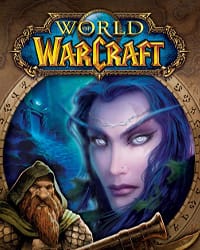
Brian DeSanti ’08 ’09MS
Role on the Game: Senior director of product management
What makes World of Warcraft Special?
In November 2024, World of Warcraft celebrated its 20th anniversary, making it one of the longest running and most successful massively multiplayer online role-playing games of all time. World of Warcraft has achieved a level of success that few other games have seen. It’s a unique, generation-spanning fixture within gaming culture.
What is a memorable experience from your time at FIEA that influences your career to this day?
One of my most memorable experiences at FIEA was when my capstone project, Chain Game, was cancelled — a known possibility in our cohort since only two of four games would survive the development cycle. Transitioning to a new team, once seen as competition, was challenging but ultimately, we found new roles and thrived. FIEA built an environment that let me experience this early in my career and better prepared me to be objective and make tough decisions in the future.
What inspired you to pursue a career in video game development?
When I was much younger, I remember seeing all the names scroll by on the credits after completing the campaign in Warcraft II; Tides of Darkness. That made me realize that this could be an actual career. As I got older, I also really enjoyed Dungeons & Dragons, particularly being a Dungeon Master for my friends. This further reinforced that I not only enjoyed playing games but also crafting experiences for others to dive into.

Corey Teblum ’08MS
Role on the Game: Production coordinator and associate producer
What makes Guitar Hero special?
Music is a powerful force in entertainment. Guitar Hero took advantage of that in a way that many previous rhythm games hadn’t quite captured. It provided an accessible fantasy tied to music: becoming a rock star in your home.
What is a memorable experience at FIEA that influences your career to this day?
After demoing a space-themed game during a class presentation, my professor asked if it was muted because there was no sound. Thinking I was clever, I said it was intentional because there’s no sound in space when really I deprioritized audio due to time constraints. We received harsh, but deserved, feedback.
That moment stuck with me, especially when I later became the producer for my studio’s audio team. I learned firsthand how critical sound is to the player experience — even though it’s one of the last things developed for games — and to work proactively to ensure our audio team has the necessary time and resources.
How did FIEA prepare you for your career?
FIEA offers a unique opportunity to gain experience making games in a safe space. You can succeed. You can fail. Along the way, you’re also learning the why’s behind those successes and failures. I had studied games before. I had made games before. But FIEA offers a way to make games in a way that is much closer to how you would in the industry. That sets you up speak in interviews and early career opportunities as someone who knows what they’re talking about because you do, and because you’ve done the work before.

Rebecca Crose ’15MS
Role on the Game: Senior manager on developer relations
What makes Roblox special?
It’s not just a single game — it’s a full platform and engine with many moving parts. For players, it’s highly social. You can easily jump between games and play with friends. For developers, you don’t need to invest money to publish your work, opening doors for countless creators.
What unique or innovative elements in Roblox were you most proud to contribute to?
I’ve had the chance to wear many hats at Roblox, but one of my proudest contributions was leading the effort to bring back platform-wide events. This initiative required coordinating and educating over 20 cross-functional teams about how platform events worked, ensuring alignment across engineering, design, marketing and operations. We partnered with 100 games to execute the initial events, creating experiences that brought developers and players together in meaningful ways. Seeing the community embrace these events and the success that followed was incredibly rewarding.
What skills did you learn at FIEA that directly helped you succeed on this project?
FIEA’s emphasis on exploring different roles was invaluable. I was able to try project management, level design, scripting, and more. That experience helped me understand the perspectives of different disciplines, gave me confidence, and taught me empathy when working across teams. It’s something I rely on constantly when communicating with people in roles different from my own.
Justin Schram ’08 ’09MS
Role on the Game: Level designer
What makes The Elder Scrolls V: Skyrim special?
The game highlights the joy of discovery. We packed the game with so many little things to find and that made players feel like they were uncovering an entire world.
What was it like working on this project?
I still see it as one of my best in the industry. I was working with a talented team that knew how to work with each other, with well-understood tools and a clear vision. It was my first project, so I didn’t appreciate how special it really was at the time. We challenged and taught each other so much on that team. I really think that shows in the end product.
How did FIEA prepare you for your career?
FIEA showed me that I would not get by as a designer without learning the language of each discipline. An idea is great, but if you cannot communicate well enough to get others on board, plus really understand what it takes to execute on that idea, you are going to have a bad time.
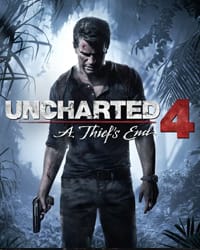
Sean Buck ’12 ’13MS
Role on the Game: Environment artist
What makes Uncharted 4: A Thief’s End special?
It helped define modern storytelling in games and showed the value of injecting narratives into every aspect, from art to design. Concept art was done for everything, so there was always a high level of visual communication.
Were there any skills or lessons from FIEA that directly helped you succeed on this project?
Being curious. At FIEA we were given the space to just try things. Sometimes those things failed, but it wasn’t considered a failure because we all learned and got better. I had to learn a bunch of new programs and workflows for Uncharted 4 that would have stopped me in my tracks if I hadn’t had those experiences already.
What inspired you to pursue a career in video game development?
I played video games from a pretty early age. My dad was always an early adopter of new technology, and I got to benefit from that. Then in middle school when a friend mentioned wanting to make video games for a living I said, “You can do that ?!” My fate was sealed. Back then there wasn’t exactly a good roadmap for getting into the games industry or even just how to learn how to make them. I lucked out in the middle of my high school years when FIEA was born, which made picking a college pretty easy. FIEA gave me a valuable foothold that took creating games from dream to reality.

Keegan Cimler ’18MS
Role on the Game: Senior gameplay user interface engineer
What makes Call of Duty: Black Ops 6 special?
The scale of the game is massive. Most games usually have one or two core modes. However, Call of Duty has up to five. It’s rare to see a game be able to routinely support all of these various modes year after year, while still finding unique ways of keeping it fresh and new for players.
What is one of the biggest challenges you overcame on this project?
One of the biggest challenges I overcame was implementing a new pipeline for designers to use for quick time event, which happen when a player must perform a timed action in response to an on-screen prompt. At first, we didn’t have a uniform way to implement these into our campaign, so it led to lots of situations where one quick time sequence would look or behave differently compared to the others, which made it look buggy. So I took the initiative to establish a pipeline that helped streamline the creation of those sequences so that designers could just supply the info they wanted in their sequence, and my system would handle the rest.
How did FIEA’s collaborative environment prepare you for working on large-scale, interdisciplinary teams in the industry?
The best thing FIEA does is have students learn by actually making lots of games with many teams. You start out with small five person teams, and then eventually work up to 20+ teams for the capstone project, which teaches you how to work with various personalities. Not to mention, the way the school is set up physically is very similar to how many gaming studios are. Being able to turn around and immediately talk with your fellow teammates in your cubical about debugging issues and troubleshooting design questions — this is what professional game developers do on a day-to-day basis. This is a great steppingstone to help learn how to work on larger teams in the professional world.
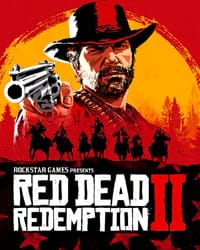
Dale Diaz ’17MS
Role on the Game: Associate engine automation programmer
What makes Red Dead Redemption 2 special?
There are two stories to tell: one of the fictional game world and one of the real world during early Colonial America. I think if they failed to tell the latter story accurately, the whole game falls apart. In that sense, it set the bar for unapologetic storytelling and how we can’t be afraid to tell good stories and build worlds that feel real.
How did FIEA’s collaborative environment prepare you for working on large-scale, interdisciplinary teams in the industry?
The environment at FIEA, observing how people communicated, seeing what worked and didn’t work, and being able to treat the program as a social sandbox as much as a developmental one truly gave me a leg up going into the industry. I’ve still been trying to improve my communication skills as it feels like sometimes, especially during crunch time, things can get lost in translation. We’re all human at the end of the day, but making an effort to improve morale with every interaction is something that rarely goes overlooked.
How are you continuing to evolve as a video game developer?
In terms of professional development, I’ve been doing deep dives in artificial intelligence and procedural generation. I’ve also been filling my gaps in theoretical knowledge as well as carrying over my technical skillset from a decade of Unity development into Unreal Engine.
I’ve also been doing contract work and consultations in and around games; the fancy term is “creative technologist.” I’ve been finding work in other interactive media spaces such as trade shows and conventions, and providing some consultation on nonprofit and educational projects.

Adnan Mirza ’11 ’17MS
Role on the Game: Producer on new maps and game modes, and later lead producer for gameplay systems
What makes League of Legends: Wild Rift special?
This is our reimagining of League for a worldwide mobile audience. We experimented with a decade of learnings to redesign the best streamlined experience, without losing depth, for a new audience.
Can you describe a moment during development when you realized League of Legends: Wild Rift was going to be important?
Launching the game was an exciting time. Years of work to get to this moment. The lights turn on and you see players piling in. Millions and millions of players downloaded and got into the game. I joined Discord and Twitch communities, talked about the game, watched people make content and also shared some memes in the chats. It was a memorable time for me.
What lessons from FIEA directly helped you succeed?
I’m a producer in industry, but I spent the first semester at FIEA exploring a few different tracks. FIEA also allows you to sit in on other tracks and lectures at your own will, but it requires you to pick a specialty to focus on. This gave me the ability to have a broader understanding of game development, while also honing my own skills and resume to successfully get a job in industry.

Ingrid Aguero ’07 ’08MS
Role on the Game: Environment director
What makes Madden NFL special?
We’re always striving to make our worlds as realistic as possible. … The impact our visual updates have on players and how it resonates with them … makes me even more committed to seeing what we can do each year to deliver even better environments.
What are some of the biggest challenges you overcome on this project?
With Madden NFL being an annual title, our development cycle is less than a year, which means we have a limited production phase, followed by Alpha, which is when we focus on polish. Due to the compressed timeline, striking a balance between meeting deadlines and maintaining the highest possible quality can sometimes be a challenge. To overcome these challenges, effective prioritization is crucial, and we try to adhere to our roadmap to ensure our project stays on track.
How did you become interested in developing video games?
I have always been a traditional artist, but I knew I wanted to involve technology in my career somehow. During the final year of my Bachelor of Fine Arts degree, I joined the UCF School of Visual Art and Design’s animation program. There I was introduced to 3D software and made short-animated films, which sparked a fascination with 3D. But it was a tour I took of FIEA and learned about their video game master’s program that I just knew I needed to explore this career path.