Tough Enough: World’s Toughest Row
As a researcher of teams in extreme environments, UCF psychology student Andres Käosaar rowed 3,000 miles across the Atlantic Ocean.









A computer vision pioneer offers insight into the evolving field and how UCF continues to lead advancements.
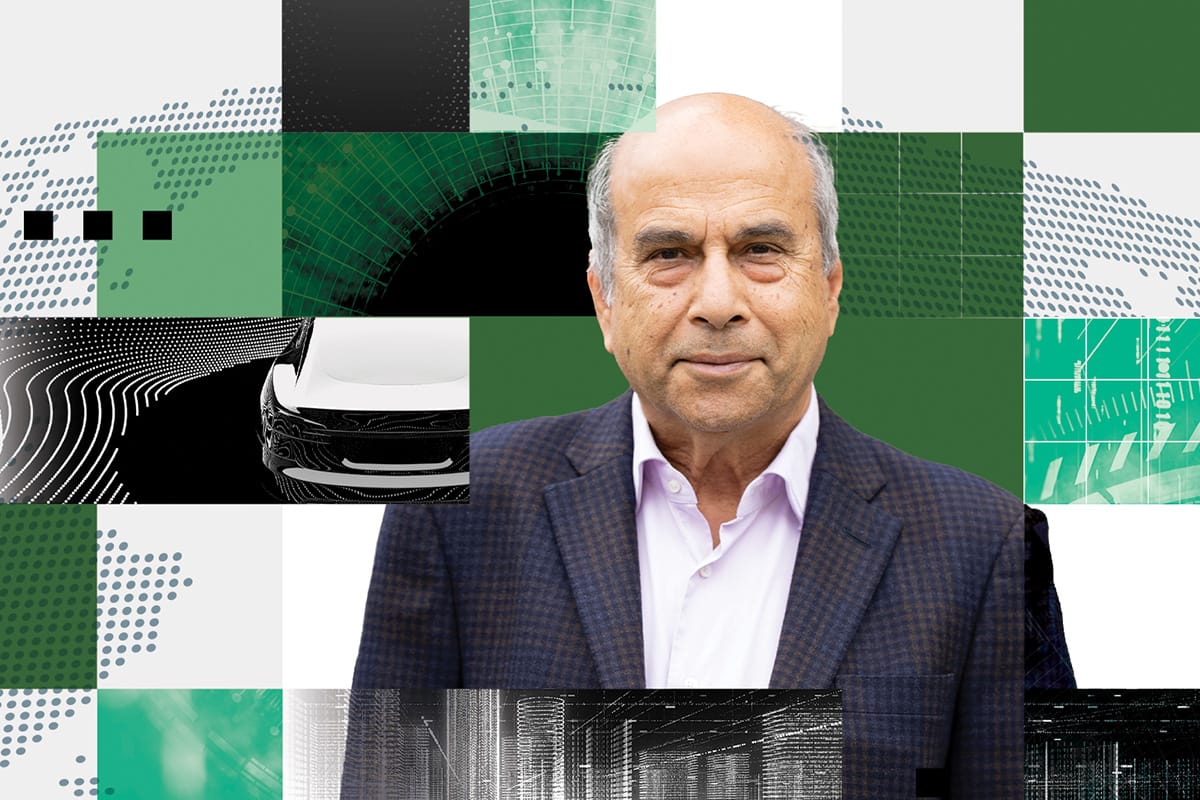
Imagine teaching a computer to see the world through human eyes, allowing it to understand images and videos, and interpret environments to make decisions. That’s the core of computer vision.
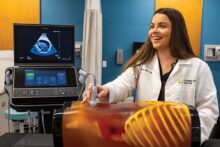
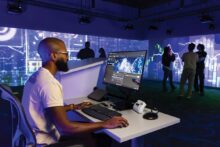
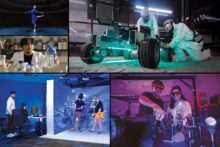
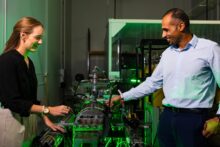
Researchers at UCF’s Center for Research in Computer Vision (CRCV) are studying various applications of the technology. Trustee Chair Professor Mubarak Shah, founding director of the CRCV and director of the Institute of Artificial Intelligence, discusses the dynamic field.
It’s used in applications such as confirming someone’s identity at an airport, self-driving cars, drones, medical diagnosis in hospitals, virtual reality, visual inspection in manufacturing, sports analysis, crop monitoring in agriculture, traffic monitoring, crowd counting at events and remote sensing.
The AI revolution is mainly driven by progress in computer vision due to deep learning. Computer vision is the most challenging, most interesting and most important area of AI. With lots of data and computing power, we are able to solve problems we never thought we could.
Instead of humans watching multiple streams of videos, for example, at airports or city centers, a computer vision system can automatically analyze videos and quickly detect abnormal events. This information can be used to warn the human operators and law enforcement personnel of potential issues. Computer vision could also efficiently visually inspect objects on a conveyor belt at a manufacturing site and identify defects. Or in healthcare, instead of a radiologist manually analyzing X-rays and MRI scans, a computer vision system can quickly analyze them and save time.
We are known for our work on video analysis, applying computer vision techniques. The extensively cited UCF-101 video benchmark consists of 101 different activities, and we have developed a series of methods to accurately recognize and localize them.
This is an exciting time for computer vision. Enrollment in computer vision courses has drastically increased. A couple of years ago, we introduced a master’s in computer vision, and UCF is the only public university offering this degree. My doctoral graduates are getting high-paying jobs, from $400,000 to $500,000, right after graduation.