Halloween is all about the thrill of a good scare. But what makes people seek out frightening experiences, and how do those experiences differ from visiting places associated with real tragedy?
For Brianna Wyatt, an assistant professor at the UCF Rosen College of Hospitality Management, understanding those distinctions is an important part of her work in dark tourism and experience design.
Wyatt has worked beneath the streets of Edinburgh, Scotland, at the Real Mary King’s Close, managed both the Edinburgh Dungeon and the London Dungeon, written scripts for Halloween tours at prison museums and recently co-edited The Routledge Handbook of Dark Events.
Her academic work explores dark tourism, or travel to places associated with death, tragedy and the macabre.
More Than a Good Scare
While haunted attractions and dark tourism can share elements of fear and storytelling, there’s an important distinction. Dark tourism involves places associated with real historical events and experiences, while haunted attractions are typically created for entertainment.
To illustrate that distinction, Wyatt points to Philip Stone’s Dark Tourism Spectrum, which places sites along a scale of darkness. At one end are commemorative sites such as the National September 11 Memorial & Museum. At the other are ‘edutainment’ attractions such as the London Dungeon, where actors bring historical events like the Great Fire of 1666 to life.
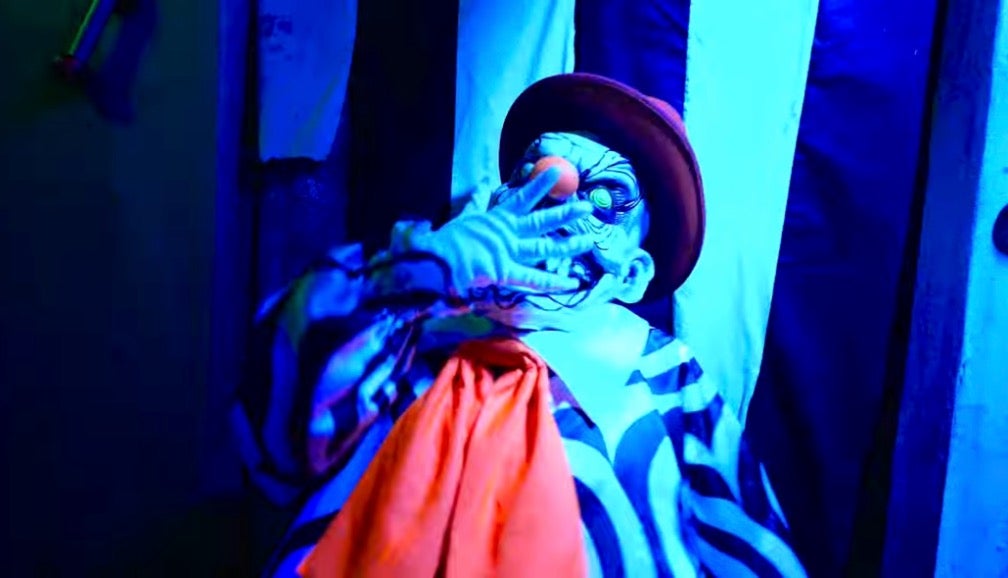
Purpose-built haunted attractions are better understood through concepts such as fright tourism or ‘thrillertainment,’ where the primary appeal is the excitement of being scared.
“These thrillertainment experiences allow people to experience being scared in an environment they know is designed to be safe,” Wyatt says. “However, fear is an individual experience, so visitors will respond to scare tactics in attractions in different ways.”
The Role of the Visitor
Understanding how visitors experience and interact with their surroundings is also central to Wyatt’s research.
In a recent study published in Annals of Tourism Research, Wyatt and colleagues from Robert Gordon University, Edinburgh Napier University and King’s College London examined how visitors experience prison museums.
Their findings highlight how visitors help shape their experiences through conversations, gestures and interactions with others, influencing how they interpret difficult history.
While the emotional responses in entertainment attractions can be very different, visitor interactions also help shape those experiences.
According to Wyatt, effective performers bring stories to life “by responding to visitors’ behavior, making each encounter feel unique and immersive.”
Designing Experiences With Care
Whether creating a haunted attraction or interpreting historical events, experience designers must consider how visitors will respond.
“What one visitor finds scary and fun, another may find genuinely distressing,” Wyatt says.
That awareness is something Wyatt emphasizes in her classes at Rosen College, where students learn to think like attraction managers and experience designers.
She challenges students to redesign experiences to make them scarier, more engaging or more educational, while recognizing the responsibilities that come with telling stories rooted in real history.
“It is important to acknowledge the difference between visiting a thrillertainment attraction designed to scare, and visiting historical sites where real people lived, suffered and died,” Wyatt says. “For future attraction managers, understanding this difference is essential.”
For students preparing to enter the attractions industry, those lessons demonstrate how research, storytelling and thoughtful experience design can shape everything from Halloween thrills to meaningful encounters with history.
Interested in a career designing unforgettable experiences? Explore Rosen College’s undergraduate degree programs in theme park and attraction management and related fields.