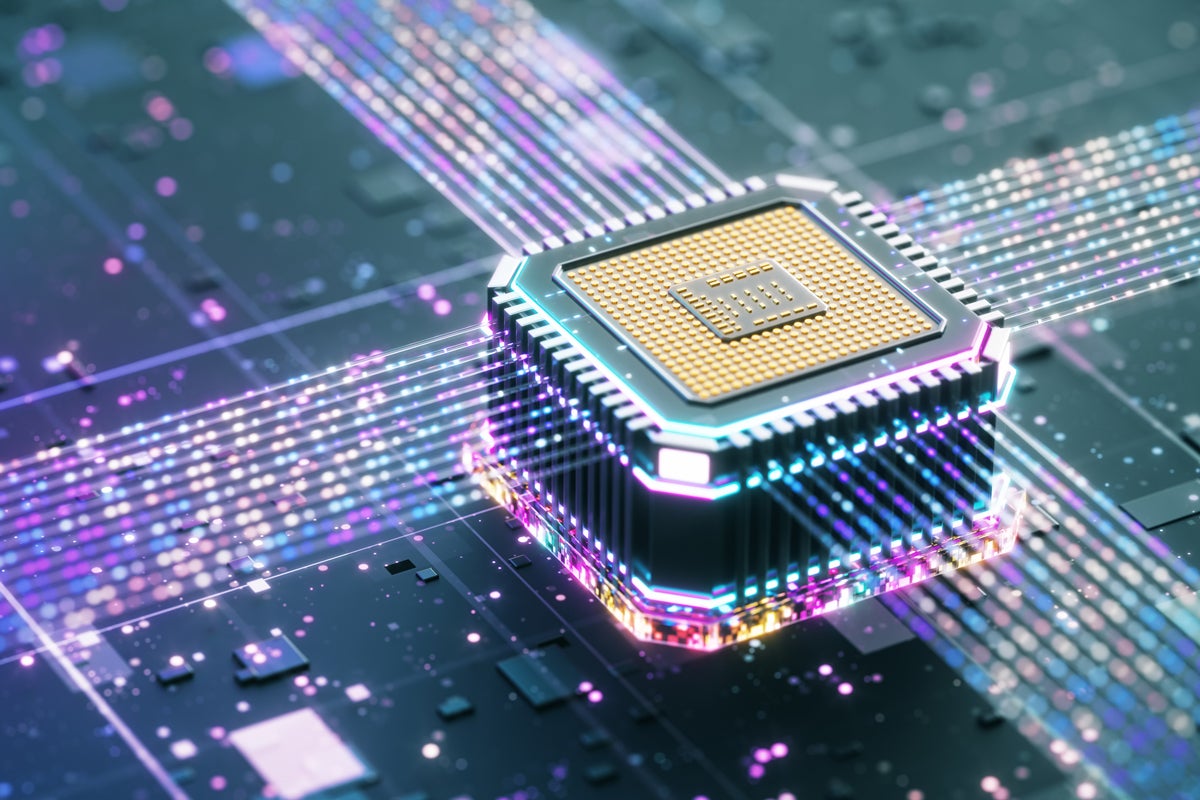
A future quantum internet could allow quantum computers to share information securely across cities and countries. But implementing this type of network presents a major challenge — quantum information is very fragile and can’t be copied or amplified like conventional digital information, making it difficult to transmit reliably over long distances
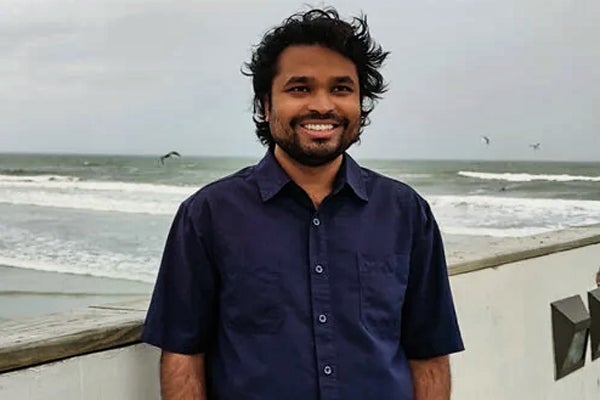 .
UCF electrical engineering doctoral student Md. Sakibul Islam has developed an award-winning solution to overcome this challenge. His framework, which identifies the most reliable and efficient routes for transmitting quantum information across a network, took second place at the Florida International University node of the Qollab X IonQ Hackathon 2026. This global competition encourages students and professionals to compete for cash prizes and quantum compute credits.
This project builds off of Islam’s research in the Quantum Devices Lab (Q-Lab), led by Assistant Professor Wayesh Qarony.
“In the Q-Lab, we are investigating how quantum information can be generated, controlled and transmitted using silicon-based quantum devices,” Islam says. “My hackathon project extended this research toward the network level, developing an approach to identify optimal communication routes while balancing the quality of quantum entanglement (the idea particles of the same origin stay connected), photon loss and communication speed.
“Ultimately, our goal is to make quantum networks more practical, reliable and scalable using semiconductor technologies that could be compatible with existing telecommunications infrastructure.” — Md. Sakibul Islam, doctoral student
“Ultimately, our goal is to make quantum networks more practical, reliable and scalable using semiconductor technologies that could be compatible with existing telecommunications infrastructure,” he continues.
What makes Islam’s project unique is his approach — he combined the physics of quantum devices with the intelligence needed to operate a quantum network. His resulting framework can compare different communication paths and identify routes that offer the best balance between entanglement quality and achievable communication rate.
His framework also incorporates solid-state qubits, a quantum bit built into a physical material such as silicon. Islam notes that silicon could become a foundational material for quantum communication technologies in the future.
Qarony says that his student’s achievement reflects the broader goal of Q-Lab.
“Building a scalable quantum internet is one of the most important scientific and engineering challenges in quantum technology today,” Qarony says. “In the Quantum Devices Lab, we are addressing this challenge from the ground up, developing silicon-based quantum devices, integrated photonic circuits and the architectures needed to connect them into larger quantum systems.”
Islam says that translating his work in the Q-Lab into a hackathon project that was recognized for its innovation was especially motivating.
“This award reinforces my belief that fundamental research, when combined with creative engineering, can lead to meaningful innovations,” Islam says. “I hope it also encourages more students to explore quantum science and engineering at UCF.”