UCF researchers have developed a new carbon-based material that generates hydrogen peroxide — a chemical widely used in cleaning, medicine, and manufacturing — with only oxygen, water, and electricity. Hydrogen peroxide is typically produced through a multi-step industrial process that requires significant energy input. This breakthrough could make production cleaner, more affordable, and more sustainable.
By modifying the material at the atomic level, the researchers at UCF’s Nanoscience Technology Center, led by Associate Professor of Materials Science and Engineering Yang Yang, significantly improved the reaction’s energy efficiency while maintaining industrial production rates.
The findings were recently published in Nature Communications.
Atomically Perfect Imperfections
The new material was created using a method known as defect modification.
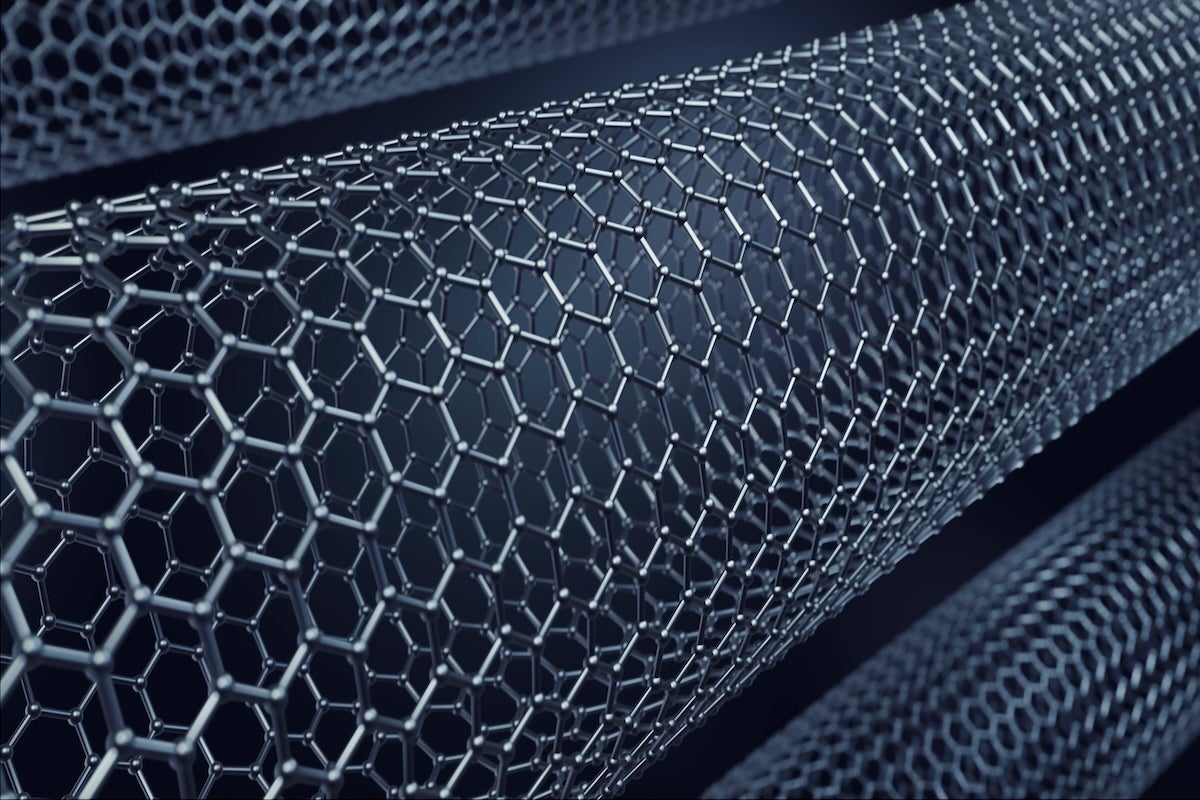
At the nanoscale, carbon materials contain atomic-level imperfections, or “defects,” Yang says. Some of these defects help drive chemical reactions, while others reduce efficiency and create instability. Yang and his team focused on stabilizing the harmful defects while preserving the beneficial ones.
“We found that adding a small amount of fluorine — the same element found in toothpaste — can ‘heal’ or stabilize the harmful defects while keeping the helpful ones active,” Yang says.
Hydrogen peroxide (H₂O₂) plays a critical role across industries, including wastewater treatment, semiconductor manufacturing, and medical sterilization.
“Today, most hydrogen peroxide is produced in large, centralized factories using an energy-intensive process,” Yang says. “It then has to be transported, which adds cost and safety risks. Our work offers a simpler, cleaner, and more efficient way to produce hydrogen peroxide using electricity, potentially, wherever it is needed.”
Engineered Efficiency
After stabilizing the atomic defects, the team observed minimal wasted reactions and high production rates. The material can withstand industrial-level electrical currents of 1 amp per square centimeter and maintain stable performance for more than 100 hours.
When paired with methanol oxidation, the system requires less energy than conventional approaches. The researchers’ economic modeling suggests a commercial version of the system could reduce environmental impact while remaining financially competitive.
Beyond hydrogen peroxide production, the research demonstrates a broader strategy for materials engineering.
“Instead of randomly modifying materials and hoping for improvement, we used computer modeling, statistical screening, and careful experimental validation to design the exact atomic structures that work best,” Yang says.
UCF filed a patent application for this technology to cover its novelty and use, with the intent of commercializing the technology and expanding collaboration with industry partners.