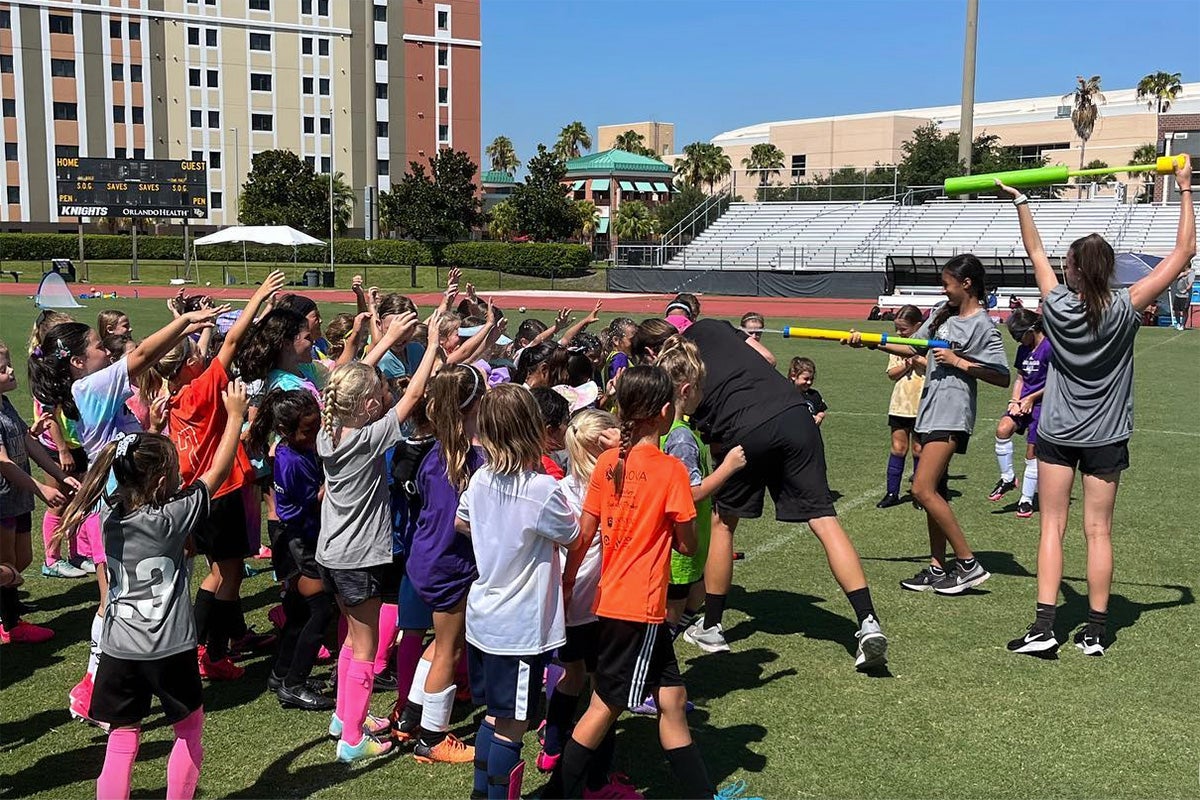
For decades, researchers have studied the rising rates of childhood obesity in the United States, where now one in five children are affected by epidemic. The prescription is always the same: limit screen time, eat a well-balanced diet, exercise.
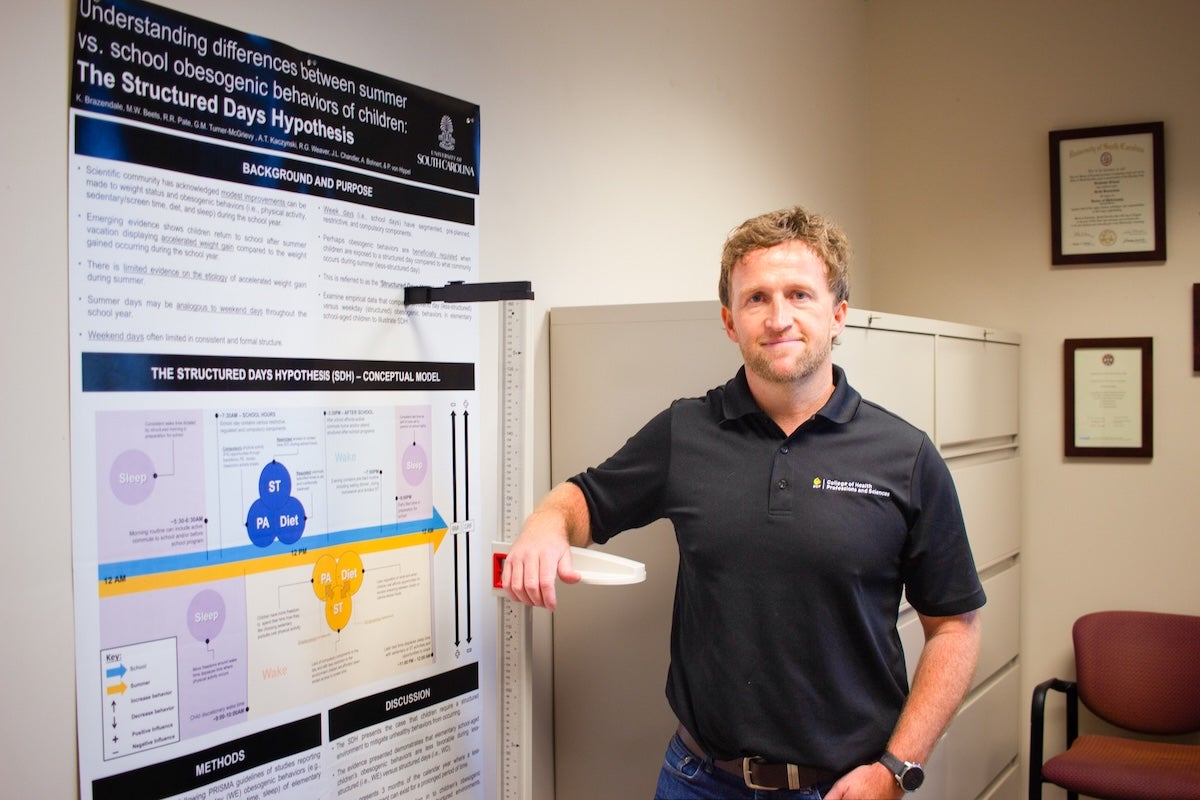
UCF Associate Professor Keith Brazendale believes society is overlooking a simple intervention that could be a major game-changer for kids everywhere, so much so that the National Institutes of Health awarded him a $453,000 funding grant to move forward with his study.
The solution? Free summer camp for kids.
“This won’t require 20 years in a lab,” Brazendale says of his study over the next two summers. “Everything is already in place to impact childhood obesity. I think that’s what raised so much curiosity from my proposal. Can it really be this simple?”
Why Summer Camp?
“My ultimate goal is to shift our mindset about how we improve the health of kids,” Brazendale says from his office in UCF’s College of Health Professions and Sciences, “because up until now, I believe we’ve gotten it all wrong.”
Getting it right has inspired Brazendale’s research across two decades, including his next project on combatting childhood obesity.
Brazendale’s project will bring together community pediatricians, organizers of summer day camps, and low-income families. Before the summers of 2026 and 2027 begin, the pediatricians will provide camp vouchers to 40 kids who meet certain weight and body mass index (BMI) criteria. Data collected before camp and after camp will build upon Brazendale’s Structured Day Hypothesis.
“It’s clear that structure is enough to mitigate much of the weight gain we’re observing in American children. I’m hopeful a study like this will affect change in public health policy.”
— Keith Brazendale, UCF associate professor
“We know what happens when kids have no structure,” says Brazendale, a father of two. “When schools closed during COVID, it became our largest experiment of unstructured days. Children’s obesity levels went through the roof. It’s clear that structure is enough to mitigate much of the weight gain we’re observing in American children. I’m hopeful a study like this will affect change in public health policy.”
If this is true, then it raises the question, “Why have we overlooked a structured summer as a solution to childhood obesity?”
Consider that more than 90% of past studies have taken place during the school year — the most convenient time to find kids for research. The timing has led to a repetitive focus on school lunch programs and physical education. Brazendale, however, draws upon his own experiences with kids from low-income communities and believes that studies on schools may be occurring where a natural intervention is already happening.
“Schools actually do a great job because of structure built into each day” he says. “Meanwhile, we’ve ignored 20 years of evidence showing weight gain and loss of fitness occurring during summer.”
He’s referring to evidence which had become “bricks buried in a brickyard.” It happens with a lot of studies. They’re filed away, waiting for another researcher to come along and dig them up years later. That’s how Brazendale began to learn about the link between summer breaks and childhood obesity.
“Pediatricians have reported for years that children are heavier toward the end of summer,” he says. “People my age think of summer as an active time when it really isn’t, especially for kids whose families can’t afford pricey camps and club sports. So, let’s see what happens when we help them fill those empty weeks with free and fun structured activity.”
Community Buy-In
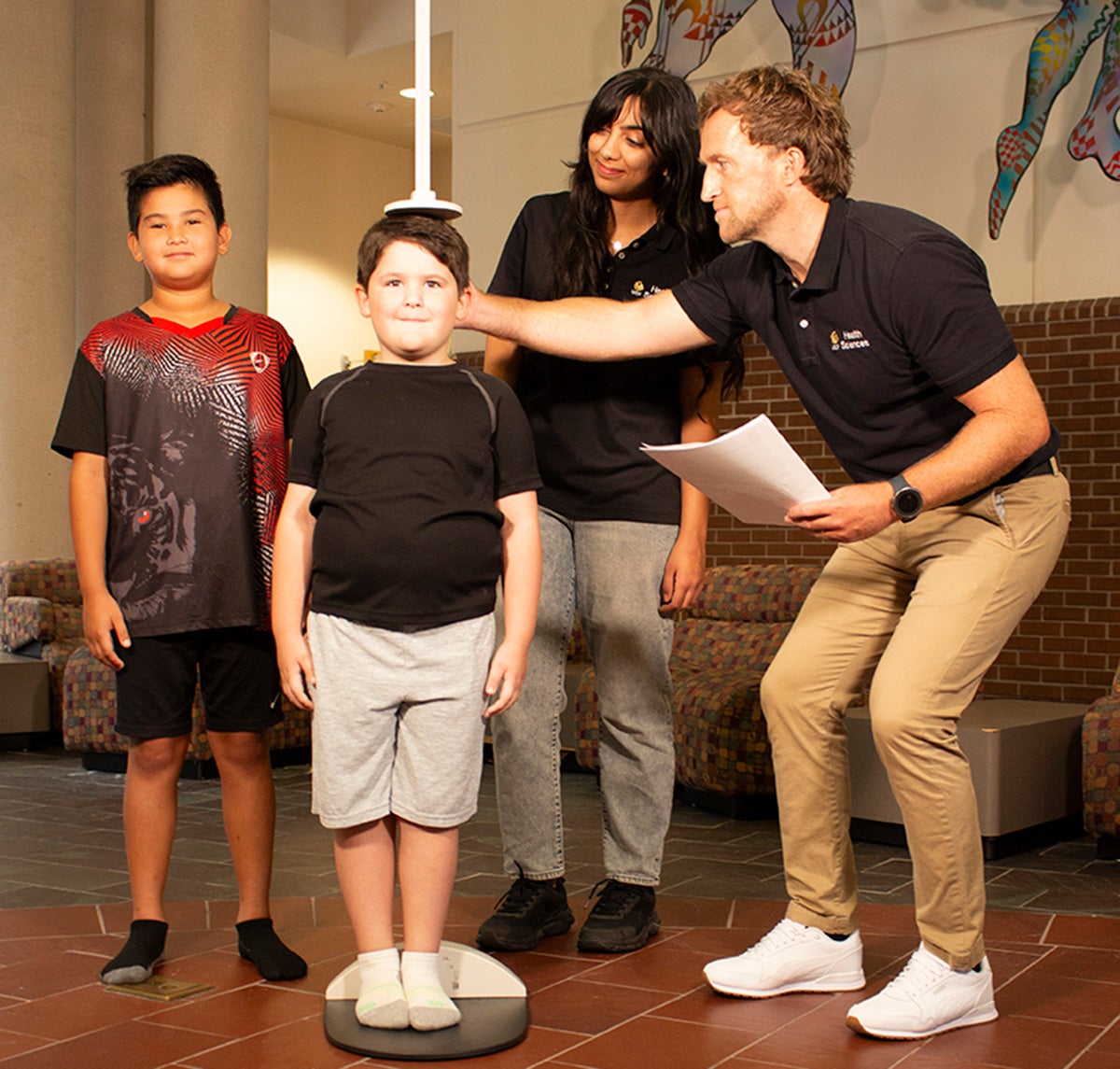
If Brazendale’s hypothesis is correct, it could cultivate the kind of healthy long-term lifestyle Brazendale experienced while growing up in Scotland. His intrigue about children’s health brought him to study in the U.S., where his research momentum eventually landed at UCF. Among his first action items upon arriving was to contact pediatricians at Nemours and leaders of the Boys & Girls Clubs of Central Florida.
“When I mentioned bringing all of us together as a potential health intervention for kids, they said, ‘We’re in,’ ” Brazendale says. “Having them involved means we have trusted people in the community to create bridges rather than hoping families respond to a researcher out of nowhere asking them to sign up for a study.”
The research side will include experts from UCF’s College of Nursing, a statistician, a pediatrician and consultants from the University of South Carolina. They’ll compare health markers for the 40 kids who attend summer camp with 40 kids who spend summer at home. Then they’ll do it again with two more groups the following summer.
With additional funding, a second research phase would include hundreds of children nationwide. The results’ ripple effects would be monumental.
According to the U.S. Centers for Disease Control and Prevention, “in 2019, the estimated annual medical cost of obesity among U.S. children was $1.3 billion. Medical costs for children with obesity were $116 higher per person per year than for children with healthy weight. Medical costs for children with severe obesity were $310 higher per person per year than for children with healthy weight.”
“Imagine where this could lead,” Brazendale says. “Pediatricians would prescribe summer camp as medicine. The health of children would not be limited by family incomes. The research findings would encourage public policy to subsidize camp enrollment the way we do with Head Start. There would be relief on our medical practitioners and on our healthcare system. Childhood obesity rates would decline and long-term health would improve.”