UCF electrical engineering alum Joe Sleppy ’18 started his first company in high school — an adaptative equipment for exercising, inspired by his mother’s bout with carpal tunnel. When it came time to decide on where to further his education, he wanted to be where the action was.
“There’s a lot of places that say, ‘Hey, look at all the things we’ve done.’ And then there’s UCF that says, ‘Look at all the things we’re doing,’ ” Sleppy says. “I wanted to be part of building the future.”
“I wanted to be part of building the future.” — Joe Sleppy
In his first year, he landed undergraduate research opportunities thanks to UCF’s Compass program, which offers students opportunities for career exploration and experiential learning in STEM the first two years of their college career.
In UCF Professor of Nanotechnology Jayan Thomas’ lab, the two partnered on the idea that would eventually become Capacitech Energy, where Sleppy has served as CEO since its inception in 2016 during his sophomore year.
Future-Proofing the Power Grid
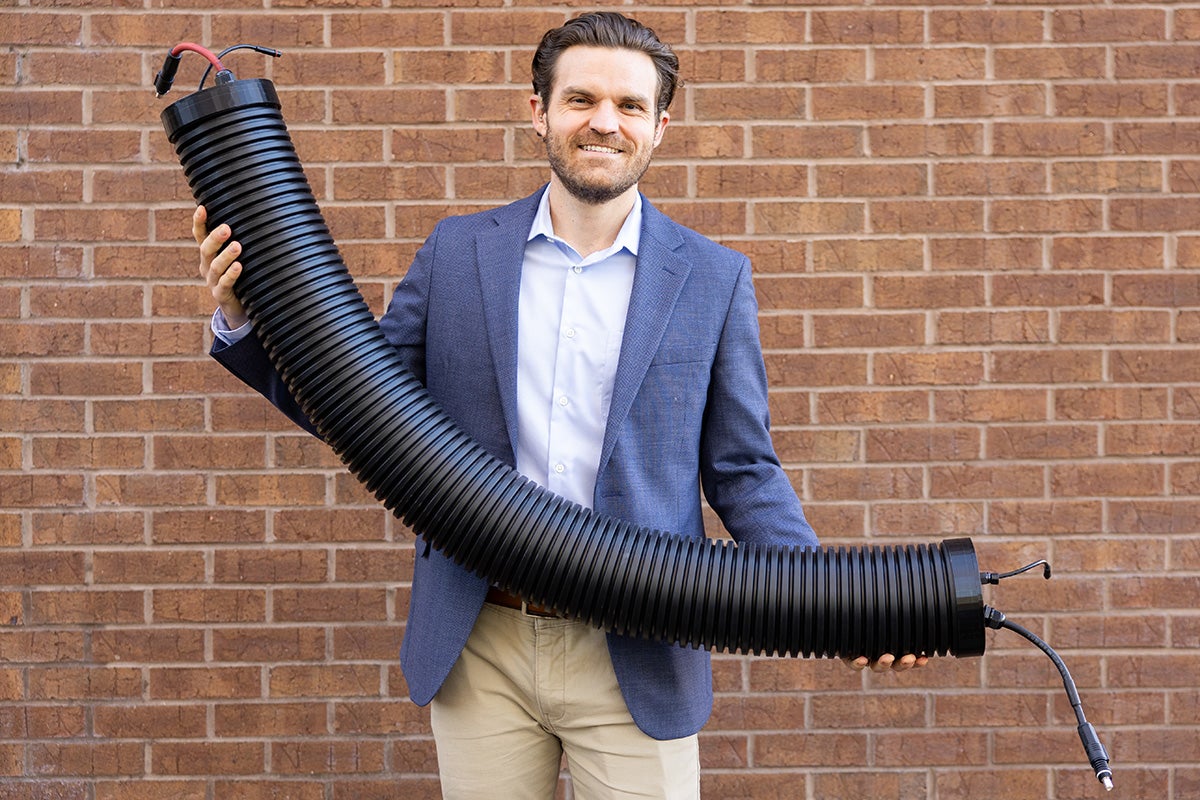
Capacitech is a rapid response energy storage leader building high-power and space-conscious energy storage systems for an increasingly complex grid. Essentially, Sleppy and his team turn supercapacitor components into modular, plug-and-play systems that harden power infrastructure against power demand spikes, outages and equipment damage.
Sleppy explains traditional power infrastructure, such as generators and batteries, are like a marathon runner whereas supercapacitors are more like a sprinter. Modern facilities — like data centers that power AI — demand power 24/7 but also demand even more power than normal for just a few seconds. Ideally, both a sprinter and marathon runner are required. So, Capacitech’s products make it practical to form relay teams between the traditional infrastructure (marathon runners) and supercapacitors (sprinters).
“If we can use supercapacitors to complement batteries, generators, fuel cells and the broader grid to serve this demand profile that’s coming from manufacturing facilities and data centers, then we’re making the world a better place — economically, but also in terms of power sustainability and security. And I think that that’s very important,” Sleppy says.
They made their first commercial sale in 2022 to Red Bull and have been running full force ever since.
Built by UCF
The company was bolstered by many resources at UCF on its way to raising the $2.5 million it has so far through investors and federal research and development programs. To this day, UCF’s Business Incubator continues to house Capacitech’s operations with adaptable leasing structures, physical space, mentoring programs and community that have adapted to their needs as they’ve grown. This year, they’ll expand into new warehouse in research park, adjacent to UCF’s campus.
“The world is watching. Let’s use innovation and entrepreneurship to make it better.” — Joe Sleppy
“UCF encouraged me to think outside of the box,” he says. “UCF is an innovative university because they’ll ask, ‘Why not?’ I think I share the same philosophy with running Capacitech. Let’s try it. The world is watching. Let’s use innovation and entrepreneurship to make it better.”
In 2026 Sleppy expects Capacitech to announce new partnerships and pilot programs in industry. And they’re already engaged in mentoring the next generation of Knights with internship opportunities for students.
“Entrepreneurship is how the world gets better — whether it’s a nonprofit or a tech startup like ours,” Sleppy says. “By reducing strain on the grid and extending the life of critical infrastructure like batteries and microgrids, we’re making energy systems more resilient and accessible. That means fewer vulnerable communities at risk and more room for innovation to grow. It’s hard not to get excited when your work genuinely makes the world better.”
Joe Sleppy was recognized on Forbes’ 30 Under 30 Energy & Green Tech list in 2026.