Highlights
-
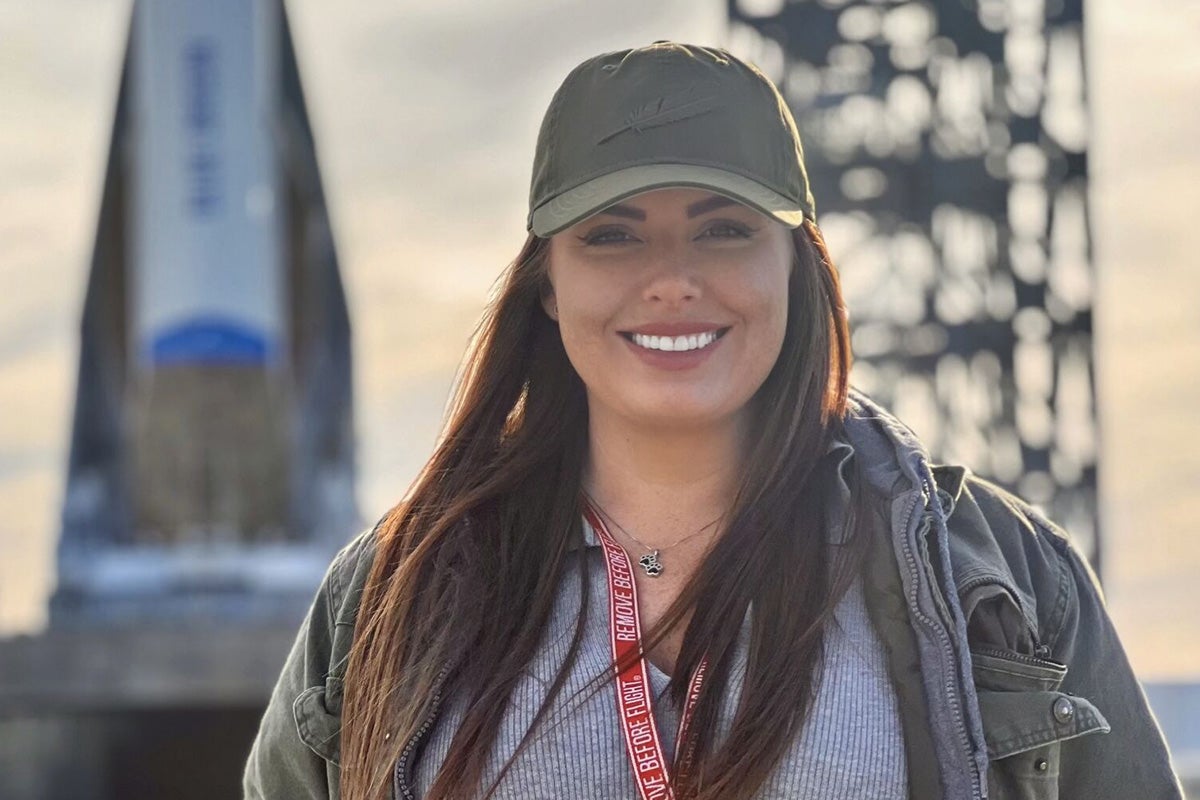
Before arriving at UCF, aerospace engineering alum Jillian Gloria ’22 was once told she’d never graduate with an engineering degree and reach her goal of working in the space industry.
-
Thanks to the DirectConnect to UCF program and hands-on research opportunities with real-world implications, Gloria carved a path for herself to sought-after jobs at United Launch Alliance and now Blue Origin.
-
As a rocket scientist, Gloria is actively advancing humankind’s progress in developing the infrastructure for a future generation to consistently travel to and live on other celestial bodies.
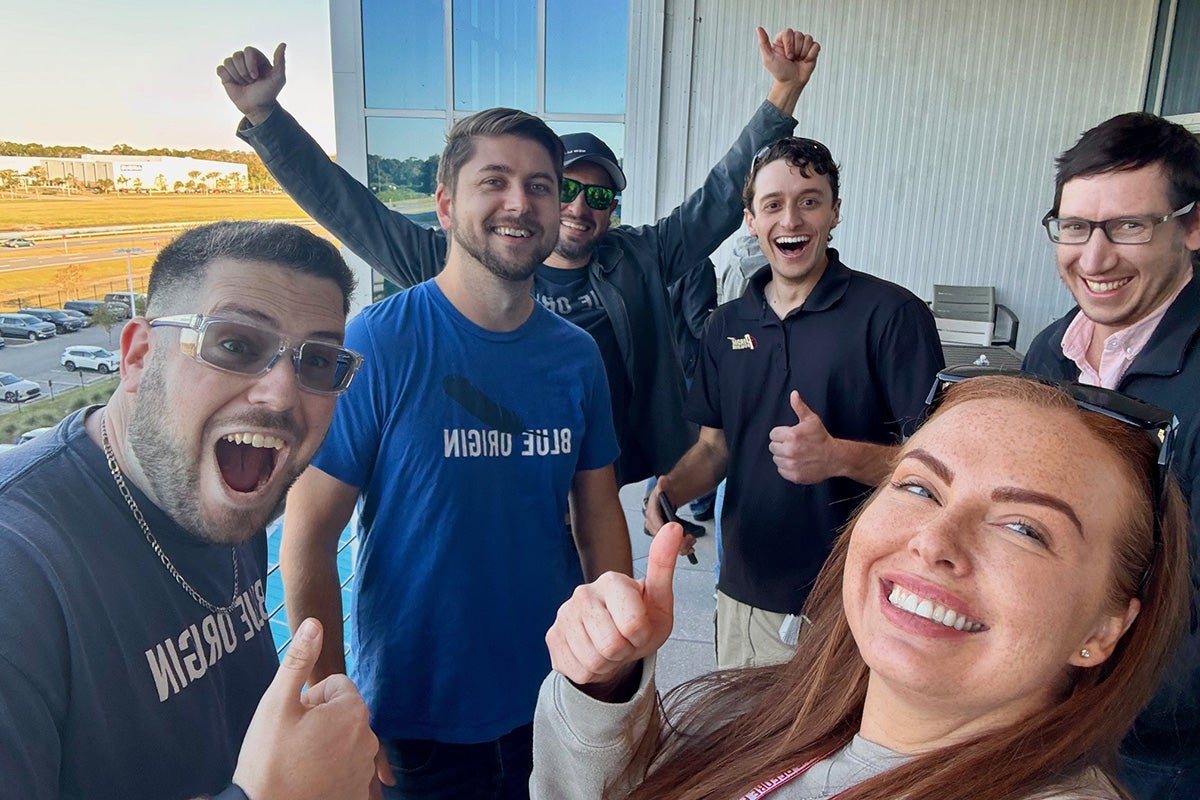
Nov. 13, 2025, 3:55 p.m. Jillian Gloria ’22 stands on a balcony at Blue Origin headquarters in Cape Canaveral, Florida, her eyes fixed on the horizon at Launch Complex 36 — the very launchpad her grandfather helped construct as a NASA engineer in the 1960s.
Engines ignite. Gloria’s breath catches as she wills the rocket to climb. Then she hears those crucial words: “Liftoff detected. New Glenn has cleared the tower.”
The Blue Origin rocket scientist has just witnessed the launch of her first NASA mission. It’s a goal the Orlando native has dreamed about since childhood; one marked by visions of the space shuttle soaring upward as she commuted to school and the roar of sonic booms when it returned to Earth’s atmosphere.
What makes this milestone even more rewarding is the determination, the hard work and the relentless tenacity it took her to get here.
“Your dreams are possible,” Gloria says. “All you need is passion and persistence. As long as you keep going, you can do anything in this world. You’re always going to end up where you’re meant to be.”
“You’ll Never Graduate”
Gloria’s college journey began outside of Florida despite the numerous space-related research and partnerships available in her backyard at UCF. Like many of her peers, she thought she had to branch out from her hometown to gain the most out of her college experience.
She realized quickly she had made a mistake.
Not long after arriving at the University in Texas at Arlington, an academic advisor told her she would never graduate with an engineering degree if she started her academic career in algebra. She would need an additional 1.5 years of math and science classes alone before she could set foot in an engineering class.
Rather than catch up on the mathematics education and credits she needed to pursue engineering, he advised she’d be better off going after “something more realistic for her current path like a business degree.”
“As an impressionable 18-19 year old, you listen to your adviser, right?” she says. “I just remember dropping the business class a few weeks in because I thought, ‘This is not what I want to do, and I don’t care how long it takes me, I’m going to do get an engineering degree.’ ”
Opportunity Comes Calling
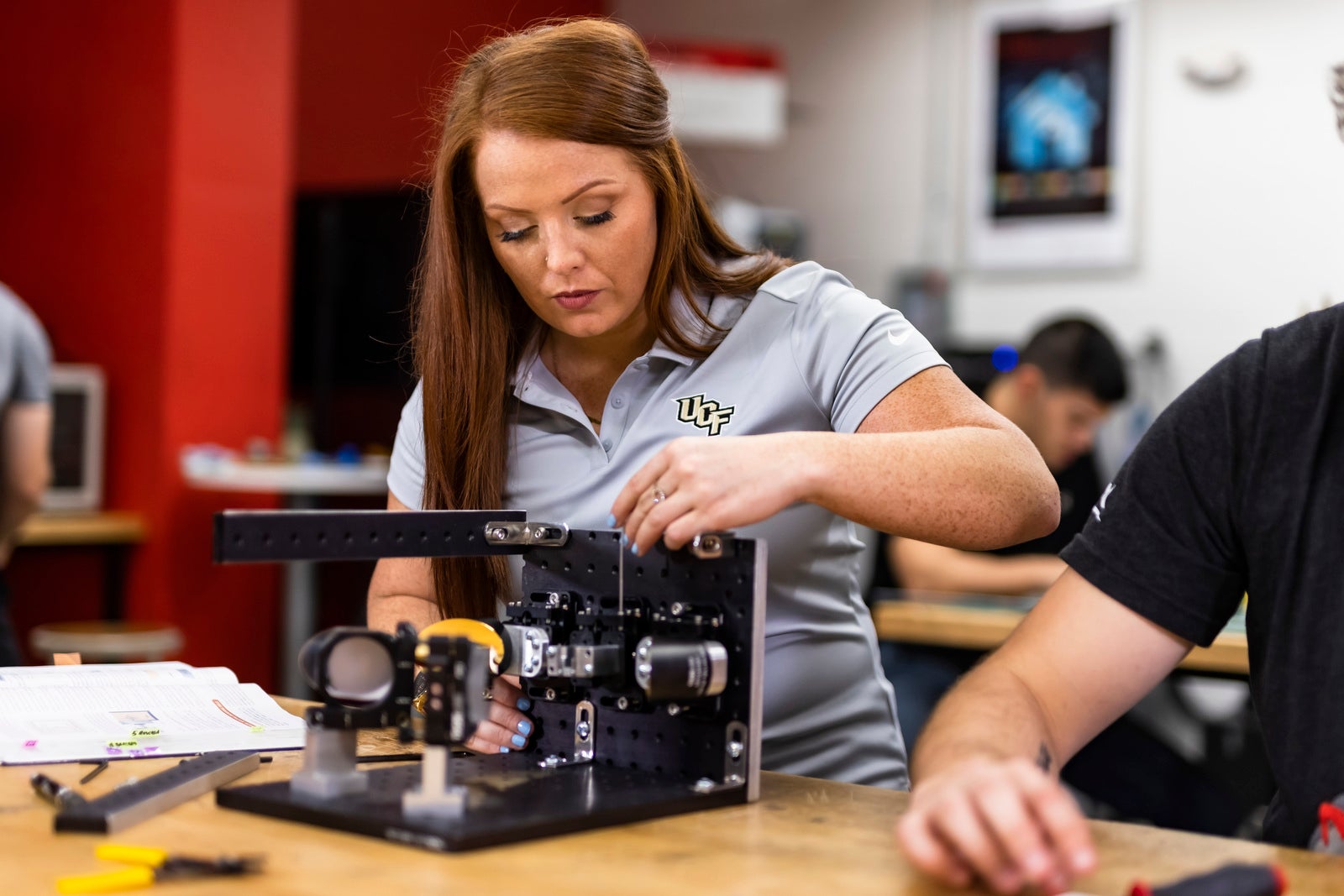
She course-corrected and enrolled in the DirectConnect to UCF program at Valencia College. Valencia provided her the academic resources and tutoring she needed to overcome her initial struggles in math and science.
In 2018 ahead of transferring to UCF, she applied to the Central Florida Physics Research Exchange Program, a former initiative for undergraduate students to participate in a 10-week funded research project over the summer with UCF’s physics department.
She remembers doubting her chances of acceptance. After all, she was an aspiring aerospace engineer, not a true physics major. But the program came with the promise of $5,000, and for someone who was working her way through school, what did she have to lose?
As part of her application, she wrote a compelling letter to Professor of Physics William Kaden about his space weathering effects research for NASA and how much she’d love the chance to work in his lab.
The letter worked. Kaden would go on to become Gloria’s mentor throughout her 2.5 years at UCF and kickstarted her hand in research that yielded projects on finding water on the moon, collaborations with the German Aerospace Center (DLR), work with UCF’s Exolith Lab and a co-authorship on a NASA-funded paper published in 2021 in the Journal of Vacuum Science and Technology.
“The world of research at UCF really provided me the actual work experience and opportunities to turn me into an engineer and a candidate that these companies sought after.” — Jillian Gloria ’22, Blue Origin engineer
“The world of research at UCF really provided me the actual work experience and opportunities to turn me into an engineer and a candidate that these companies sought after,” says Gloria, who keeps her senior-year textbook Mechanics and Thermodynamics of Propulsion, Second Edition on her office desk. “I worked with industry hardware, a vacuum chamber that’s worth hundreds of thousands of dollars at NASA, flew a payload on a Masten Space Systems Xodiac rocket to track rocket plumes during launch and landing on the moon. I was a published author before I graduated. It all was such an amazing opportunity. That was the first time when I felt like I was actually doing the work I had dreamed about. The things I was exposed to at UCF really just opened my eyes onto what’s available out there in terms of my career.”
Building a Road to Space
Since graduating in 2022, Gloria launched over a dozen successful missions across three launch-vehicle programs (Atlas V, Delta Heavy, Vulcan Centaur) at United Launch Alliance as a propulsion systems test engineer.
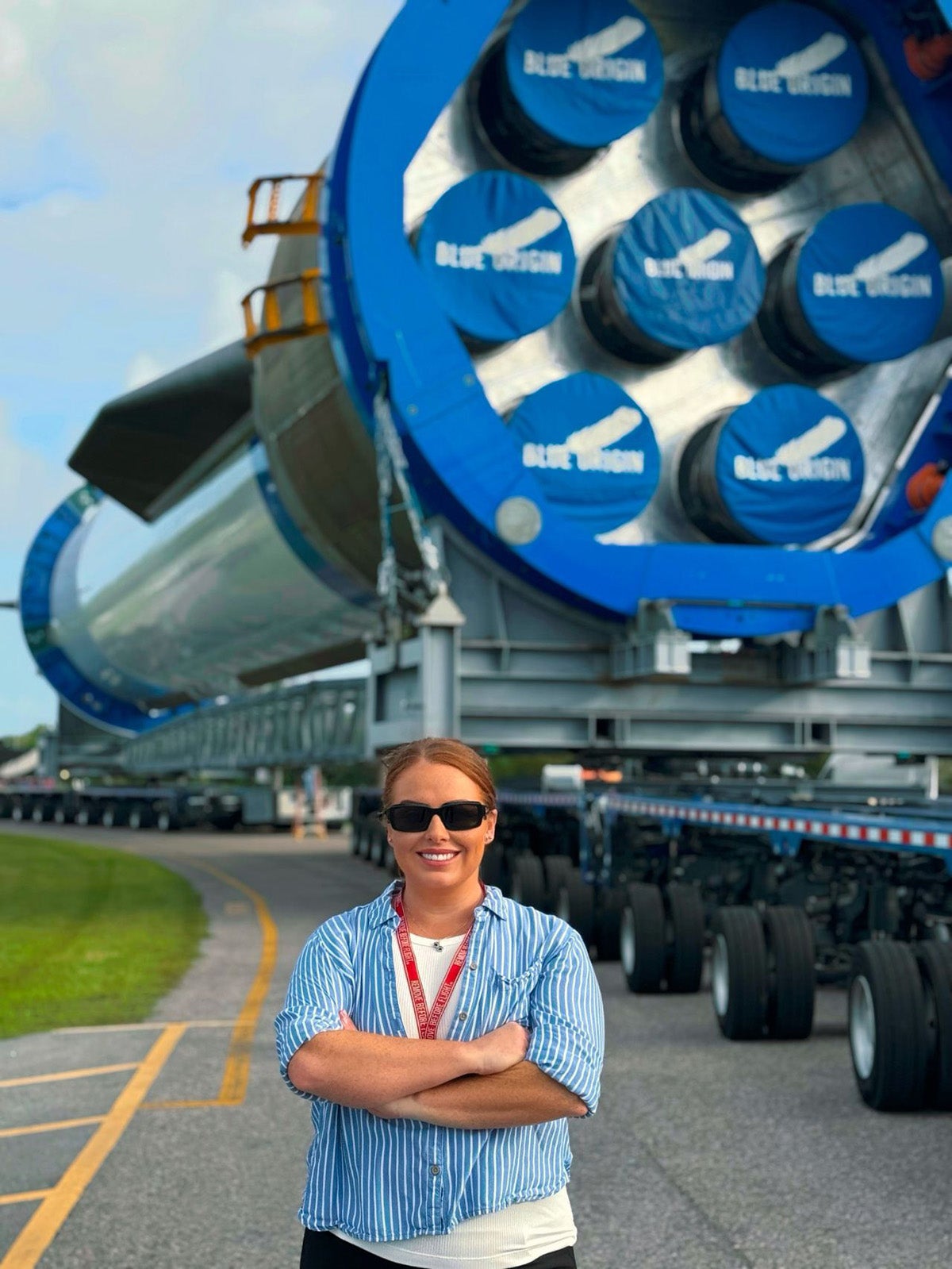
In January 2025, she joined the Blue Origin team as an integrated vehicle test engineer, specializing in the integration, testing, refurbishment, and optimization of complex fluid and pneumatic systems for her fourth launch vehicle, New Glenn.
In other words, she validates the build of the rocket, ensuring its integrity and functionality through every build stage before launch.
She is energized every day by the opportunities available to her to grow and learn within the company, who in addition to their rocket program is also developing a lunar lander and space station.
“This work matters. It’s the future.” — Jillian Gloria
“We’re all working together for the benefit of Earth, and you feel it every day you go to work at Blue Origin,” she says. “This work matters. It’s the future, it’s the next generation launch vehicle, and it just plays a hand in Blue’s mission statement that we want to build a road to space.”
Every milestone they hit — like the recent successful launch and first-time landing of the New Glenn rocket that ferried NASA’s twin ESCAPADE spacecraft to begin their journey to Mars — helps get them closer to that goal.
While current generations may not see it, she knows the work she is doing at Blue Origin is developing the infrastructure for future generations who will one day consistently travel to and live on other celestial bodies.
“The stars are the final frontier. It calls to us,” Gloria says. “You can’t really explain it, but when you look up at the sky, it kind of touches your soul. It just makes me feel more connected to something that’s so far away and so beautiful. It’s everything.”