Highlights
-
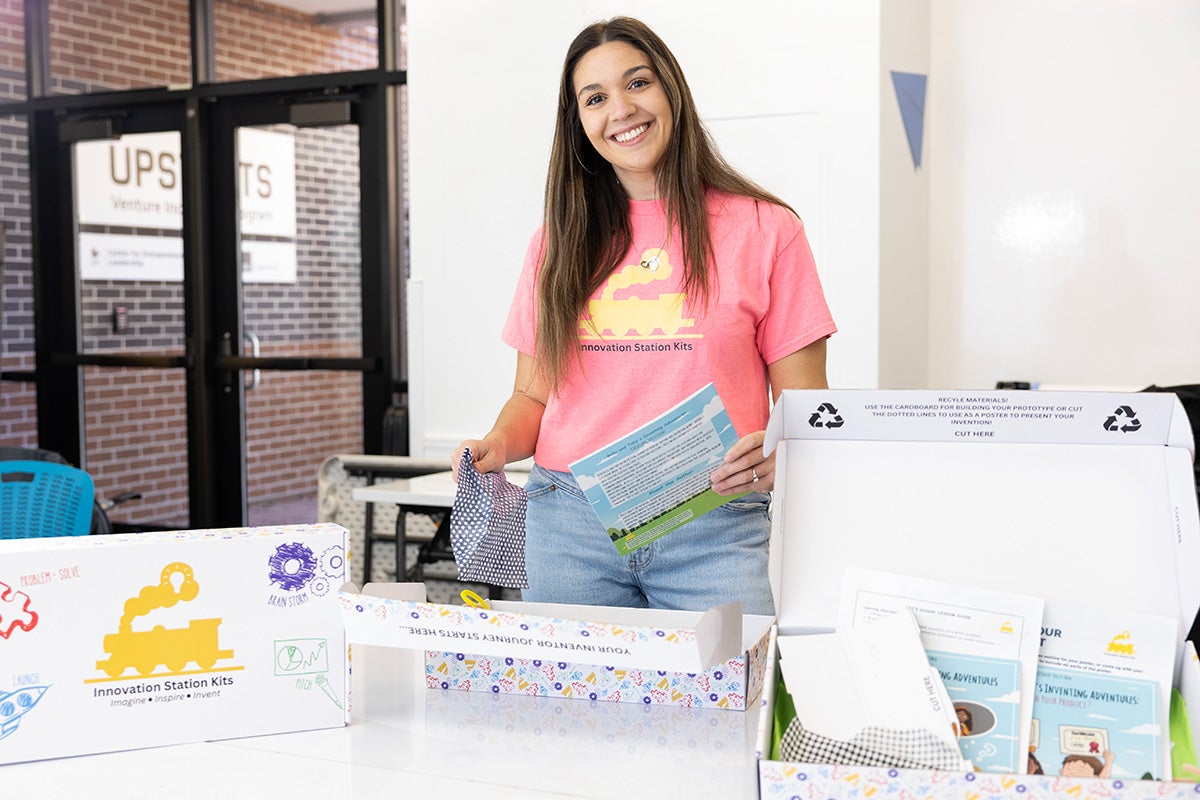
Drawing upon her personal experience in struggling to learn how to read, Shea is inspiring confidence in the next generation of school children with her series of kits that teach children to identify and explore problems, brainstorm and develop innovative ideas, build and prototype concepts, and practice their presentational skills.
-
She credits UCF’s Pegasus Innovation Lab and Blackstone Launchpad as crucial resources that complemented the knowledge she gained in her coursework to start her company, Innovation Station LLC, during her last semester at UCF.
-
The kits will debut in nine Tampa-area elementary schools this semester through local nonprofit High 5, Inc., which offers a variety of after-school and recreational programs, and Shea hopes to eventually partner with school districts to get them into classrooms.
UCF alum Kelly Shea ’23 understands first-hand the academic challenges some children struggle with in the classroom. After all, she was once one of them.
“School just didn’t make sense to me,” says the elementary education grad, who couldn’t read until midway through elementary school.
Those early challenges have been integral to Shea’s career path as an educational entrepreneur. They also fuel the “why” behind her mission to empower young students through her start-up business that offers invention education kits for kids.
Making Sense of School
Growing up, Shea recalls struggling in every subject, especially reading, during her elementary school years.
“I had trouble comprehending things,” says the 23-year-old, who has since written and published four children’s books. “My first-grade teacher, Ms. Shepard, was the one who recognized I was having problems. I met with her almost weekly throughout second grade for extra support. Things finally started clicking for me in middle school, but I struggled a lot early on.”
She got involved with a Tampa-area nonprofit called Girls With Confidence, which empowers young girls in developing positive self-esteem. As she got older, she began volunteering and taking on more leadership roles with the organization.
“I would come up with activities and games for their programming and realized that I love teaching and creating impact, like how people did for me,” she says. “I just loved working with kids. I wanted to help them find solutions to their struggles because I was there once, too.”
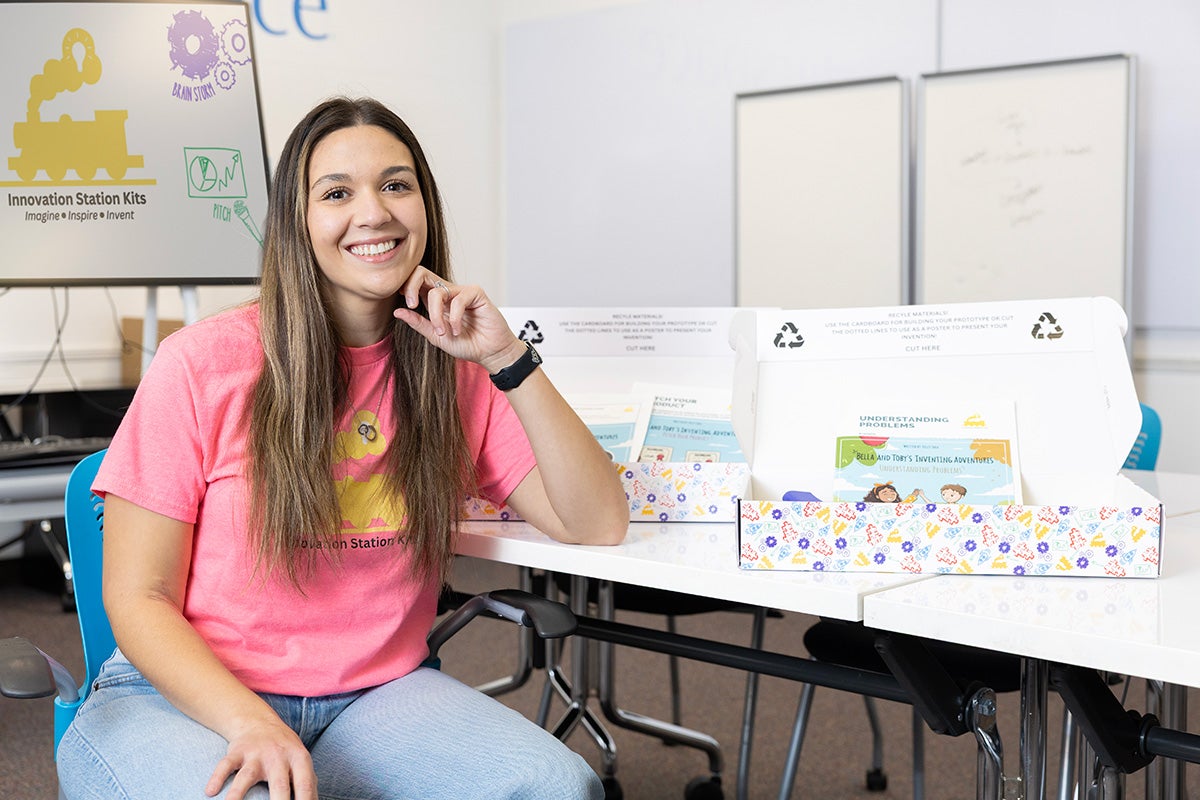
Shea carried that determination and creative, problem-solving spirit throughout her time in UCF’s School of Teacher Education and leveraged it to create two businesses before she graduated. She credits UCF’s Pegasus Innovation Lab and Blackstone Launchpad as crucial resources that complemented the knowledge she gained in her coursework, ultimately fueling her career path today with Innovation Station LLC.
Connecting Education and Entrepreneurship
While taking the Careers in K-12 Education course with Cristina Sáenz ’22PhD — now an invention education manager for Massachusetts Institute of Technology’s Lemelson-MIT Program — Shea had her light bulb moment: She could bridge her passion for education with her entrepreneurship endeavors.
Invention education is a learning approach that challenges students through hands-on problem-solving. Shea often saw this play out during her internship with PedsAcademy at Nemours Children’s Hospital, where young patients face educational challenges due to injuries and illnesses.
“At Nemours, I saw how kids with cerebral palsy adapt things for their needs, and it inspired me because that’s what invention is about,” she says. “I thought, ‘Why don’t I create a series of kits for K-5 students that teaches them to go back to the basics of hands-on learning?’”
With that, Innovation Station LLC was born during her last semester at UCF.
Empowering Tomorrow’s Innovators
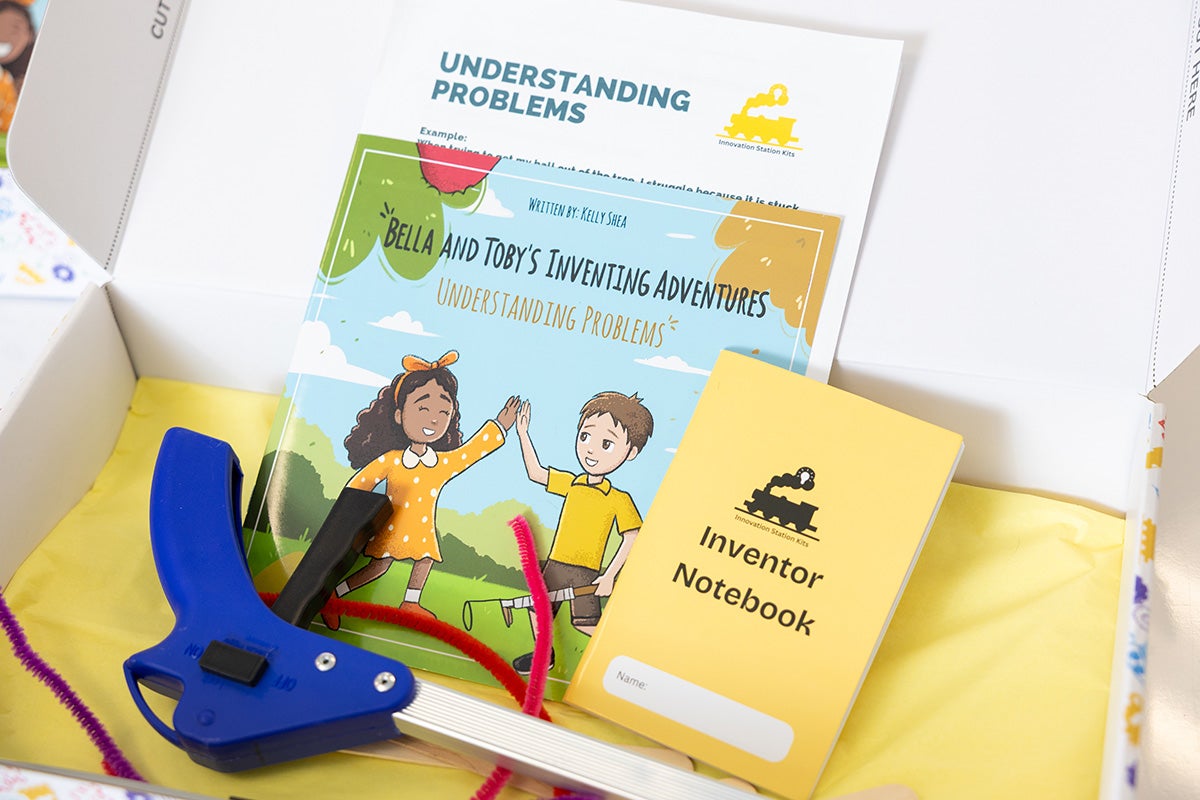
Through Innovation Station, Shea offers a series of four invention education kits that teach children to identify and explore problems, brainstorm and develop innovative ideas, build and prototype concepts, and practice their presentational skills.
Each kit includes a relatable storybook — written by Shea herself — as well as guided activities, worksheets, crafting supplies, and lesson resources for teachers. Even the packaging is designed to be used as part of the inventive process. With the final kit in the series, students cut off the sides of the box to make into a poster board they’ll use to pitch their product.
“They’re reminded that their product is a prototype; it’s not going to be perfect, and failure is OK because we can always fix things based on what we learn from it,” she says. “They learn how to communicate their brand with problem and solution statements. The books also cover easing those presentation nerves and learning to support your friends even if you’re competing.”
Prior to launching Innovation Station kits in July 2025, she conducted a six-week focus group with the Girls Scouts of Citrus Council, where she was able to test the kits with girls ranging from 4 to 12 years old. One 4-year-old invented a soft pencil because she was just learning to write, and regular pencils hurt her hand.
“It’s meant to teach them to be problem-solvers,” she says.
Since then, Shea has been promoting Innovation Station kits while also working in manufacturing, helping others bring their own inventions to life. She is piloting the kits this semester in partnership with fellow teacher education alum Chuck Burgess ’92. The kits will debut in nine Tampa-area elementary schools through local nonprofit High 5, Inc., which offers a variety of after-school and recreational programs.
“I took a chance on myself, and I decided that this is what I want to do.” — Kelly Shea ’23
She aspires to collaborate with school districts to introduce them into today’s classrooms.
“I took a chance on myself, and I decided that this is what I want to do,” she says. “I want to inspire and have an impact on the next generation and help create core memories by facilitating those light-bulb moments of, ‘Wow, I can be an entrepreneur.’”