Over the next five years, UCF’s Marriage and Family Research Institute (MFRI) will equip 1,500 Central Florida couples with tools to strengthen bonds, improve communication and build more resilient relationships through the latest iteration of Project Harmony — this time with a focus on targeted support for first responders and parents.
Project Harmony, a grant-funded research project initially funded and launched at UCF in 2015, helps couples connect and strengthen their relationships by equipping them with skills for improving communication and resolving conflict. It uses Prevention and Relationship Enhancement Program (PREP), an established evidence-based relationship intervention curriculum, to teach core skills but also offers a personalized approach through tailored programming and relationship coaching.
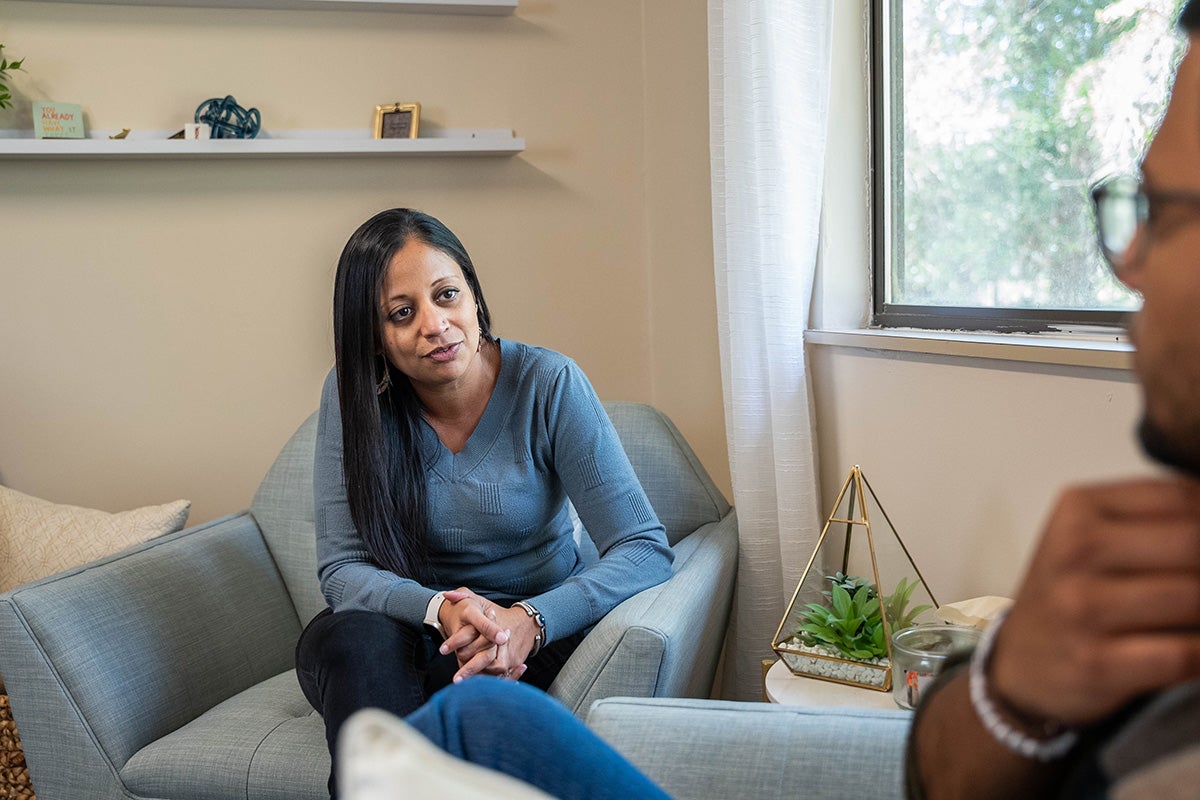
Participants learn strategies for effective communication, hone active listening and conflict management skills, and gain tools for coping with stressful situations — all taught in a group format with flexible scheduling options to accommodate participants, who also receive free childcare, meals and gift cards to help mitigate barriers to participation.
“We talk about what healthy relationships look like, the communication pitfalls we can fall into when we feel invalidated or unheard, and understanding love languages and styles,” says Sejal Barden, professor of counselor education and Project Harmony’s principal investigator. “Ultimately, it leaves couples with a new curiosity for what their needs are and how to meet their partner’s needs with consideration for who and where they are now. By knowing that relationships are constantly evolving, they can use these skills to position themselves to evolve together as opposed to growing apart.”
Meeting a Need in the Community
Funded by a five-year, $6.25 million grant from the U.S. Department of Health and Human Services, Project Harmony builds on decades of relationship education research through the MFRI. Couples will be placed in one of three subgroups tailored to their needs: Unite in Harmony for general relationship education, Shield in Harmony for first responders and their partners, or Raise in Harmony for couples who are also parents.
Barden says the tailored programming stems from both research and prior feedback indicating a need for relational support based on specific stressors unique to couples in these subgroups. All couples participate in the core PREP curriculum, but those in the Shield and Raise groups will engage in four to five hours of their own unique curriculum — something that is being developed with input from members of the first responder community and parenting experts, respectively.
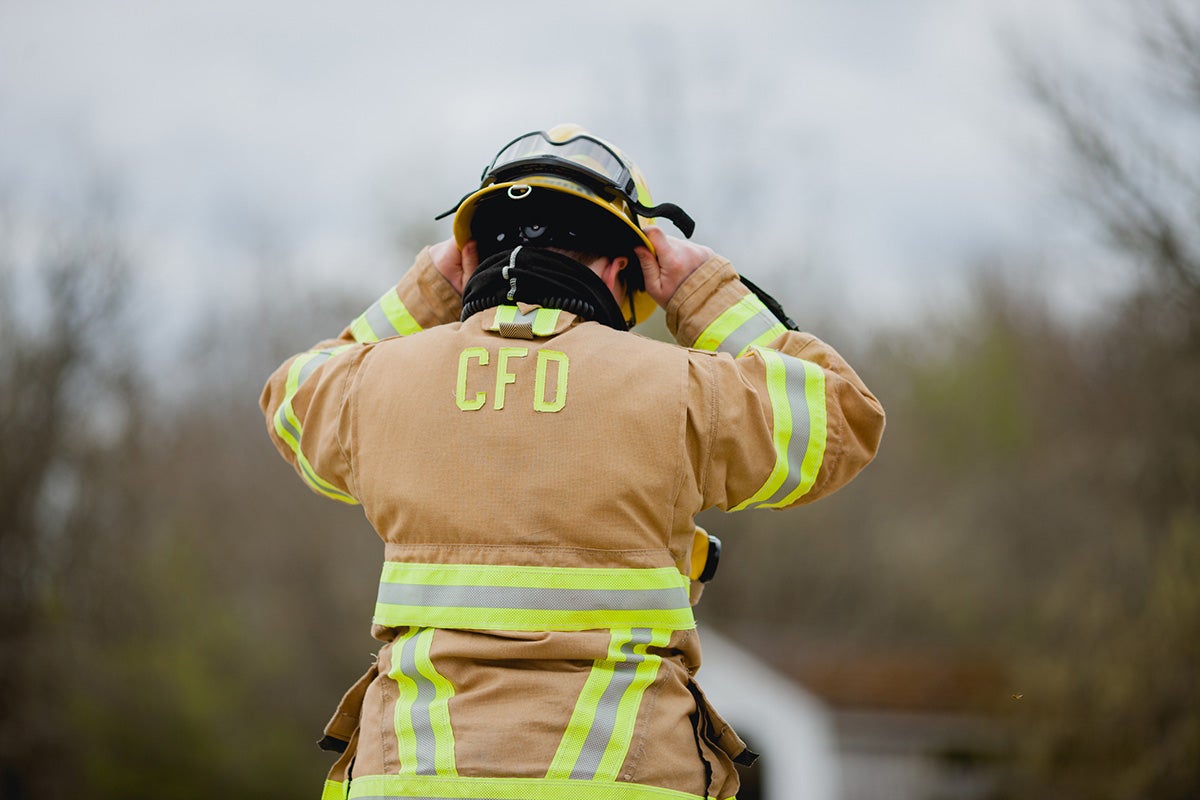
For first responders and their partners, relationship stressors can be more nuanced due to the nature of the job. These can include varying shift schedules, occupational hazards and the stress that often accompanies them. Barden’s team is currently conducting focus groups with Central Florida-area firefighters, law enforcement officers and paramedics, as well as their partners, to learn more about their experiences.
“I don’t think we can underestimate the impact of the occupational demands of being a first responder, not only on the individual but on the family dynamic at home,” Barden says. “They keep our communities safe, so the least we can do is provide a service back to them.”
Designed With a First Responder for First Responders
It’s a group that Benoit Aubin, a first-year student in the counselor education doctoral program, is particularly passionate about. A former medic in the U.S. Navy and firefighter/paramedic, Aubin found himself assisting with the peer support team while in the fire service — an experience that inspired him to pursue further education and a career in clinical mental health counseling.
Now a mental health clinician for the District Fire Department that services the Walt Disney World Resort area, Aubin is not only working on his doctorate, he’s also a graduate research assistant helping to build the curriculum for Shield in Harmony. He has facilitated outreach and recruitment of focus group members, fostered connections between fire service leadership and MFRI staff, analyzed prior research and educated colleagues on the fire service culture.
“A lot of what I’m hearing from participants is that they didn’t know other first responders were having the same issues regarding the mental health crisis and relationships,” he says. “There’s a powerful stigma with mental health among first responders, but I didn’t know it was to that extent. It showed me how important this is and fuels me to spend countless hours assisting in curriculum development.”
Under Barden’s mentorship, Aubin is gaining hands-on experience in synthesizing and incorporating what he’s hearing in focus groups to ensure the training modules are addressing real experiences in alignment with the core content. For example, he’s creating a module focused on empowering first responder couples to help their partners decompress after coming home from a stressful shift. He also tailors the language to first responders while being mindful of stigmatizations and other barriers that prevent them from accessing mental health services.
“When I started recruiting and telling people about a free relationship education program that’s being created with a first responder for first responders, people were so enthusiastic about it,” Aubin says. “I think of and picture the people that this will help, hold onto those images, and that gives me the motivation to do this because it’s something that we know is so needed.”
Life-Changing Education
For couples who are also parents, the work lies in not just learning to connect and communicate with each other but also with their children, including navigating how to parent adolescents through the prevalence of social media. This curriculum is being developed through focus groups with parents and feedback from parenting experts around the country.
“We want to ensure parents have the tools for connecting with each other through the more challenging chapters in life and in parenthood.” — Sejal Barden, MFRI’s executive director
“We want to ensure parents have the tools for connecting with each other through the more challenging chapters in life and in parenthood, which includes helping them translate these skills into building stronger relationships with their children,” Barden says.
Barden and her team hope to begin enrolling couples in the Unite group in the spring, with Raise and Shield to follow shortly after. Although word of mouth is their top source of referral, the MFRI team will also be out in the community recruiting participants at fire stations, police stations, libraries, health departments and wellness events.
“Learning that we can change the trajectory of a couple’s life and their connection with a short amount of education and intervention is life-changing,” Barden says. “If we know that this works, how could we not do it? It feels like a calling and commitment I couldn’t imagine not being a part of.”
Researcher Credentials
Barden received her Ph.D. in counseling and education development from the University of North Carolina at Greensboro, and both her master’s and education specialist degrees in marriage and family therapy from the University of Florida. She joined UCF’s Department of Counselor Education and School Psychology, part of the College of Community Innovation and Education, in 2011, and has served as MFRI’s executive director and the principal investigator of Project Harmony since 2015.