Highlights
-
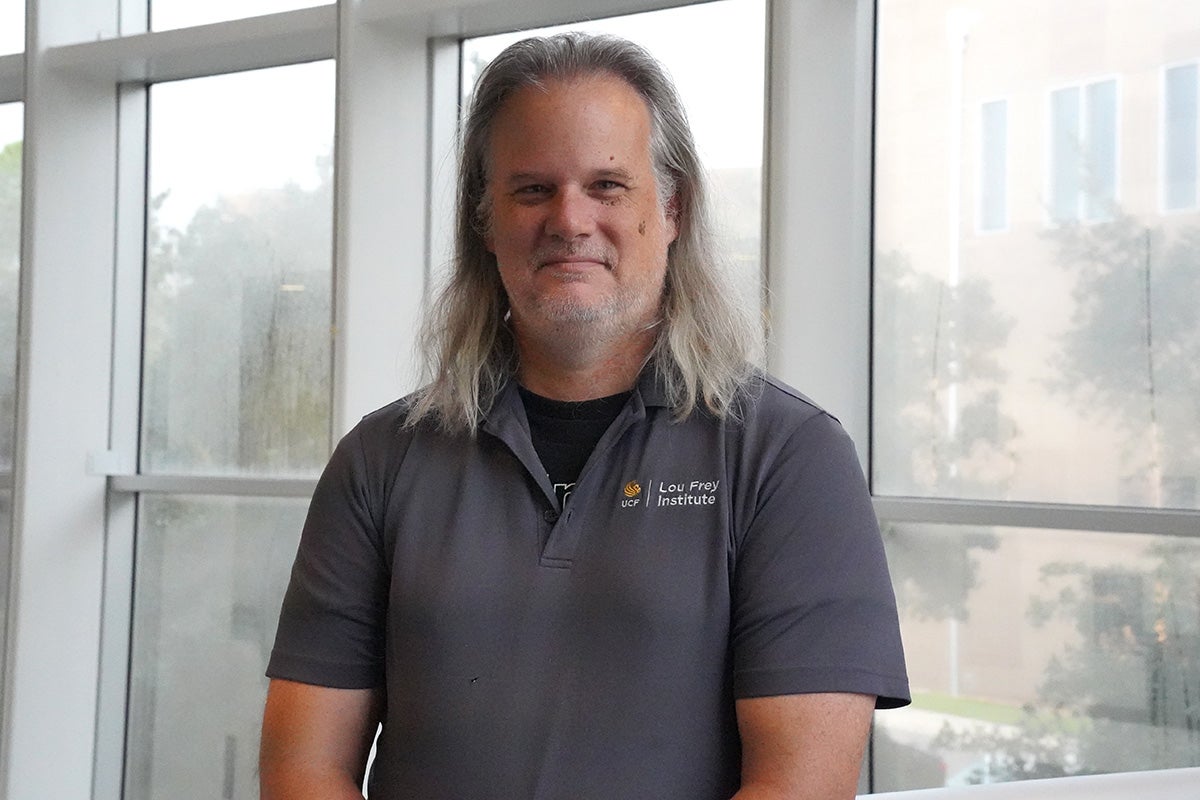
Stephen Masyada has been invited to serve on a 20-member framework committee for the civics portion of the National Assessment of Educational Progress (NAEP) for the 2032 assessment.
-
Masyada is the longtime director of the Lou Frey Institute, which serves every school district in Florida as a leading provider of civic education instructional and professional development resources.
-
The NAEP also tapped Terri Fine, professor emerita from the School of Politics, Security and International Affairs and former associate director of the Lou Frey Institute, to serve on the 10-member content committee.
For Stephen Masyada, civics education has been a lifelong interest. Now, his work in the field will help shape how civics knowledge and skills are assessed for students across the country.
Masyada, director of the Lou Frey Institute, has been selected as one of 20 members of the panel that will help revise the framework for the civics portion of the National Assessment of Educational Progress (NAEP) for the 2032 assessment.
The appointment recognizes his extensive experience in civics education and provides an opportunity to bring his perspective to a national conversation about what students should know and be able to do as engaged citizens.
“I think it’s a recognition of the work we do here at the Lou Frey Institute and at UCF in civic education and the impact we’ve had on civics in Florida and in some cases nationally,” Masyada says.
Shaping How Civics Education Is Assessed
The NAEP civics assessment provides data used to understand students’ civic knowledge nationally. While only a sample of students take the assessment, the results provide a broader picture of civic education across the country.
Masyada says the framework is particularly important because it can influence how policymakers and educators understand what should be emphasized in civics education.
“The content of the framework will dictate to states what is seen as important and what they’ll be comparing what’s happening in the states to when they release data,” Masyada says.
He also expects the framework to play a role in national evaluations of state standards for civics and government.
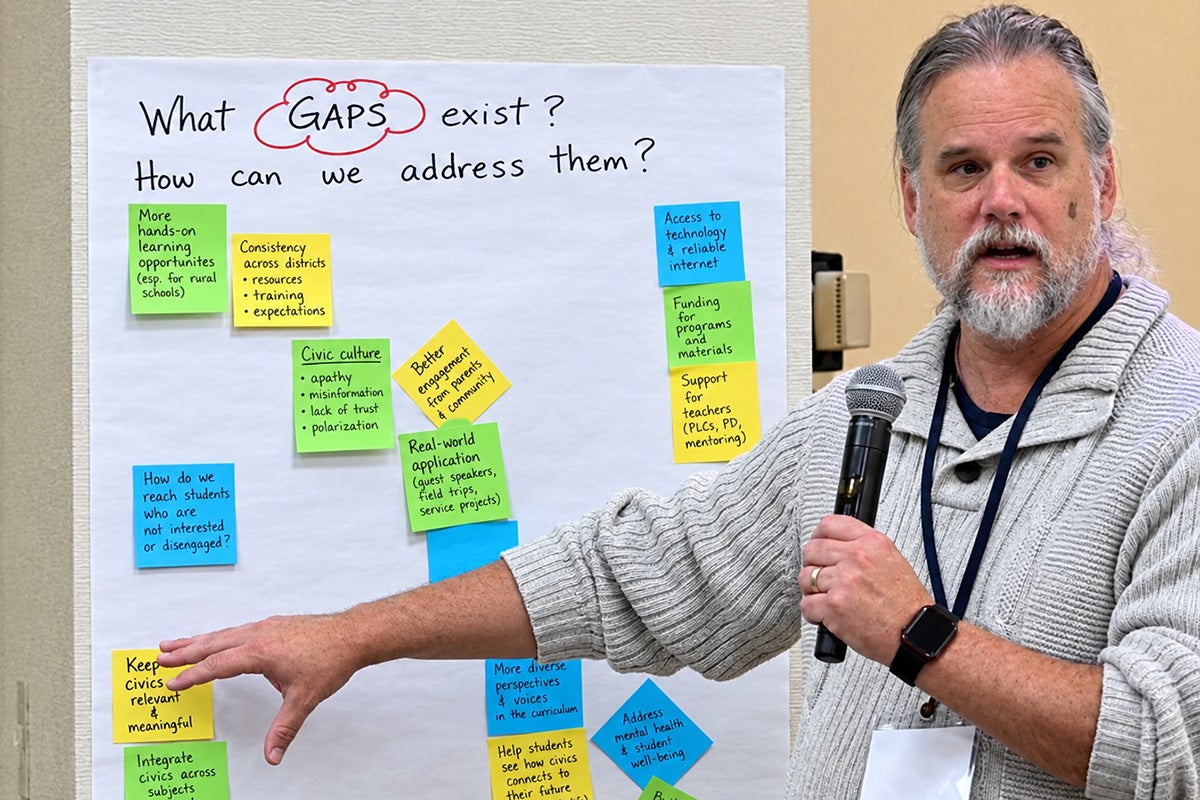
As a member of the framework committee, Masyada hopes to help broaden the way civic education is considered and assessed. Rather than focusing solely on students’ ability to recall facts, he believes assessments should also consider how students apply their knowledge.
“I think we really need to think about something beyond just knowledge, but also scenarios,” Masyada says. “What does the knowledge look like in practice, taking it to that next level?”
He also hopes the conversation will consider how civics education can begin earlier, including at the K-5 level.
For Masyada, effective civic education includes foundational knowledge of the nation’s founding principles, rights and liberties and the responsibilities of citizenship. It also includes dispositions that encourage students to participate in their communities, work with others to address problems and seek solutions to public policy issues.
“How do we measure these different dispositions necessary?” Masyada says. “I think that’s part of the conversation for the committee that’s involved with this.”
Bringing a National Perspective to Civics Education
The committee’s work will bring together perspectives from across the country. Masyada says that is important because civic education varies significantly from state to state.
“We have 50 states and 50 different ways to approach civic education in this country,” Masyada says. “I know what’s actually happening and being taught in Florida’s classrooms. I’ve been involved heavily in standards in this state and helping teachers understand what the standards mean and what they look like.”
A U.S. Air Force veteran, Masyada earned his bachelor’s, master’s and doctoral degrees from the University of Florida and a certificate in instructional design and higher education leadership from UCF.
He taught high school in Florida for more than a decade and also worked in North Carolina as a state-level social studies specialist. In 2014, he joined the Lou Frey Institute, where he has continued his work supporting civic education.
His experience working directly with K-16 educators, developing and interpreting standards and supporting assessment initiatives has prepared him to contribute to the national framework process.
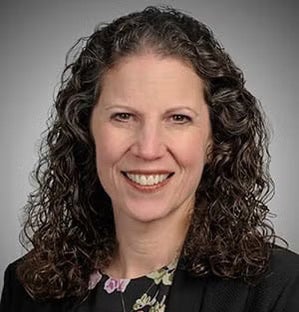
He is one of two representatives from the College of Sciences involved in the development of the 2032 civics assessment. In addition to Masyada serving on the 20-member framework committee, Terri Fine, professor emerita from the School of Politics, Security and International Affairs (SPSIA) and former associate director of the Lou Frey Institute, will serve on the 10-member content committee.
“The fact that UCF has two people involved I think it’s a huge feather in the cap for all of us,” he says.
As the committee looks toward the 2032 assessment, Masyada hopes its work will strengthen support for high-quality civic education and help establish a shared understanding of what students need to know and how they can participate in civic life.
He also sees an opportunity to consider how the country’s student population has changed and how civic education can provide common ground.
“We’re a far more diverse student population than we used to be,” Masyada says. “So I think having some commonality, some understanding of what can bring this population together, when it comes to civic education, I think that’s one of my hopes.”
Extending UCF’s Civic Education Work
The Lou Frey Institute at UCF houses the Florida Joint Center for Citizenship and has been a leading provider of civic education instructional and professional development resources in Florida since it was established in 2002. The institute reaches approximately 300,000 students and 2,000 teachers across every Florida school district.
“We appreciate the opportunity to support and represent the college, the school and the university in these different districts, working with so many different teachers and leaders and representing UCF on the national stage as well when it comes to civic education,” Masyada says.