Highlights
-
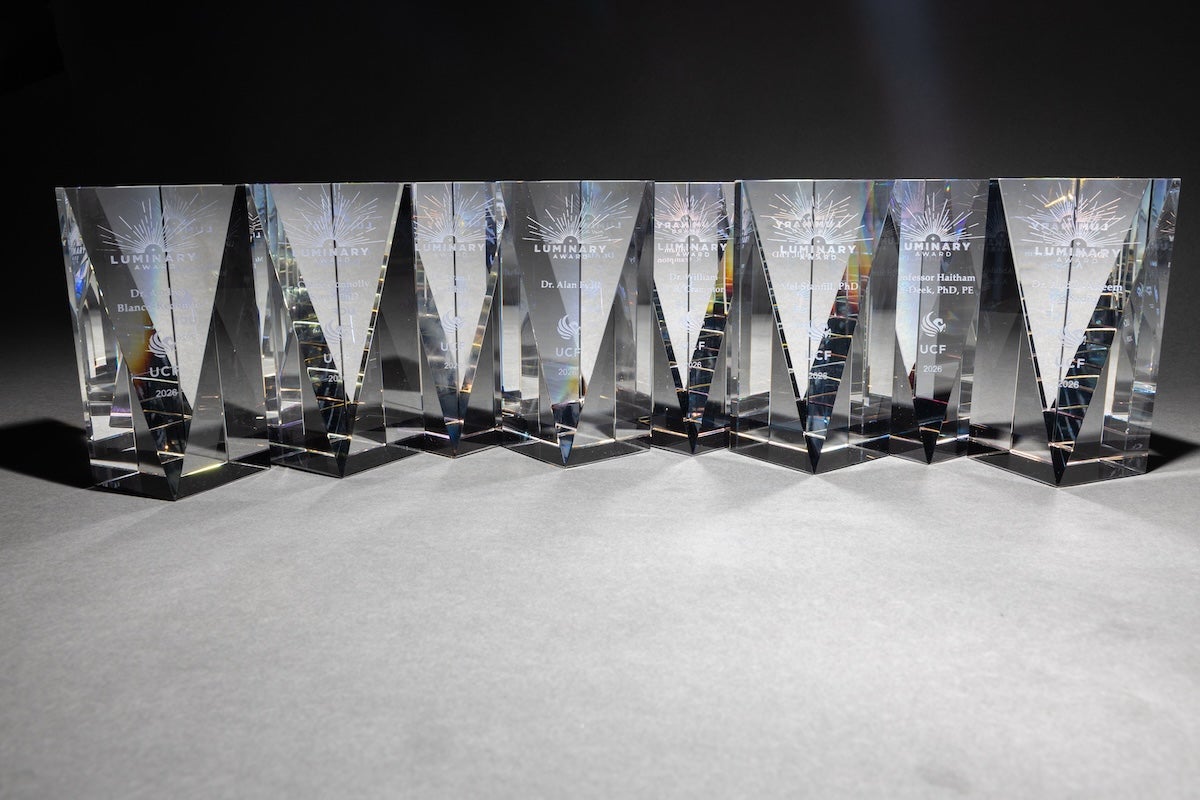
Eight UCF faculty earned 2026 Luminary Awards for achievements that extend the reach of UCF research and scholarship around the world.
-
Their work is helping prevent highway crashes, strengthen disaster resilience, elevate tourism and open new possibilities in quantum technology and artificial intelligence.
-
UCF will celebrate the honorees on Oct. 20 during the 10th annual Luminary Awards ceremony.
Questions asked at UCF rarely stay put.
The answers travel — making highways safer, informing disaster planning, shaping conversations about life-changing technologies and more. Behind that reach are brilliant minds, including eight faculty members whose research and scholarship are being celebrated at the 2026 Luminary Awards. Their achievements demonstrate how UCF expertise reaches beyond campus to address challenges facing Florida and the world.
Now in its 10th year, the annual awards honor faculty whose work brings UCF national and international recognition while elevating the university’s influence across disciplines and communities.
Selected from nominations by deans, directors and department chairs across UCF, the 2026 awardees will be celebrated Oct. 20. Joining the ceremony will be President Cartwright; John Buckwalter, provost and executive vice president for academic affairs; Winston Schoenfeld, vice president for research and innovation; and Kelly Ferris Lester, vice provost for faculty excellence.
Meet this year’s luminaries.
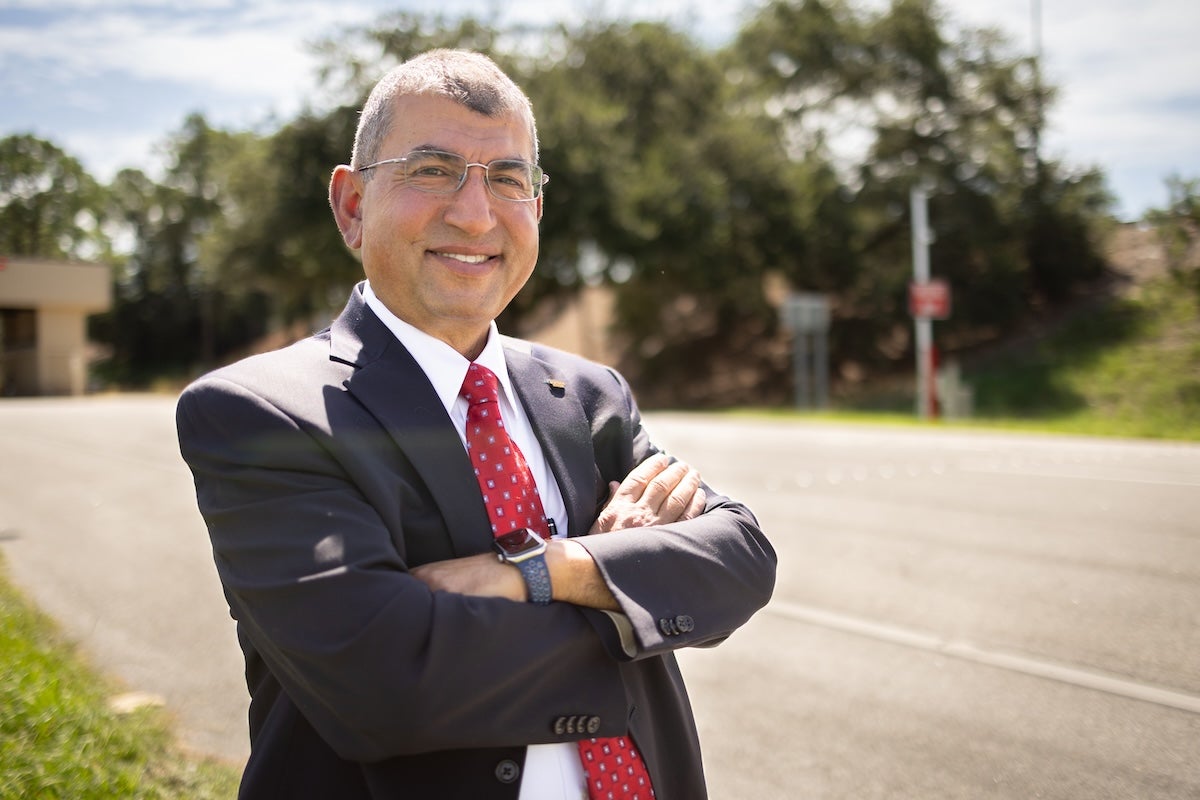
Haitham Al-Deek
Professor, Department of Civil, Environmental and Construction Engineering, College of Engineering and Computer Science
Haitham Al-Deek is helping stop wrong-way drivers before a dangerous turn becomes a devastating crash.
Working with the Central Florida Expressway Authority, he helped create and implement North America’s first highly accurate wrong-way driving detection and deterrence system. Since its introduction in 2015, thousands of drivers have corrected course before heading in the wrong direction, helping prevent potentially fatal or debilitating crashes.
His algorithm for cost-effectively addressing the highway exits most at risk for wrong-way driving has been widely adopted in Florida and Idaho. Al-Deek’s broader expertise includes freeway operations, intelligent transportation systems and traffic safety. His work has influenced public policy and advanced transportation planning, freight transportation, and the deployment of life-saving technologies on high-speed toll roads and freeways.
Since joining UCF in 1992, Al-Deek has secured more than $10 million in research funding and developed innovations that have resulted in multiple patents for the university while preparing the next generation of transportation engineers to make an impact on society. His honors include awards from the U.S. National Research Council’s Transportation Research Board.
Kevin Mackie, Al-Deek’s department chair, says his extensive efforts to improve highway safety and transportation “are contributions that touch the lives of all of us.”
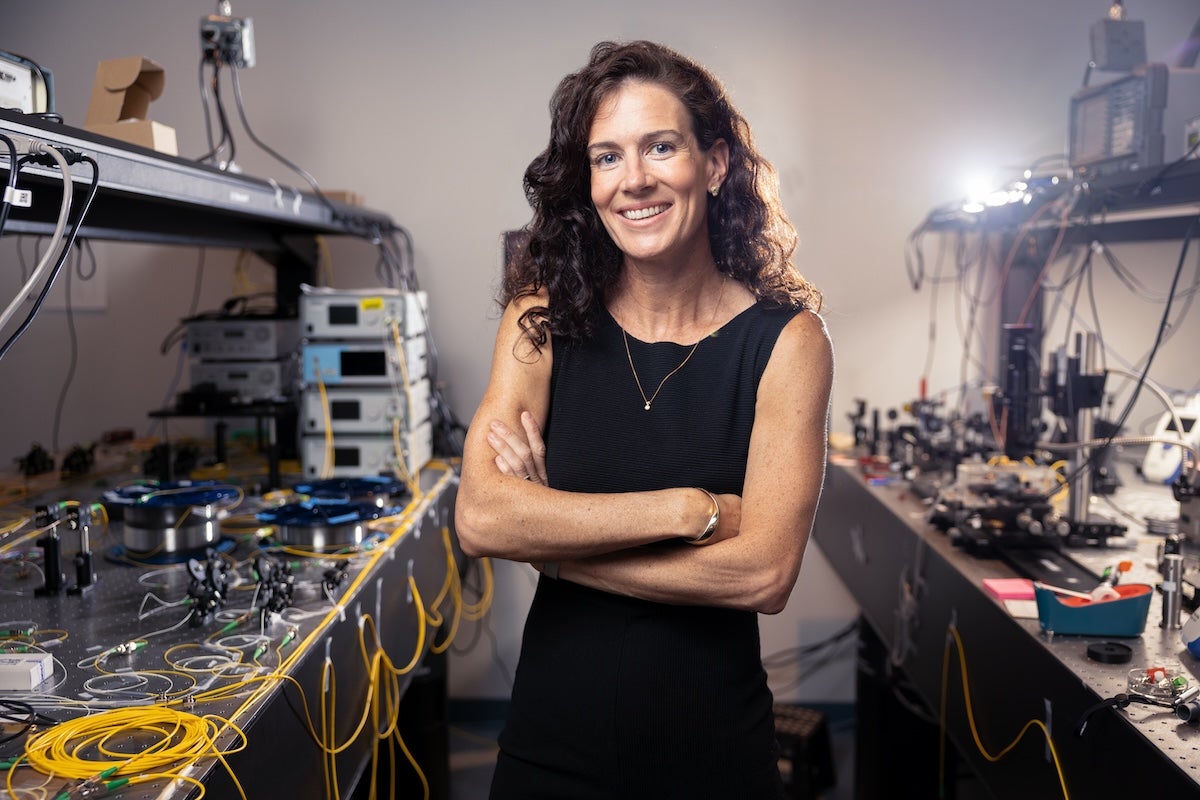
Andrea Blanco-Redondo
Florida Photonics Center of Excellence Endowed Professor, College of Optics and Photonics
Andrea Blanco-Redondo is harnessing light to push the boundaries of quantum technology.
Her research develops scalable ways to generate and control quantum states of light — advances that could unlock new possibilities in computing, communications and information processing. She’s internationally known for discovering a new class of optical pulses that behave like a particle and can help researchers and industry shape what’s next. In three years at UCF, her scholarship has informed roughly two dozen conferences and produced papers in prestigious journals, including Science, Nature Materials, Nature Communications and Nature Photonics.
An Optica (Optical Society of America) Fellow, Blanco-Redondo also serves as chair of the SPIE OPTO Symposium at Photonics West, a premier annual conference of the international society for optics and photonics. Alongside her research and professional leadership, she mentors future scientists and helps expand opportunities in engineering and optics.
“Through internationally recognized scholarship, sustained external engagement and demonstrable impact, Dr. Blanco-Redondo exemplifies the UCF Luminary ideal through globally impactful work that both broadens understanding and inspires future scientists,” UCF College of Optics and Photonics Dean David Hagan says.
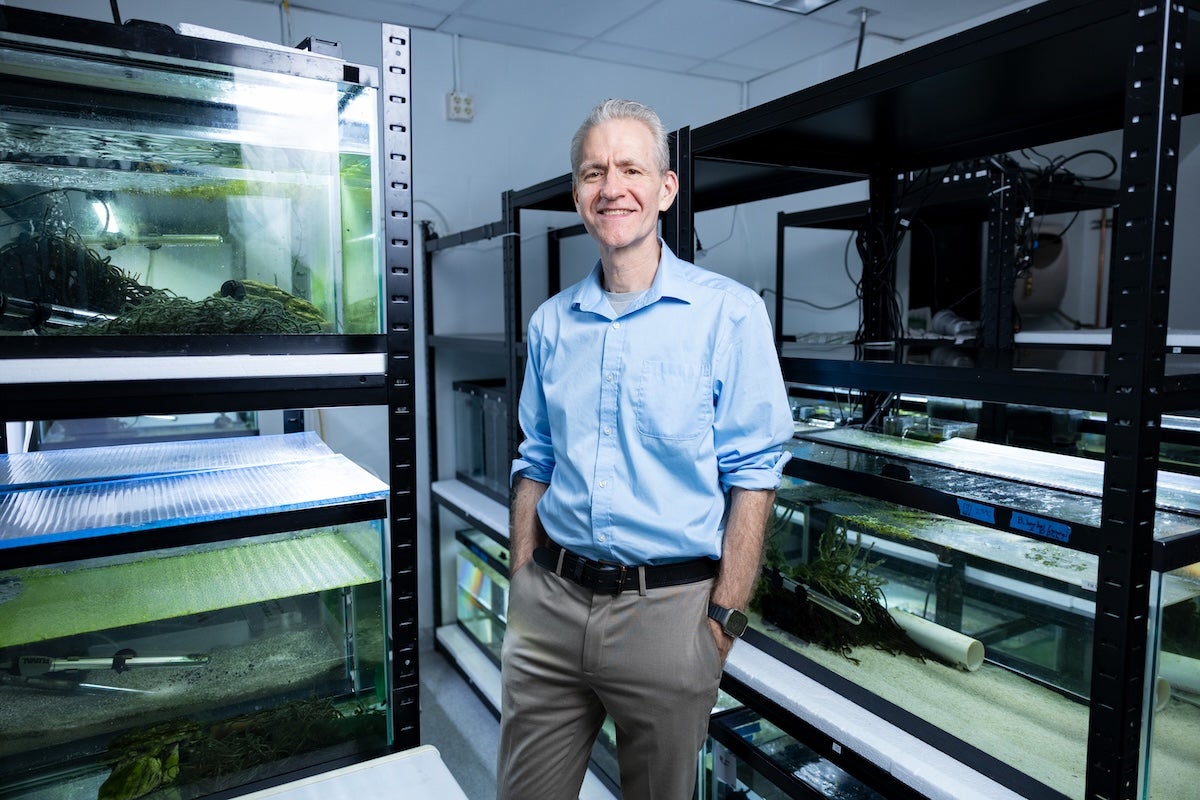
William Crampton
Professor, Department of Biology, College of Sciences
William Crampton’s research on electric fish is revealing extraordinary capabilities — and has even earned a world record.
A leading global authority in his field, Crampton recorded an 860-volt eel in the Amazon Basin, the highest voltage ever documented from a living organism, according to Guinness World Records. His work advances species discovery, documentation, and conservation while revealing principles of biological sensing relevant to radar, sonar, and autonomous sensing technologies.
In a recent study, Crampton and other UCF researchers uncovered how eels and knifefish strategically suppress their electric signals to avoid detection, balancing the need to sense their surroundings with the need to remain concealed. His open-source tools are also expanding how scientists study behavior in natural systems. Crampton’s discoveries have also reached audiences worldwide through major media outlets, including National Geographic.
“His recent work combines innovative discovery, international recognition and exceptional public visibility, producing scholarship that advances knowledge while capturing the imagination of both the scientific community and the public,” UCF Department of Biology Chair Eric Hoffman says.
Alan Fyall
Visit Orlando Endowed Chair of Tourism Marketing, Rosen College of Hospitality Management
Alan Fyall is helping destinations worldwide rethink how tourism can better serve the people who visit and the communities that call them home.
His research addresses destination planning, travel accessibility, resilience, sustainability and tourism’s impact on communities. His appointment to the United Nations Pool of Experts for Global Reporting on the State of the Marine Environment brings UCF expertise into international ocean governance.
An elected fellow and leader with the International Academy for the Study of Tourism, Fyall has advised organizations and governments across Africa, Asia, Europe, the Caribbean and the United States. His scholarship includes eight books, 105 peer-reviewed journal articles and more than 100 conference papers and editorials. The New York Times, USA Today and Forbes have featured his expertise.
“Dr. Fyall’s work connects local relevancy to global impact,” says Rosen College of Hospitality Management Dean Cynthia Mejia. “His research on accessible tourism through mega-events, the well-being impacts of tourism on residents and the vulnerability of coastal destinations to climate disruption is improving how communities around the world plan for and benefit from tourism.”
Ivan Garibay
Professor, Department of Industrial Engineering and Management Systems, College of Engineering and Computer Science
Ivan Garibay is advancing artificial intelligence (AI) to confront challenges ranging from social media misinformation to disease.
He uses AI to model and predict complex human behavior and develops data-driven strategies to counter misinformation and propaganda. This year, he co-founded a biotechnology research company to commercialize AI research aimed at accelerating the search for cures for diseases – an effort supported by a patent filing.
Since joining UCF in 2016, Garibay has secured more than $36 million in research funding and testified before Congress about AI’s challenges and opportunities. The master’s program in data analytics he founded has produced 240 UCF graduates for the workforce.
His work has attracted media attention on four continents, including on NBC’s The Tonight Show Starring Jimmy Fallon. His honors include election as an associate member of the Academy of Science, Engineering and Medicine of Florida.
“[Garibay] exemplifies the externally recognized, world-changing scholarship the Luminary Award celebrates,” says Waldemar Karwowski, chair of the UCF Department of Industrial Engineering and Management.
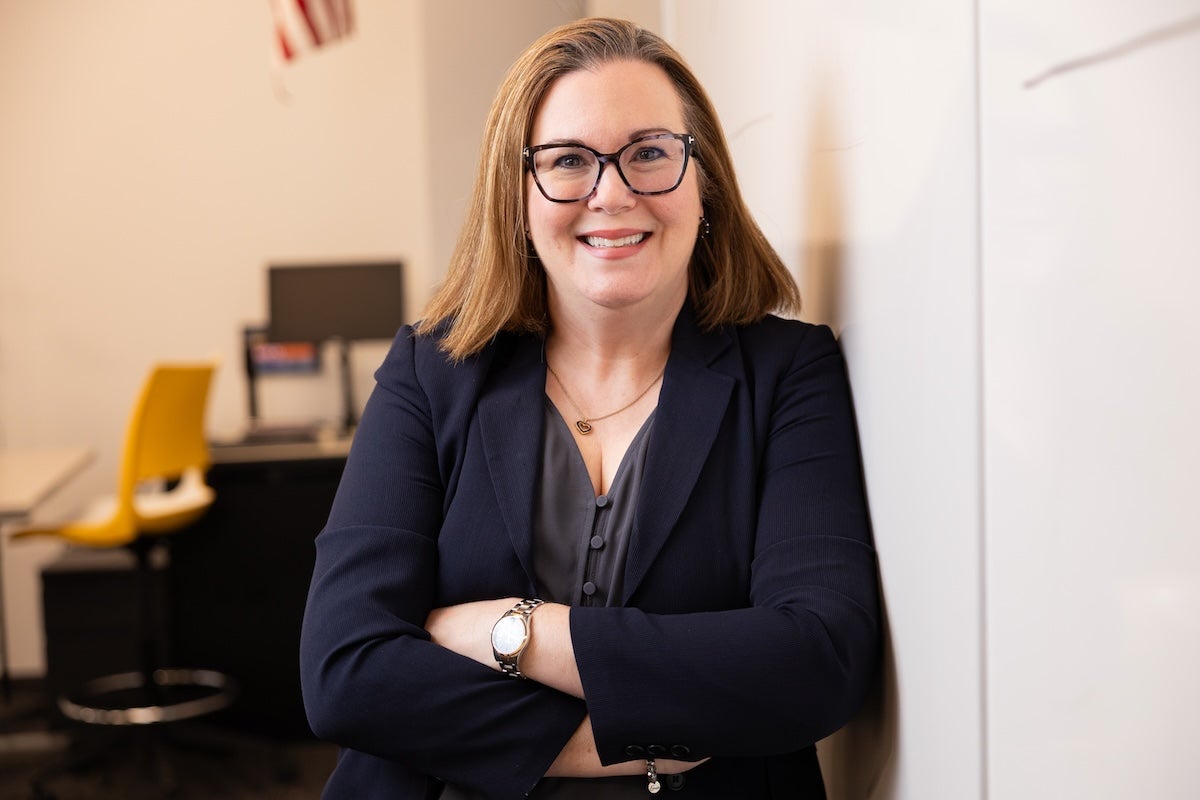
Claire Connolly Knox
Professor, School of Public Administration, College of Community Innovation and Education
Claire Connolly Knox is strengthening how communities prepare for and mitigate disasters, respond when they strike and recover in their aftermath.
Her nationally recognized research connects coastal resilience, emergency management, environmental vulnerability and equitable delivery of public services. Supported by millions of dollars in grant funding, her work informs federal policy, disaster response, emergency management capacity and strategies for building more resilient communities.
As founder and director of UCF’s Master of Emergency and Crisis Management program, Knox also helps prepare future leaders in the field. Her contributions have helped advance UCF’s homeland security and emergency management graduate programs, which U.S. News & World Report ranks No. 1 nationally.
Knox was elected a fellow of the National Academy of Public Administration in 2024 — one of the field’s highest honors — and received the International Association of Emergency Managers’ 2025 Emergency Management Educator of the Year Award.
“Her sustained scholarly productivity, national prominence, public engagement and commitment to addressing complex societal challenges have enhanced UCF’s reputation while advancing more equitable and resilient communities,” says Bradley Heim, director of the UCF School of Public Administration.
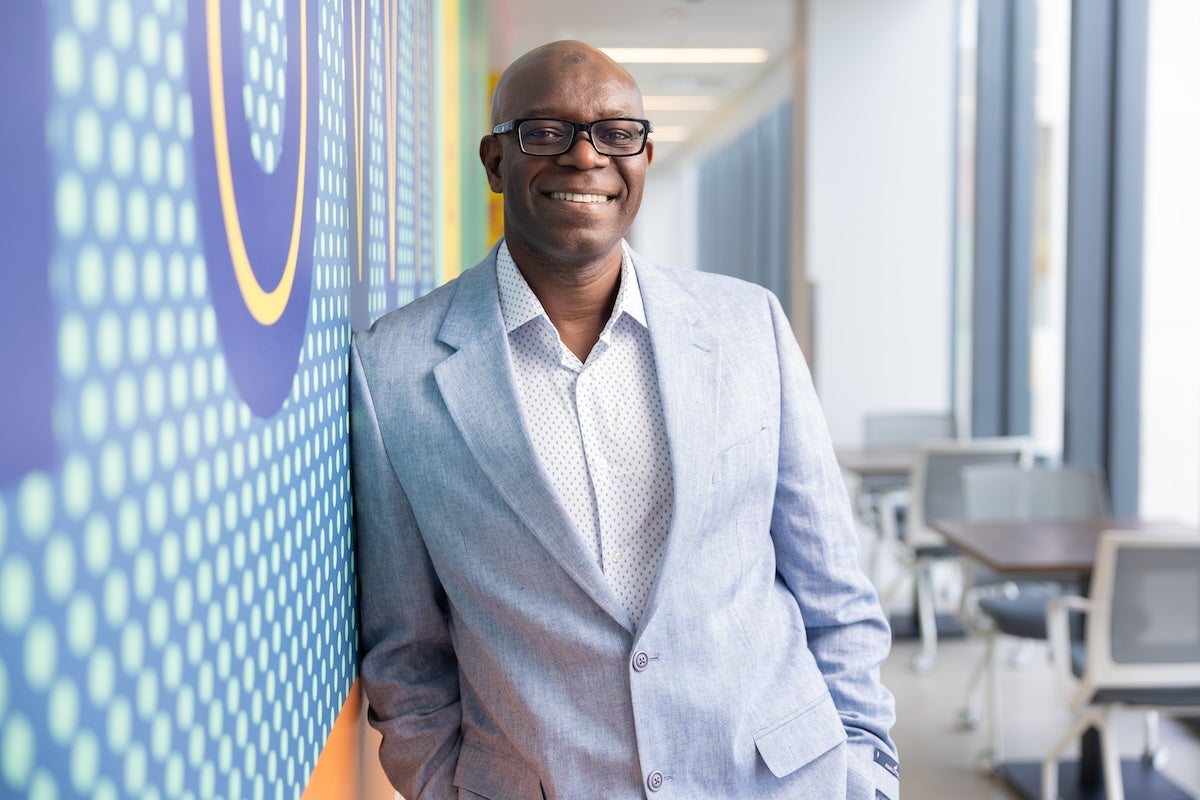
Abdul-Akeem Sadiq
Professor, School of Public Administration, College of Community Innovation and Education
Abdul-Akeem Sadiq helps governments and communities prepare for complex threats while equipping the next generation of researchers to take them on.
His interdisciplinary research spans floods, infrastructure failures, human trafficking and other emerging crises. By examining disaster preparedness, emergency communication systems, organizational mitigation strategies and equitable disaster response, he generates insights that inform public policy and professional practice.
Sadiq also leads a U.S. National Science Foundation initiative to develop future hazards and disaster researchers. He recently brought scholars from across the nation to UCF to strengthen collaboration and workforce development in disaster science. His honors include election as a fellow of the National Academy of Public Administration, one of the field’s highest distinctions.
“Dr. Sadiq has established himself as a nationally and internationally recognized scholar whose research, leadership and public engagement have significantly advanced the fields of emergency management and public administration while elevating UCF’s visibility as a leader in disaster resilience and public service scholarship,” Heim says.
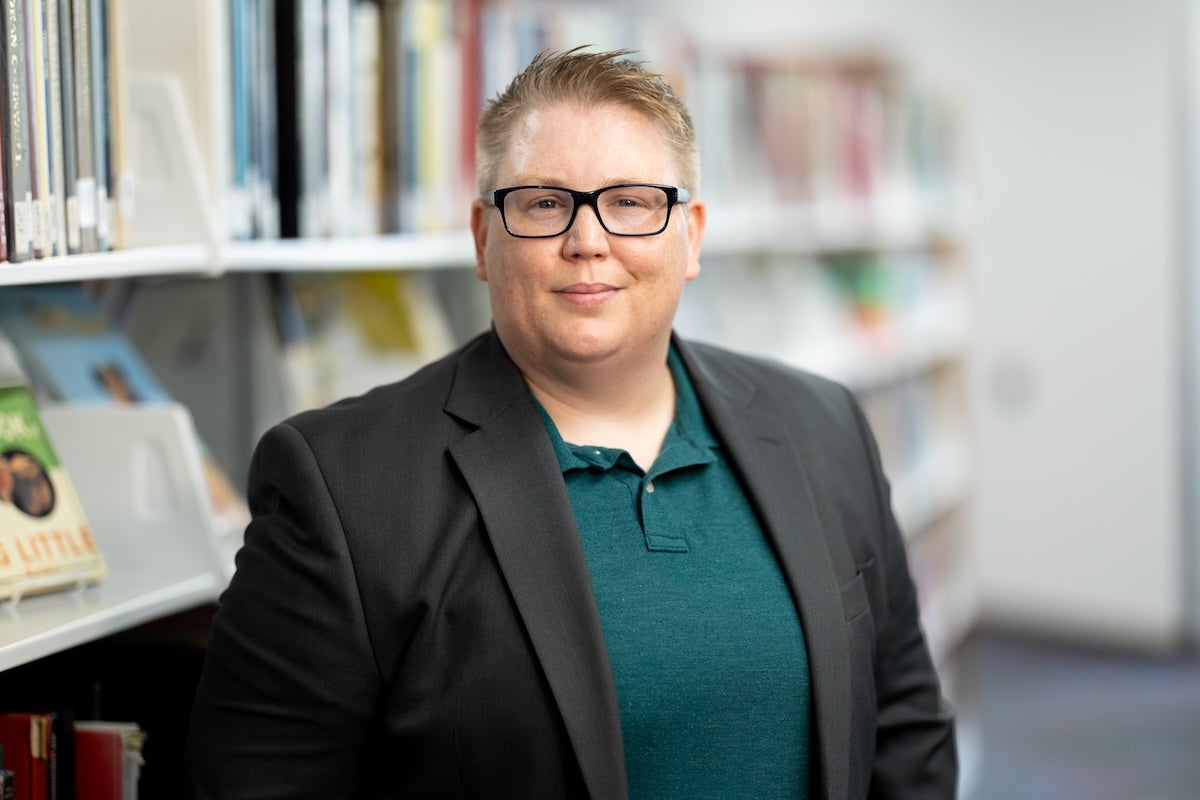
Mel Stanfill
Professor, Texts and Technology Program and Department of English, College of Arts and Humanities
Mel Stanfill brings critical insight to the technologies and online communities reshaping digital culture.
In examining how technology, identity, law and economics influence cultural participation, Stanfill explores fandoms, music, AI, digital games, social media governance, parasocial relationships and more.
Stanfill’s book Fandom Is Ugly: Networked Harassment in Participatory Culture earned the National Communication Association’s 2025 Diamond Anniversary Book Award for its analysis of politics, online communities and harassment.
Stanfill’s expertise has reached the public through commentary for NPR, The Guardian, National Geographic, Forbes, NBC News and Teen Vogue, bringing scholarly insight to contemporary conversations about technology and popular culture.
“Dr. Stanfill has made UCF a national player in the discussion of the cultural effects of technology,” UCF Department of English Chair James Campbell says. “UCF needs to be a place not just where new technology is conceived, but where it is questioned, critiqued, and has its cultural meanings and effects made clear, and Dr. Stanfill is making that happen.”