What is AI in Engineering?
Artificial intelligence refers to computer systems and algorithms that can perform tasks that typically require human intelligence, such as visual perception, speech recognition, and decision-making. In engineering, AI enables computers to help design, optimize, control and maintain complex systems with minimal human input.
AI allows engineers to process and extract insights from massive datasets beyond human capabilities in order to identify patterns, model future outcomes and enhance decision-making. Self-learning algorithms can also facilitate customizable and adaptive solutions that continue optimizing performance in response to new data.
How UCF is Impacting Various Engineering Disciplines with AI

Computer Systems Design and Architecture
Artificial intelligence is changing the design and architecture of modern computing systems, from personal devices to data centers. Self-learning algorithms can now automate and enhance processes that previously required extensive and tedious human effort.
For example, AI techniques in electronic design automation, like reinforcement learning and neural architecture search, enable optimized computer chip layouts catered to specific performance criteria and manufacturing constraints. This allows much more rapid prototyping.
Additionally, AI facilitates self-optimizing computing architectures that continuously adapt to evolving user needs and workload demands. Known as adaptive computing, this approach implements techniques like predictive load balancing, just-in-time compilation and dynamic resource allocation to maximize efficiency.
Ronald DeMara, a Pegasus Professor in UCF’s Department of Electrical and Computer Engineering, specializes in optimizing computer system design and architecture through AI and machine learning. His research focuses on the intersection of circuits, computer architecture and new devices.
Specifically, DeMara is exploring the use of a new type of device called a “probabilistic bit” for low-power computing applications like Internet of Things (IoT) devices. The probabilistic bit is based on a spintronic device called a spin hall effect magnetic tunnel junction. It has a tunable threshold that allows the switching behavior to be tuned electrically without having to fetch instructions or data from memory, reducing energy consumption.
DeMara aims to use these probabilistic bit devices in analog computations to replace traditional Boolean circuits with floating point data paths. This could enable simpler, lower wiring count and more robust circuits that can handle intermittent power sources. He is developing simulations and architectures that use these devices in applications like handwritten digit recognition for edge computing.
His goal is to minimize resource usage so these computing paradigms are suitable for small, inexpensive IoT devices. The pioneering research aims to push the limits of CMOS scaling and enable intelligent edge computing through energy-efficient analog computing approaches.
Bioengineering and Computational Modeling
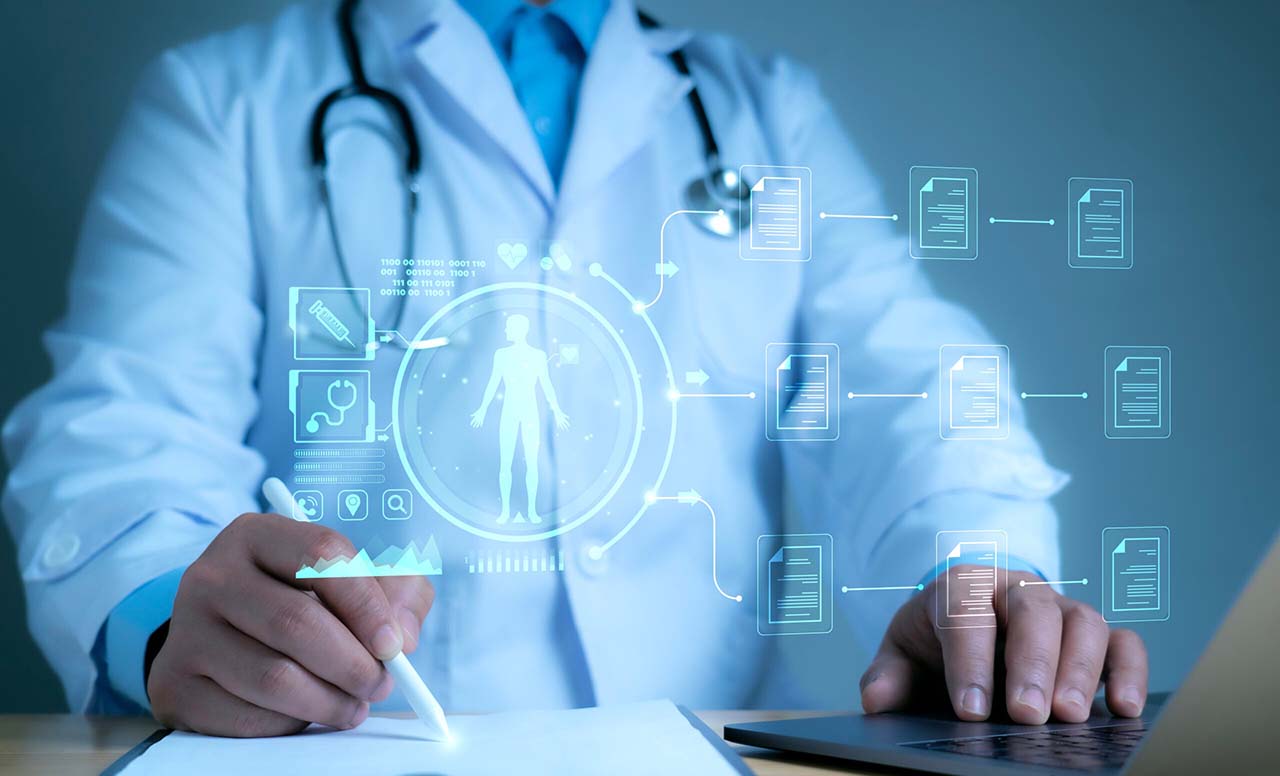
In bioengineering, artificial intelligence is proving pivotal in analyzing massive, multidimensional biological datasets to reveal insights for advancing personalized medicine, medical devices and clinical diagnostics.
For example, AI techniques help construct highly detailed computational models that accurately simulate cardiovascular function and disease progression in digital twins. Researchers then utilize these models to customize treatments and predict outcomes based on a patient’s unique physiology.
Self-learning algorithms are now capable of solving complex problems that have long hindered traditional computational methods, presenting opportunities to enhance efficiency, sustainability, automation and innovation across industries.
Additionally, machine learning algorithms can process anatomical scans and biomarkers to rapidly diagnose conditions, identify optimal drug regimens, or design tailored medical devices like stents and prosthetics. AI is also speeding up screening of new pharmaceutical compounds.
At UCF, Alain Kassab is a Pegasus Professor, trustee chair professor, and the biomedical engineering program coordinator. His lab specializes in modeling cardiovascular systems and congenital heart diseases.
Specifically, Kassab develops physics-based and data-driven computational models that provide personalized predictions to improve clinical treatments. His models provide insight into blood flow, pressure distribution and other key parameters.
By combining clinical data with the physics of physiology, Kassab’s AI-enhanced modeling enables accurate surgical planning, device deployment optimization and therapy customization to reduce adverse outcomes in patients with complex heart conditions.
Digital Twin, Virtual Reality, Augmented Reality and Interactive Visualization
Artificial Intelligence is revolutionizing simulated environments by introducing physics-based behaviors, predictive analytics, and interactive responses that far surpass scripted systems. This transformation is enhancing extended reality (XR) applications across training, design and more.
For instance, AI gives digital twin simulations the ability to mirror real-world systems in action, forecast future outcomes and dynamically adapt to changes. This provides invaluable analytics for complex processes like smart cities and supply chains. In augmented and virtual reality, AI facilitates multi-sensory environments with near-natural physical and behavioral properties for immersive experiences.
At UCF, Carolina Cruz-Neira serves as Agere Chair Professor and a pioneer in XR technology. Her Synthetic Reality Lab focuses on AI-enhanced simulations and interactive visualizations for experiential learning.
Her research sits at the intersection of virtual reality, visualization, interactive technologies, applications and hardware infrastructure when needed. She collaborates extensively with government and industry partners to develop prototype solutions with tangible deliverables. Some examples include VR welding simulators, field engineering training, interactive anatomy visualizations, and rapid scenario generation for military training.
Currently, Cruz-Neira is focused on bringing social interaction and teamwork elements into VR/AR and understanding how these technologies can be tailored to users’ specific roles within an application. For example, the same medical visualization app would be presented differently to a classroom of students versus a practicing surgeon.
By mirroring complex natural phenomena, AI stands to unlock unprecedented applications for extended reality technology across industries and UCF aims to remain at the frontier advancing what is possible.
Brain-Machine Interfaces and Robotics
Artificial intelligence is driving remarkable progress in both neural interfaces that connect the human brain to computers, as well as robotics–the development of machines that can assist humans by operating with increased autonomy in the real world.
In brain-computer interfaces, AI analyzes neurological signals to interpret a user’s intended movements. This allows more seamless control of assistive devices like motorized wheelchairs or bionic limbs using one’s mind. AI also facilitates two-way communication for sensory feedback.
Likewise in robotics, deep learning algorithms empower machines to perceive, adapt to, and navigate within complex environments without explicitly programmed instructions. This allows advanced applications like warehouse automation, precision agriculture, elderly assistance, and automated vehicles.
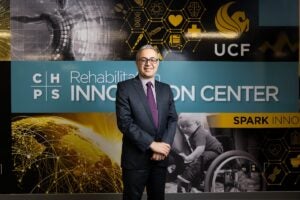
At UCF, Assistant Professor Mohsen Rakhshan specializes in leveraging AI to decode brain activity and control assistive devices. His Computational Neurophotonics Lab develops noninvasive, wearable systems that measure neurological signals to drive wheelchairs, computer cursors, robotic limbs and other rehabilitative technologies.
By detecting activity across networks of neurons, AI enables fast, accurate interpretations of a user’s movement intentions. It also facilitates more naturalistic touch and proprioceptive feedback for enhanced usability. Rakhshan’s team works closely with local clinicians to optimize neural interface technology for those with mobility impairments.
UCF’s research demonstrates how the powerful combination of artificial intelligence with biotechnology and robotics promises to strengthen symbiotic relationships between humans and machines.
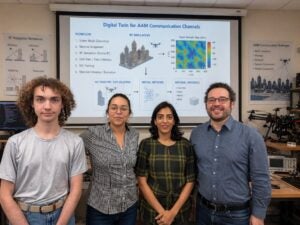
Signal Processing, Telecommunications, and Wireless Networking
Artificial intelligence is driving major advancements in how data is processed, communicated, and transmitted across telecommunication networks. By enabling real-time analytics and automation, AI techniques like machine learning improve network efficiency, reliability, security and latency.
For example, AI facilitates adaptive signal processing that optimizes data transmission in response to live network conditions. This allows wireless systems to dynamically adjust frequencies, power levels and communication protocols to reduce interference and boost throughput.
Additionally, neural networks analyze network traffic patterns to identify security threats, prioritize sensitive applications and prevent outages. AI also provides self-healing capabilities to automatically mitigate issues and reroute packets along alternate pathways when disruptions occur.
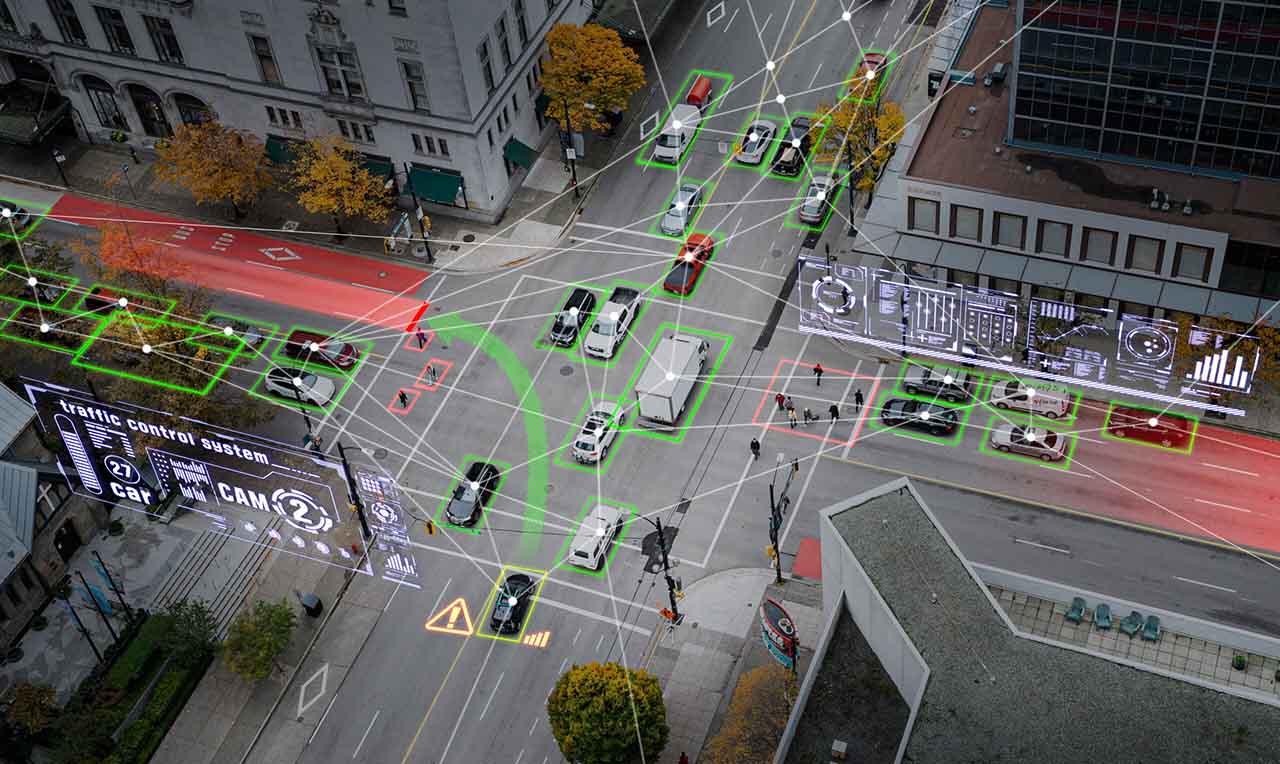
At UCF, Yaser Fallah specializes in enhancing wireless connectivity for autonomous and connected vehicles through artificial intelligence. His lab focuses on cooperative AI for autonomous vehicles, which involves learning-based perception and decision-making/planning for automated driving.
The goal is to enable vehicles to share information over wireless networks to augment each other’s perception of the environment. His team has developed “cooperative cognition” algorithms that allow neural networks across different vehicles to work together to detect objects.
His team also works on vehicle-to-vehicle and vehicle-to-infrastructure communication to enable advanced driver assistance systems. They have contributed algorithms that have been adopted into vehicle communication standards used by major automotive manufacturers.
A key focus area is developing “altruistic cooperative driving” where autonomous vehicles are considerate of human drivers and can cooperate with them. His team uses reinforcement learning to train vehicles to demonstrate helpful behaviors like slowing down to allow merging. The goal is safe and efficient cooperative autonomous driving.
As urbanization escalates globally, UCF aims to remain at the forefront of developing artificial intelligence to enhance future telecommunication networks. AI promises to unlock unprecedented levels of speed, reliability and efficiency.
What’s Next in Artificial Intelligence?
As artificial intelligence continues its monumental impact across every engineering discipline imaginable, the University of Central Florida remains committed to pushing the boundaries of what is possible.
Through multidisciplinary partnerships across its computing, engineering, optics and healthcare programs, UCF aims to continue spearheading AI innovations that make systems smarter, processes more efficient, designs more optimized, machines more autonomous and lives more enhanced.
Artificial Intelligence News