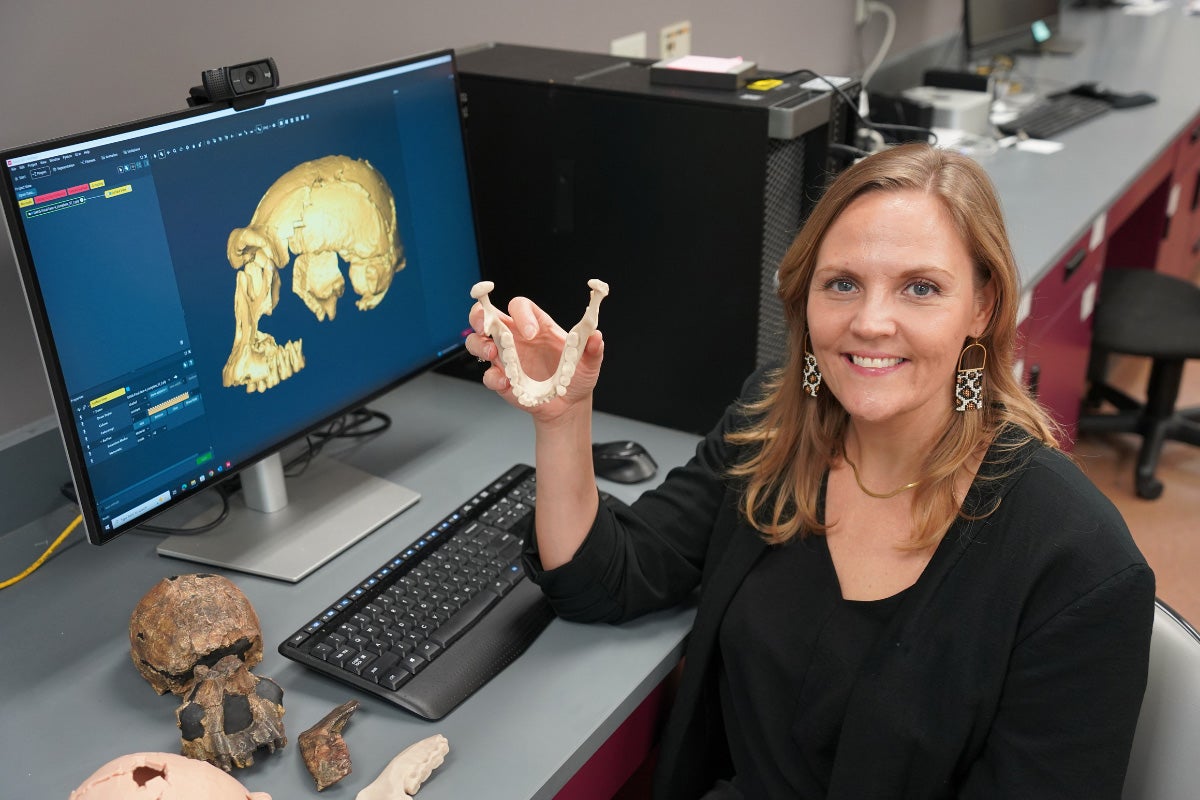
For over a century, scientists have searched fossil records for clues to how early human ancestors evolved, migrated and separated across Africa and beyond. Today, researchers such as Sarah Freidline, an assistant professor in the UCF Department of Anthropology, are revisiting those clues with new insights and advanced imaging techniques.
In two recent studies, Freidline and her collaborators analyzed evidence from fossil sites in eastern and northwestern Africa, revealing surprising findings of early human evolution dating back nearly 1.5 million years. While both studies focus on describing fossil remains and understanding their place in human evolutionary history, Freidline, a co-author of the studies, says each addresses different questions and regions.
Uncovering the Unexpected
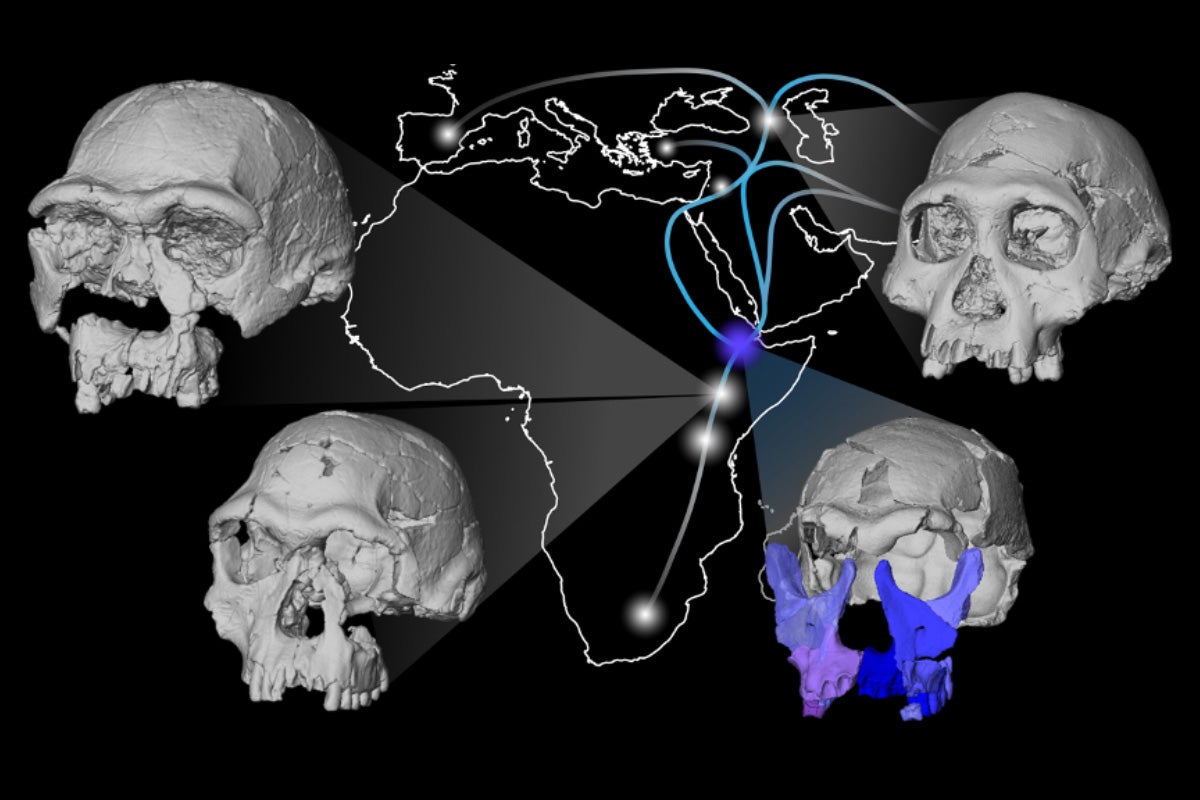
The first study, published in the Nature Communications journal and led by Karen Baab of Midwestern University, revisits DAN5, a nearly 1.5-million-year-old Ethiopian fossil belonging to the extinct human species Homo erectus—Latin for “upright man.” This species is recognized as the first to have a more human-like body plan, walk fully upright, and migrate from Africa into Asia and Europe.
Originally described in 2020, the new study expands earlier work on the braincase by examining the fossil’sfacial bones and teeth, which had not previously been fully analyzed. Using advanced imaging techniques, the research team digitally reassembled fragments of the face and teeth to reconstruct the most complete Early Pleistocene human cranium from the Horn of Africa.
“The reconstructed fossil revealed a surprising mix of traits, including a face and teeth that appear more similar to earlier species like Home habilis,” Freidline says.
As a biological anthropologist specializing in paleoanthropology, she says that these findings were unexpected because other African Homo erectus fossils from the same time period, particularly from Kenya, show more “classic” H. erectus morphology.
“DAN5 blurs the line between Homo habilis and Homo erectus,” Freidline says. “Our findings suggest that early Homo erectus populations were more anatomically varied than previously thought and may have retained features from earlier ancestors even after dispersing across Africa and Eurasia.”
The second study, published in the Nature journal and led by Jean-Jacques Hublin of the Collège de France, shifts the focus north to Morocco, examining fossils from Grotte à Hominidés — French for “Hominid Cave” — at Thomas Quarry I, a significant cave system and paleoanthropological site near Casablanca dated to approximately 773,000 years ago.
“The fossils include well-preserved mandibles, teeth and postcranial remains that, in some respects, are unexpectedly gracile and derived — in contrast to typical Homo erectus and the European species Homo antecessors dated to the same time period — likely representing an African population closely related to Homo sapiens,” Freidline says.
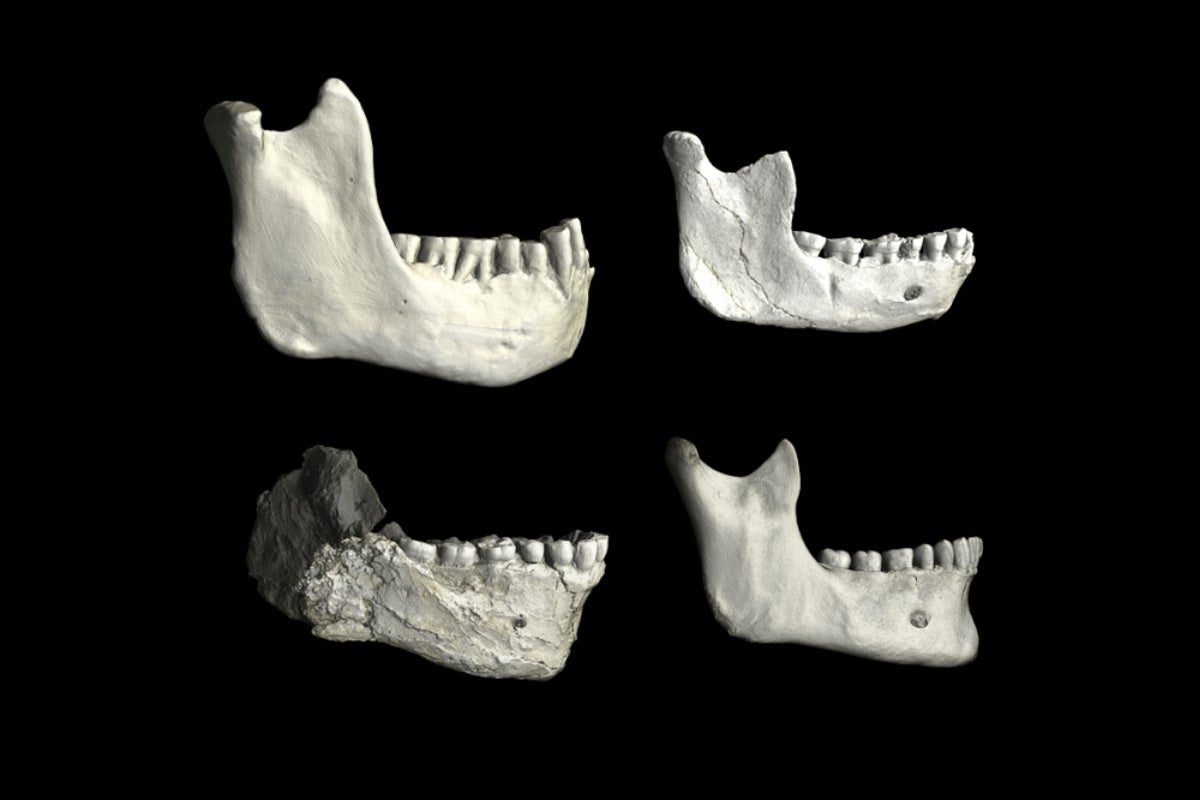
Until now, fossils from Spain’s Atapuerca region were considered the earliest evidence of traits linked to Homo sapiens. The Grotte à Hominidés fossils suggest a possible evolutionary connection to the earliest known Homo sapiens from Jebel Irhoud, dated to about 315,000 years ago.
According to Freidline, North Africa has been overlooked in the fossil record. The Sahara was not always a barrier. During repeated “Green Sahara” phases over the past several hundred thousand years — including periods relevant to Homo erectus and the emergence of Homo sapiens — the region became wetter and habitable, enabling movement and gene flow. The most recent phases occurred between approximately 15,000 and 5,000 years ago.
“These fossils are dated very precisely to a critical time near the split between Homo sapiens and the Neanderthal and Denisovan lineage,” she says. “They are an evolved form of Homo erectus, showing a mosaic of archaic and derived traits while lacking characteristics typical of Neanderthals.”
Together, the two studies challenge the idea of a simple, linear path in human evolution, instead pointing to a long history of various and overlapping populations across Africa.
“Even though both fossils are separated by hundreds of thousands of years, they reveal unexpected combinations of traits that suggest early human evolution was shaped by regional evolution, migrations and interactions,” Freidline says. “Africa wasn’t just the birthplace of early humans, but a place where multiple populations coexisted and evolved in different ways.”
Advanced Imaging Reveals Hidden Details
Unlocking the new findings required more than fossils alone. Both studies relied on advanced technologies such as micro-CT scanning, digital reconstruction and comparative anatomical analysis, including geometric morphometrics, to extract new information from fossil fragments.
“For the DAN5 fossil, the facial bones were fragmented, so we used CT data to virtually reconstruct the face, fitting the pieces together like a 3D puzzle,” Freidline says. “Once reconstructed, I applied geometric morphometrics to capture subtle shape differences to compare fossils across time and geography without size bias.”
In Morocco, magnetostratigraphic dating provided one of the most secure timelines for any African Pleistocene hominin assemblage, while virtual reconstruction techniques allowed scientists to visualize fossils that couldn’t be physically reassembled.
Freidline’s application of cutting-edge methods, including geometric morphometrics, has deepened our understanding of how the skull and face developed and changed over time in fossil human ancestors.
“Traditional methods to analyze fossils rely heavily on linear measurements, like length and width, which are useful but limited,” she says. “Geometric morphometrics allow us to isolate shape independently of size, which is crucial when comparing fossils of different sizes.”
Freidline says this method has become the standard in paleoanthropology over the years, but it remains a specialized skill set requiring advanced software and programming. She brings this expertise to both her research and teaching at UCF.
Where Discovery Leads Next
Looking ahead, researchers hope to compare the Ethiopian and Moroccan fossils with other early human remains from Africa and Europe to better understand how ancient populations were related and how traits were passed on over time.
“There’s still a lot we don’t know, and every new fossil has the potential to change the story,” Freidline says. “Additional fossil discoveries may further clarify how these populations interacted, adapted, interbred and evolved.”
For Freidline, this research has been professionally and personally meaningful.
“I’ve been interested in evolution, history and archaeology since I was a child, and my curiosity about paleoanthropology evolved when I was introduced to it in college,” she says. “That experience opened the door for me to study human evolution through fossil remains and to ask big questions about how, when and where humans evolved, helping us better understand our deep history.”