Highlights
-
Two-time UCF electrical engineering graduate Matthew Montgomery ’08 ’09MS is one of four crew members selected for NASA’s Crew Health and Performance Exploration Analog (CHAPEA) — a series of analog missions that simulate long-duration stays on the surface of Mars.
-
From Oct. 19, 2025, through Oct. 31, 2026, the crew is living in a 1,700-square-foot, 3D-printed habitat to test how people could live and work on Mars.
-
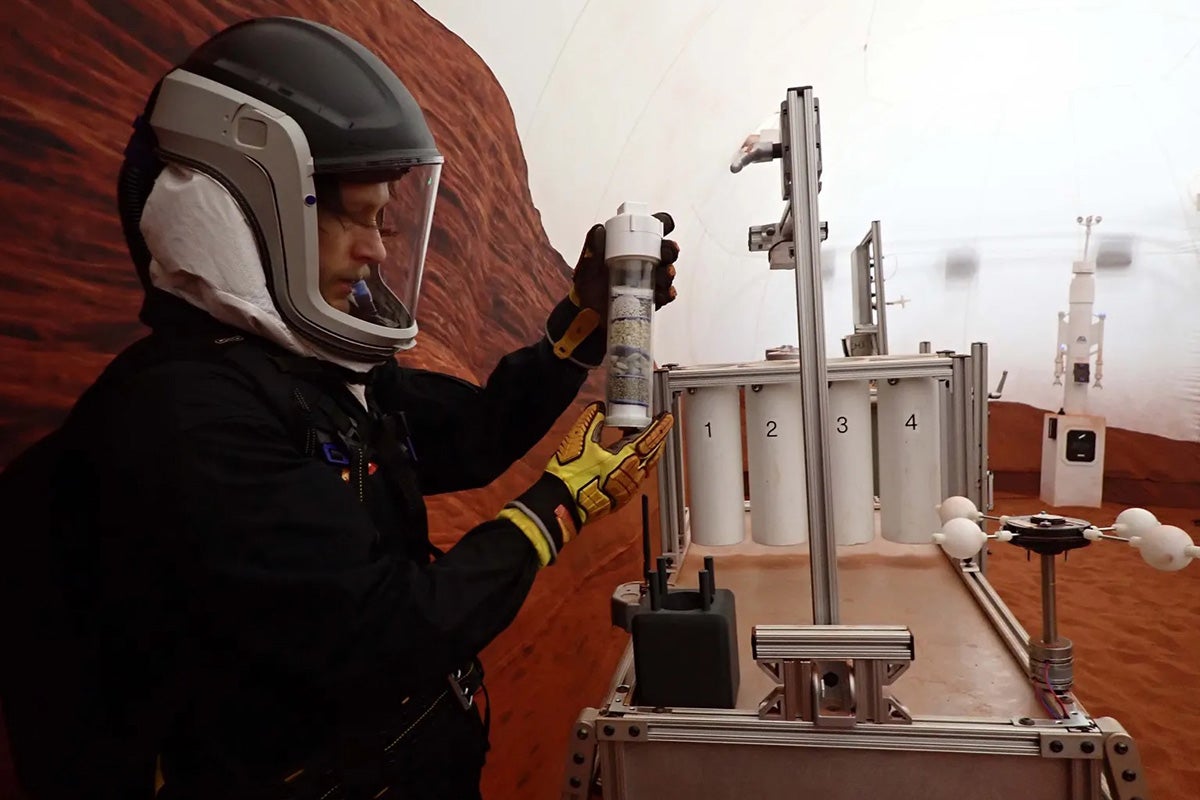
The crew’s primary projects included simulated spacewalks with and without virtual reality, navigating time-delay communications, crop growth, meal preparation and consumption and data collection for exercise, hygiene activities, maintenance work, personal time, science work and sleep.
Landing humans on the moon was just a dream when UCF was founded in 1963. But we dared to believe — developing the talent and inventing the technologies to make it reality. That same spirit still drives us today.
We are America’s Space University. And we celebrate UCF Space Week to honor our origin as we dare to build what’s next.


Where Global Leaders Unite to Forge the Future of Space
While taking a break from his job responsibilities on “another planet,” Matthew Montgomery ’08 ’09MS settled in for some light reading: The Handbook of Space Resources. Curious about the authors’ backgrounds, he flipped through the contributors list.
The two-time UCF electrical engineering alum couldn’t help but smile when he spotted two familiar names: acclaimed UCF planetary scientists Daniel Britt and Phillip Metzger ’00MS ’05PhD.
Even on a mission to “Mars,” UCF was right there with him.
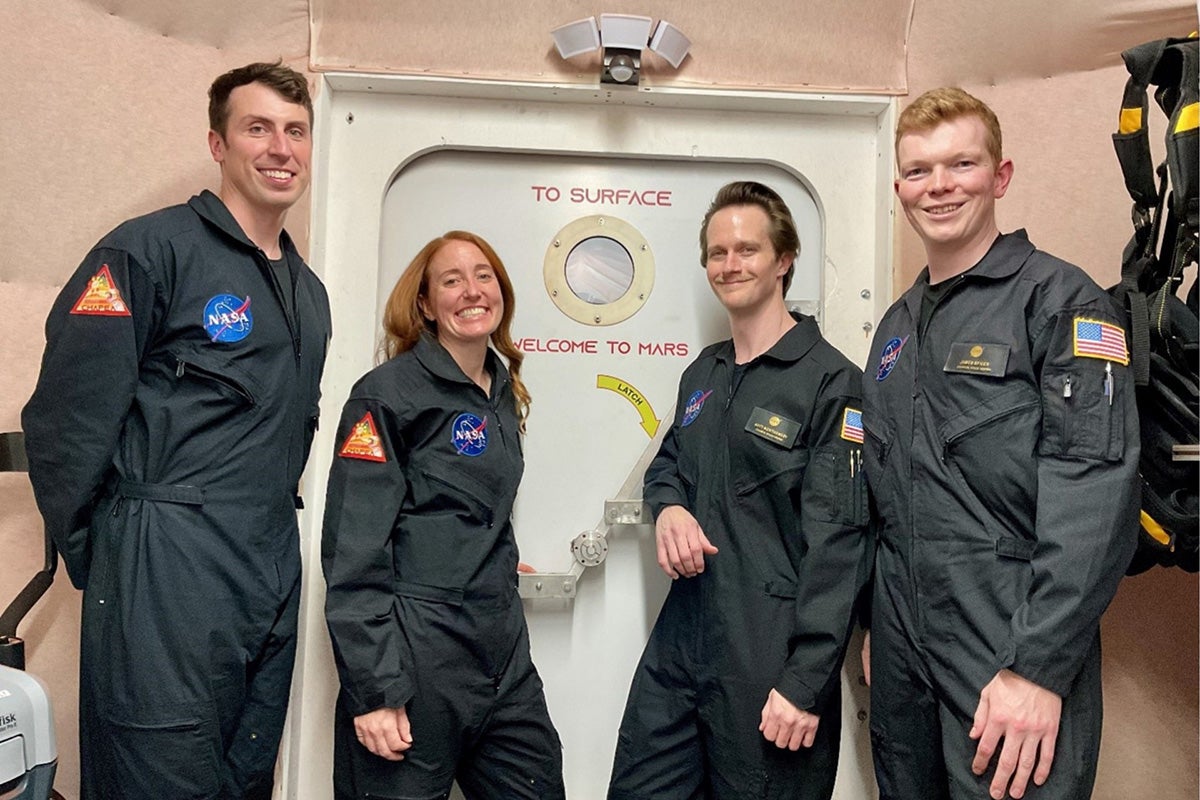
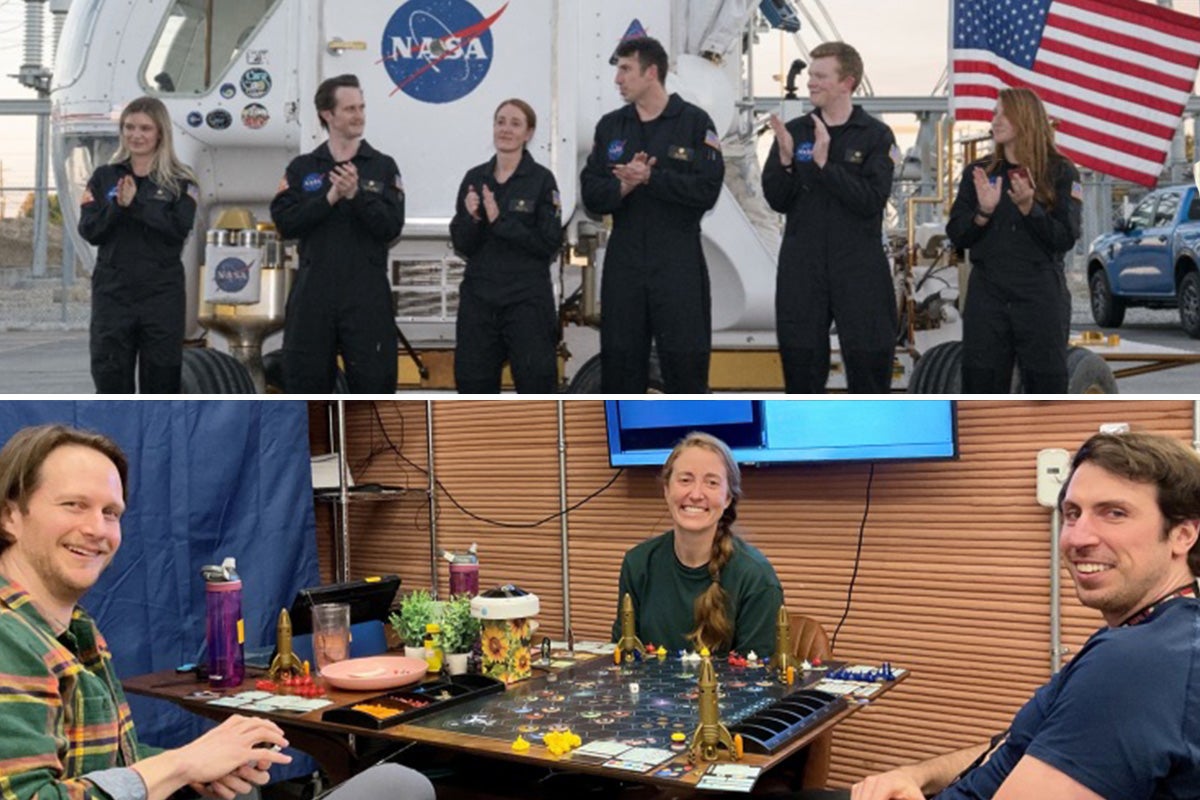
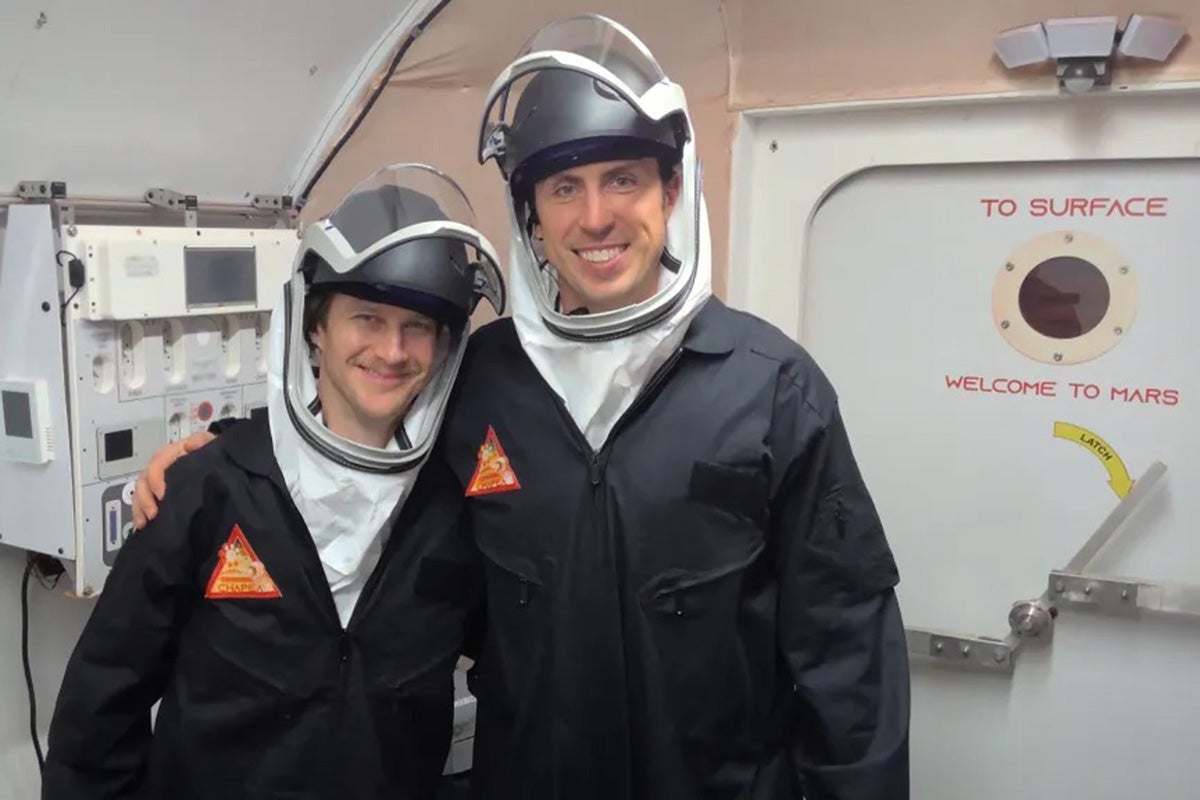
On Oct. 19, 2025, Montgomery entered a 1,700-square-foot, 3D-printed habitat at NASA’s Johnson Space Center with three crewmates for NASA’s Crew Health and Performance Exploration Analog (CHAPEA). Together, they’ve simulated living on Mars, conducting research and collecting data as if they were 140 million miles from Earth.
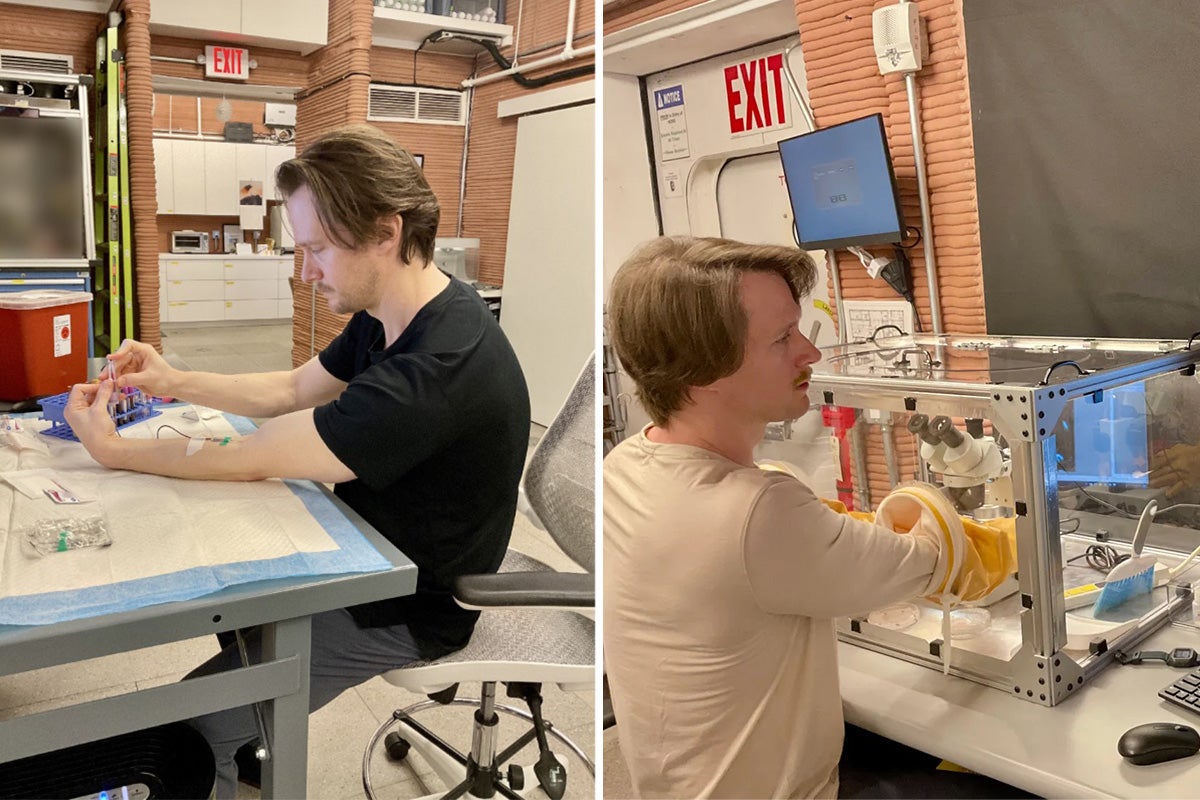
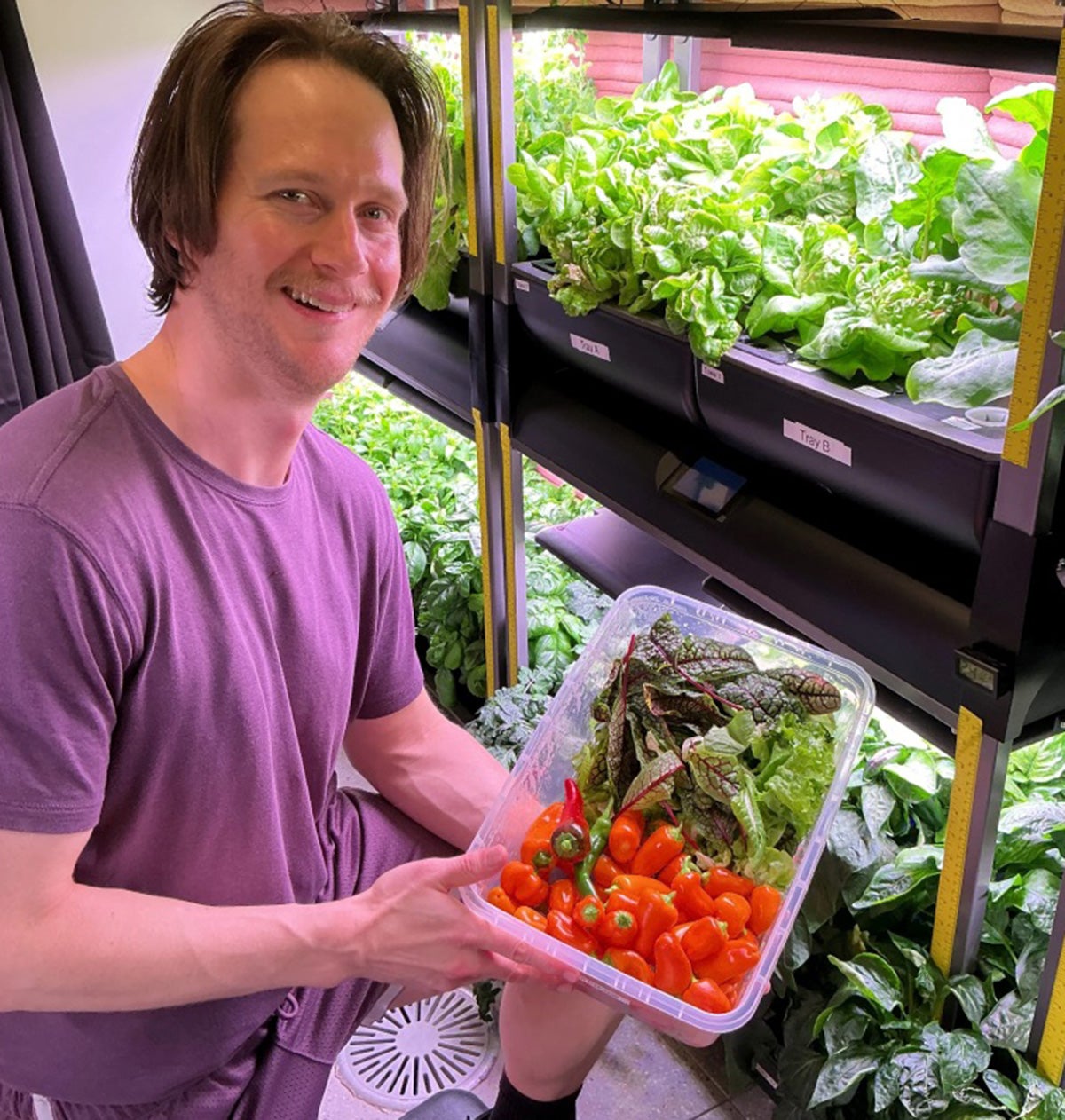
Their work includes spacewalks with and without virtual reality, time-delayed communications, crop growth, meal preparation and consumption, exercise, hygiene activities, maintenance work, personal time, science work and sleep — all to help prepare for future missions.
The 39-year-old isn’t a trained astronaut or a NASA scientist. After an 18-month application and screening process, being selecting to volunteer for this mission meant stepping away from his loved ones and Floating Lava Studios, his Los Angeles-based film production company, for more than a year.
He cultivated the skills that helped him land this gig, in part, at UCF.
An Orlando native, Montgomery enrolled through an early admission program while still a senior at nearby University High School. As a Burnett Honors Scholar, he immersed himself in research opportunities and lab work while earning his bachelor’s and master’s degrees in electrical engineering.
“UCF provided me the technical foundation to get where I’m at,” Montgomery says. “I think engineering is one of the best undergraduate degree programs that anyone can pursue. Foundationally, it teaches you problem-solving skills that can be broadly applied to almost anywhere you go. I also learned solid research principles, and lab work was critical. You need both sides. There’s a lot of opportunity (at UCF). I’ve taken a more entrepreneurial approach (in my career), and I think UCF really sets you up for that.”
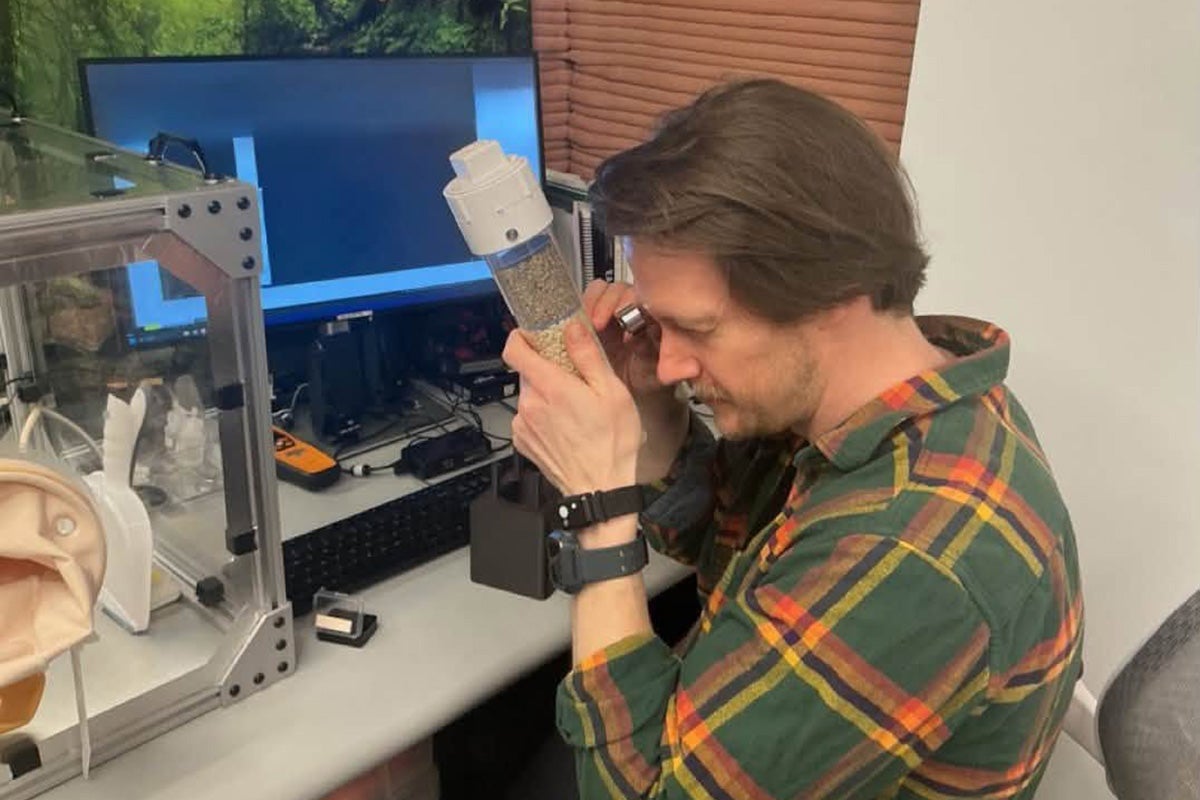
As CHAPEA’s science officer, Montgomery draws on his engineering background to contribute expertise in LED lighting, robotics, controlled environment agriculture and embedded control systems.
Ahead of the mission’s scheduled Oct. 31 conclusion, Montgomery answered questions via video about life inside the habitat — and what it could mean for humanity’s future beyond Earth.
A Glimpse of Life on Mars
Why did you say yes to this mission?
When I read through the application, I really felt meant for this mission. It comes down to a simple answer: The researchers asked for help, and they had a worthy cause.
I think there’s a powerful lesson and reminder in there — when you’re pursuing lofty goals or reaching for the stars, you do need support. All you need to do is communicate your vision and ask for help. When you do, people show up and support you.
What does a routine day look like?
Our day-to-day life is similar to astronauts on the International Space Station and representative of what will be expected of Mars-surface astronauts: drone and rover operations, exercise testing, bio collections. Each day has a mix of standard items — resistance or cardio exercise, science and experiment work, crop care, maintenance, ensuring you get your daily caloric intake goals met.
We also perform spacewalks, or extravehicular activities, in two forms: virtual reality (VR) or non-VR.
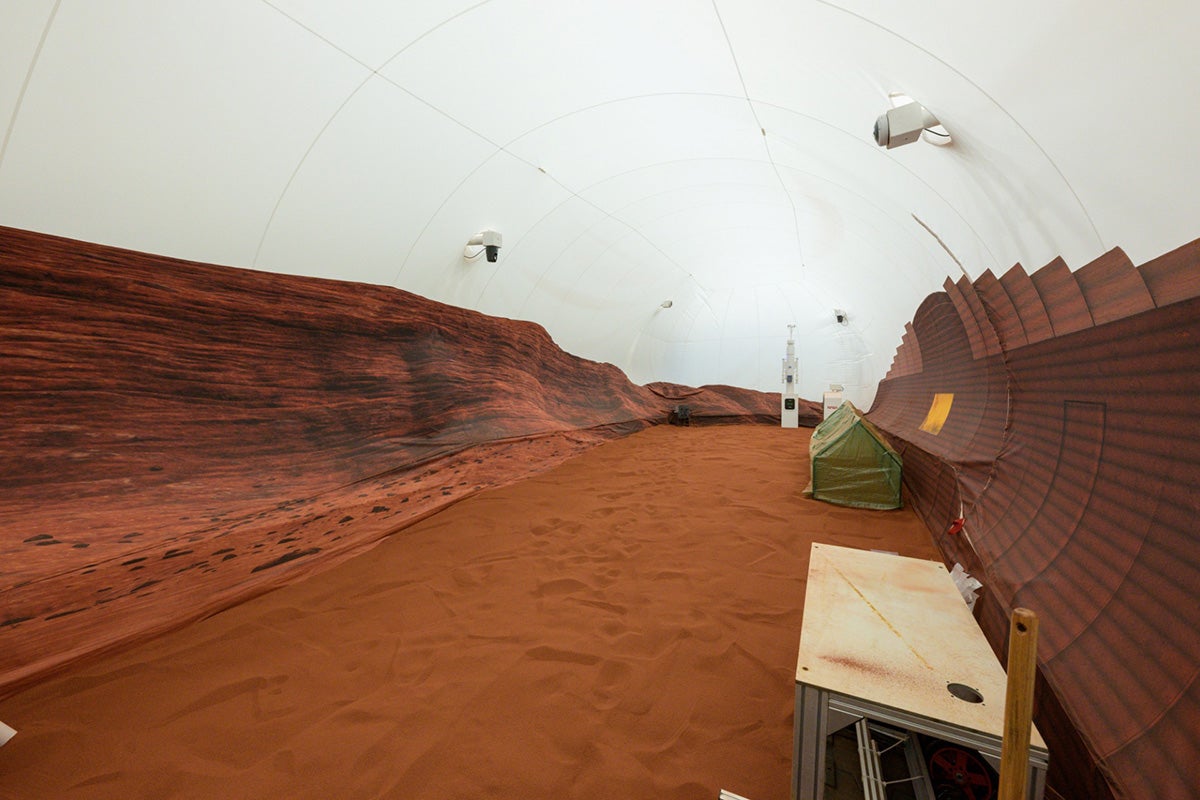
Outside the airlock, we have a simulated Mars surface with red regolith simulant. During non-VR spacewalks, we participate in surface equipment checks, maintenance, infrastructure builds, and a lot of science and geological-type tasks.
On VR spacewalks, we put on headsets and use treadmills that allow us to traverse much larger distances. Compared to the International Space Station, you might be doing spacewalks every day on Mars, and that tempo is something NASA isn’t used to. We need to gather data: Does that tempo start to affect cognition or physical performance?
When you are on the surface of these more remote environments, you’re going to want to use that time to not only survive, but gather data and increase the body of scientific knowledge.
How well did you pack for 378 days?
I consider myself a light packer, and I’ve learned you really don’t need a whole lot to get by. That way of life translated well into the mission.
I did bring some comforts. I’m glad I brought a buckwheat pillow. I find them really comfortable, especially when they’re broken in. I brought a good pair of headphones and a set of spudger tools.
We packed quite a few books. We have a nice library of music and movies. Owning a production company, I really enjoy film, and members of the crew are film fans, too. It’s been something we’ve bonded over.
I wish I had brought a small mirror for my room. One of the other crew members brought high-quality microphones we could plug into different devices. It’s contributing to this interview.
In the end, there are four of us. When we come together, we have quite the spread and our bases covered.
How do you hope this mission will advance space exploration?
A lot has to come together to advance space research. The technical side is probably thought of first, but an important piece is the human aspect.
An important aspect of our mission is time-delayed communication. That’s something NASA has limited experience with but is looking to gain through experiments like this.
If we think about the ISS or the moon, they’re relatively close to the Earth, and [communication] is nearly instantaneous. But as we push farther out to Mars, that distance gets quite long. We have no [option for] instant [communication] like a phone call or video chat. A lot becomes written, and we have to account for the time it takes to send messages and receive responses.
Ultimately, all of this will hopefully create new processes, procedures and plans for surface missions where mission control isn’t quite as integrated with the crews.
What have you learned about yourself during this mission?
I should give myself a little grace and have a short memory. I’m driven to strive for really high-performing outputs, but in complex situations, especially on long-duration missions, you’re going to make mistakes and things aren’t going to go as planned. You need to assess those accurately, learn the lesson and move on.
The good part about a long-duration mission is there’s usually an opportunity to give something a go again. There’s a little comfort in that.
I’ve also learned I should trust myself a little more. When something doesn’t feel right or I’m feeling [drawn to] a particular course of action, I should dive in and pinpoint where that’s coming from. A few [times during] this mission, [doing that has] led to better outcomes.
What advice do you have for future Mars explorers?
Acquire a broad set of skills. I’m continually impressed by the crew’s breadth and depth of knowledge. When it’s just the four of you and you have to rely on yourself and each other, having that broad set of skills is incredibly important. You’ll be the ones solving problems, and that could be the difference between life and death and the success of the mission.
Foster a deep sense of inquisitiveness. You need to be present. Being [observant] might lead to new discoveries. It might also lead to preemptive measures that help your safety and success.
Check everything. That’s both good for data and good for safety.