

The human body starts recalibrating as soon as it enters microgravity, because it’s no longer working against weight to function. Earth’s gravity applies a constant load to the skeleton, and without that load the body settles into a different balance.
Understanding these shifts is hard because so few people have flown, which keeps the research sample small. Every mission doubles as a study.
The stakes rise with distance. A mission to Mars would keep astronauts in space for roughly 900 days, far longer than anyone has spent away from Earth’s protection.
The Short Version
- Bone thins 1% to 1.5% a month, against 0.5% to 1% a year for aging adults on Earth.
- Muscle atrophies without the load of gravity to work against.
- Fluid shifts toward the head, causing puffy faces and swelling at the back of the eye in 70% of space station crews.
- Blood and immunity change: clotting behaves differently and dormant viruses can reactivate.
- Cells show signs of aging within 24 hours of radiation exposure.
- Radiation climbs sharply once a crew passes beyond Earth’s magnetic field.
What Happens to Your Body in Space?
Space travel pushes blood and cerebrospinal fluid toward the head, and that single shift drives many of the other health effects. There’s no gravity pulling fluid down, so it collects upward. The result is puffy faces, and the brain physically shifting inside the skull.
Physicians organize the health effects of spaceflight into a set of medical priorities. Those categories are the working map of the field:
- Radiation exposure
- Eye health and vision
- Space motion sickness
- Bone loss and muscle health
- Mental health and team dynamics
What does launch feel like?
At UCF’s Star Nona 2026 event, a research event to explore how space medicine and commercial space flight are transforming the future of human health, NASA astronaut Robert Curbeam, who holds the record for the most spacewalks on a single mission, described how the body feels during launch and splashdown, when G-forces are strong enough that you have to remind yourself to breathe.
The disorientation that follows is its own medical priority. Altered gravity, and the transitions between one gravity level and another, can trigger motion sickness and interfere with an astronaut’s ability to tell which way is up.1 The concern is operational as much as medical: a crew member who feels ill may struggle with mission tasks, vehicle controls or a spacewalk.
What happens to the body without pressure?
On the Polaris Dawn mission, which included the first civilian commercial spacewalk, the entire vehicle was depressurized and all four crew members relied on their suits for life support.
Dr. Emmanuel Urquieta, vice chair for aerospace medicine and director of UCF’s Center for Aerospace and Extreme Environments Medicine, or CASEEM, explains the risk: pressure changes cause nitrogen in the bloodstream to form bubbles, producing joint pain, fatigue, difficulty breathing and, in rare and serious cases, stroke-like symptoms.
It’s the same decompression sickness scuba divers face if they surface too fast, and the crew carried an ultrasound to watch for bubbles forming.
What Happens to Bones in Space?
Astronauts lose 1% to 1.5% of bone density each month in microgravity, according to NASA,2 compared with 0.5% to 1% per year for aging adults on Earth. The loss concentrates in weight-bearing bones like the spine, hips and legs, because those are the ones that stop getting loaded.
Why do astronauts lose bone in space?
Melanie Coathup, professor of medicine and director of UCF’s Biionix Cluster, which works on bionic implants, materials and interfaces, explains what gravity is doing for bone in the first place: “On Earth, when we bear weight on our bones, it forces fluid into the tissue and then as we take off the ground, water draws back out. So that applies a mechanical stimulus to our cells that sends nutrients into the bone and then removes waste products as well.”
Take the weight away and that movement mostly stops. Coathup predicts that in microgravity “there’s very little fluid movement, which stops or reduces that mechanical stimulus that sends nutrients in and stops waste products from going out, and we believe this may contribute to bone damage.”
What happens to muscle in space?
Muscle atrophies quickly without the stimulus of Earth’s gravity, and even Mars gravity at roughly a third of Earth’s puts people at risk of losing mass, strength and endurance. Ethan Hill, who directs a neuromuscular research laboratory in UCF’s School of Kinesiology and Physical Therapy, works on the countermeasure side, testing eccentric contraction-based resistance training, low-load resistance training and blood-flow restriction as ways to hold onto muscle during long missions.
What can prevent bone loss in space?
The obvious countermeasure doesn’t transfer. Bisphosphonates, the standard osteoporosis drugs on Earth, aren’t a sustainable solution in space because of their long-term side effects.
UCF has also partnered with the biotechnology company Vaxxinity to develop vaccines that mitigate bone and muscle wasting for astronauts and for people on Earth.
How do researchers measure bone loss in space?
To test the mechanism directly, Coathup worked with Michael Kinzel, then an associate professor in UCF’s Department of Mechanical and Aerospace Engineering, to build a bone chip: a microfluidic device with miniature flow channels and artificial capillaries made using 3D printing. It flew on Blue Origin’s New Shepard rocket on the NS-24 mission, so researchers could compare fluid movement in microgravity against the same chip in different orientations on Earth.
On Fram2, the first crewed flight to orbit over Earth’s poles, the crew carried portable X-ray equipment to take the first bone images made in space. That lets researchers assess density loss in flight rather than after landing.
What Happens to Your Eyes in Space?
NASA reports that 70% of International Space Station astronauts develop swelling at the back of their eyes.3 The condition is called spaceflight-associated neuro-ocular syndrome, or SANS, and it happens because weightlessness shifts fluid toward the head. It matters more than most spaceflight effects, because vision is mission critical and the changes don’t always resolve on the ground.
Why does vision change in space?
Astronauts look different in orbit. Faces round out, and it isn’t weight gain. It’s blood and cerebrospinal fluid that gravity used to pull toward your feet sitting in your head instead. The same shift that puffs a face presses on the back of the eye, and SANS shows up in three ways: decreased near vision, or farsightedness; swelling of the optic nerve; and flattening of the eyeball. Whether years-long missions make these changes worse is still unknown.
How do doctors study vision changes in space?
Dr. Mehul Patel, assistant professor of medicine and a UCF Health ophthalmologist, studies SANS with optical coherence tomography angiography, or OCTA, a noninvasive imaging approach. The device is a Spectralis HRA+OCT2, and the resolution lets clinicians map blood flow and vascular changes at the back of the eye in detail that older imaging missed.

“All prior studies have used MRIs and other ways to image the back of the eye with photos. But this newer OCTA technology can be compared to a 4K or 8K TV.”
What Happens to Blood and the Immune System in Space?
Both change. Testing before and after International Space Station missions shows that spaceflight alters how the immune system works and how blood clots.
Does the immune system work differently in space?
Yes. Spaceflight alters immune function, and it can reactivate dormant viruses already present in the body. Platelets, the cells best known for clotting, play a role in immune response too, which is why the two systems get studied together.
Why are researchers studying blood clotting in space?
Hansjorg Schwertz, associate director for translational aerospace medicine research at CASEEM, leads the Megakaryocytes Orbiting in Outer Space and Near Earth study, or MOON, to understand the clotting side. Megakaryocytes are bone marrow cells that produce platelets, which circulate in the bloodstream to stop bleeding and form clots.
The team sent human cells to the space station on the SpaceX 34 resupply mission. Once aboard, astronauts culture them so megakaryocytes develop in microgravity. The cells are stained with fluorescent dye, which lets Schwertz watch them produce platelets remotely and with better accuracy than he’d get otherwise.
Schwertz describes the approach as personalized medicine, because the study examines what spaceflight does to each person’s own cells rather than to cells in general. The goal is to find ways to keep clotting under control for astronauts, and to bring whatever works back to patients on Earth.
Does Space Travel Age You Faster?
Some markers of aging do move faster in space. Genetic changes in the liver that resemble aging appear just 24 hours after radiation exposure in a simulated deep space environment. The changes involve cellular senescence, where cells stop multiplying but don’t die off.
What is cellular senescence?
Senescent cells behave differently from healthy ones. They stop multiplying and, instead of dying off, stay in the body like zombies, releasing factors that push neighboring cells into the same state and cause inflammation. Spaceflight has been shown to increase it.
How do researchers test this?
Michal Masternak, professor of medicine in the Burnett School of Biomedical Sciences and leader of the College of Medicine’s aging and space medicine research, published the finding in GeroScience.4 “Just 24 hours after radiation exposure, there are many genetic changes in the liver that are remarkably similar to what happens during aging,” Masternak said of the results. The team chose the liver because it’s one of the body’s major metabolic organs.
Animal models spent 14 days in simulated microgravity, then were exposed to galactic cosmic radiation and solar particle events at the NASA Space Radiation Laboratory, at doses meant to mimic what a crew would absorb on a trip to Mars.
The UCF team compared its results against astronaut blood samples from the NASA Twins Study and from Inspiration4, the first all-civilian orbital crew, and found similar genetic changes. Masternak’s lab is now studying specimens from the commercial Axiom Missions 2 and 3, looking at circulating noncoding micro-RNAs, small molecules that influence how genes behave.
Why study aging in space at all?
On Earth, aging takes decades to observe in humans. If spaceflight accelerates it, researchers can watch the same processes unfold fast enough to understand them, then apply what they learn to people who never leave the ground.
Why Is Radiation Worse Beyond Low Earth Orbit?
Because the shielding runs out. Space station crews stay inside Earth’s magnetic field and the Van Allen belts, which deflect most cosmic radiation and solar storms. Missions to the moon travel past that protection entirely.
Artemis II went farther than any crewed mission ever has. On April 6, 2026, six days into the flight, the crew passed Apollo 13’s 1970 record of 248,655 miles from Earth, and at their farthest point traveled about 252,756 miles before looping home.5 Crew members carried dosimeters in their pockets to measure exposure in real time, and monitors inside the Orion spacecraft gathered radiation data throughout the flight. NASA is now planning Artemis III.
Distance isn’t the only thing that raises exposure. Fram2’s polar orbit raised cosmic radiation exposure, because the magnetic field shields less at the poles. Urquieta said the radiation profile there could be comparable to what Apollo crews faced.
In the Apollo era researchers could do little more than record a dose. Urquieta said genetic sequencing, molecular diagnostics and modern understanding of gene expression now make it possible to see what that dose actually does to a body.
What can protect astronauts from radiation?
Coathup and UCF materials science expert Sudipta Seal developed an injectable nanoparticle formulation to reduce radiation-induced bone loss. The mechanism has a useful irony to it.
“The radiation that may harm us seems to trigger the material to better protect us,” Coathup said. Radiation alters the oxidation state at the nanoparticle’s surface and makes it better at neutralizing the free radicals that exposure generates. The protection isn’t limited to bone. Red and white blood cells and platelets all suffer under radiation too, and the nanozyme appears to protect them as well.
What Does Isolation Do to Astronauts?
Isolation and confinement are named medical priorities for long missions, because a trip to Mars would keep a crew together in a small space for roughly 900 days. Researchers study it in sealed habitats on the ground.
NASA’s Human Exploration Research Analog, or HERA, is a 650-square-foot habitat built to simulate the conditions of a deep space mission. It’s fully enclosed:
- No windows
- No internet access
- No outside contact except mission control
- Communication delays building to 20 minutes each way
Urquieta lived there for 30 days in 2017 as Mission Specialist 2 on the HERA XI mission. What stayed with him was practicing medicine in what he calls a resource poor environment, solving whatever came up with only the few tools on hand, which is the condition a real crew would face.

“In space flight, you’re taking your entire healthcare system with you.”
Shawn Burke, a research professor at UCF’s Institute for Simulation and Training, studies what those conditions do to a team. She distinguishes two kinds of conflict. Task-related conflict can be productive, since it surfaces different ideas. “But interpersonal or relationship conflict is nearly always detrimental to team functioning, as the conflict becomes personal and not about the task,” Burke said. It can also deepen isolation if the crew splits into factions. Her recommendation is that crews agree in advance on how they’ll handle disagreement, before there’s any to handle.
Crews in NASA’s Crew Health and Performance Exploration Analog, or CHAPEA, live and work in Mars-like conditions for a year or more.
How Do Scientists Study the Effects of Space on the Body?
Mostly by building stand-ins: for the environment, for the tissue and sometimes for the astronaut. Each one lets researchers watch a spaceflight effect without putting a person at risk.
How do researchers simulate space on the ground?
Even microgravity itself gets staged. Researchers produce it four ways, each buying a different amount of time: a drop tower gives fractions of a second, a parabolic aircraft flight gives 25 to 30 seconds per parabola, a suborbital rocket gives minutes, and an orbital platform like the space station gives days to years.
Why fly tissue instead of people?
Coathup’s microfluidic bone chip rode Blue Origin’s NS-24 mission to measure fluid movement, and Schwertz’s human cells went to the space station aboard SpaceX 34 so megakaryocytes could develop in orbit.
Some tissue gets grown for the purpose. Kiminobu Sugaya, professor of medicine and head of neuroscience in the Burnett School of Biomedical Sciences, creates human brain organoids from stem cells, then exposes them to cosmic rays and simulated microgravity to see how neural tissue responds.
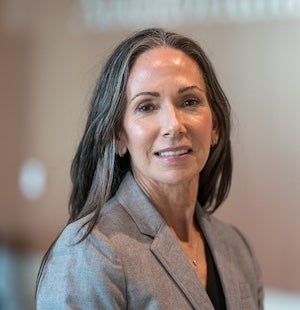
“It’s basically sending small versions of astronauts to Mars before we send astronauts to Mars.”
Fogarty is describing AVATAR, an experiment using organ-on-a-chip devices that contain an individual astronaut’s own bone marrow cells. Because the chip is built from that person’s tissue, it can be used to predict how that specific crew member’s body will respond, rather than how an average one would.
The unglamorous part is the clock. Biological samples collected from astronauts have to start processing within two hours. Masternak said there is one chance at these samples, and no option to go draw more blood.
Why is orbit a useful laboratory?
Alain Berinstain, director of the Florida Space Institute at UCF, said that in orbit air doesn’t slow processes down, so anything involving weight, separation, sedimentation, fluid flow or buoyancy behaves differently. His test for researchers considering space as a lab is blunt: turn your experiment upside down, and if it stops working, you have a lot of work to do.
How Does Space Medicine Help People on Earth?
Telehealth is the clearest example. It was created by the space program to treat astronauts who got sick in orbit, and it became critical for treating patients on Earth during the pandemic.
Masternak’s liver work identified molecular targets that could eventually support anti-aging therapies, and studying the process in space is faster than waiting decades to observe it on the ground.
The nanoparticle formulation Coathup and Seal developed was aimed at cancer patients receiving radiation treatment, who lose bone for reasons that overlap with what happens to astronauts. Space-induced bone loss also helps researchers understand early-onset osteoporosis and fracture risk, and the UCF partnership with Vaxxinity is developing vaccines against bone and muscle wasting for astronauts and for people here.
Other groups live under conditions that resemble spaceflight more than most people realize:
- Military personnel on deployment
- Deep sea explorers
- Mountain climbers
- Patients in rural and remote areas
Degrees for Jobs in Space Medicine
These UCF programs cover the medicine, engineering and human performance science that keep people healthy in space.
- Aerospace Medicine, the direct route, covering aviation, space and extreme environments medicine
- Biomedical Sciences, B.S., in the Burnett School, where the cellular aging and brain organoid research happens
- Aerospace Engineering, B.S.A.E., the department behind the microfluidic bone chip flown on New Shepard
- Biomedical Engineering, Ph.D., at the interface of engineering and medicine, where implant and tissue research sits
- Industrial and Organizational Psychology, M.S., the discipline behind the crew dynamics and isolation research
Summary: What Happens to the Human Body in Space
- Bone density drops 1% to 1.5% a month, against 0.5% to 1% a year for aging adults on Earth, concentrated in weight-bearing bones.
- Fluid shifts toward the head, causing puffy faces, the brain shifting inside the skull, and swelling at the back of the eye in 70% of space station crews.
- SANS presents as farsightedness, optic nerve swelling and eyeball flattening.
- Muscle atrophies without the load of gravity, and exercise-based countermeasures are being tested against it.
- Altered gravity can trigger motion sickness and disrupt an astronaut’s sense of orientation.
- The immune system changes, dormant viruses can reactivate, and blood clotting behaves differently.
- Genetic changes resembling aging appear in the liver within 24 hours of radiation exposure.
- Beyond the Van Allen belts, crews lose the magnetic shielding that protects the space station.
- Pressure loss carries its own risk, since nitrogen bubbles forming in the bloodstream cause decompression sickness.
- Isolation and confinement are medical priorities in their own right, and a Mars mission would last about 900 days.
- Countermeasures developed for astronauts apply to cancer patients, people with osteoporosis and patients in remote settings.
Frequently Asked Questions About the Human Body in Space
Astronauts lose 1% to 1.5% of bone density a month in microgravity, much faster than the 0.5% to 1% a year lost by aging men and post-menopausal women on Earth. Weight-bearing bones like the spine, hips and legs are most affected. Melanie Coathup, a UCF professor of medicine, attributes the loss to the reduced stimulus of weight, which bone needs to maintain healthy mass.
The Van Allen belts are two rings of charged particles held in place by Earth’s magnetic field, discovered in 1958. They trap much of the radiation streaming toward Earth from the sun and from deep space. Crews aboard the International Space Station orbit inside that protection. Missions to the moon pass through and beyond it, which is why radiation exposure rises sharply once a spacecraft leaves low Earth orbit.
A brain organoid is a small piece of human neural tissue grown from stem cells, sometimes called a mini-brain. Researchers expose organoids to cosmic rays and simulated microgravity to see how brain tissue responds to spaceflight conditions without putting a person at risk.
A megakaryocyte is a large bone marrow cell that produces platelets, the cell fragments that circulate in blood and form clots to stop bleeding. Platelets also take part in immune response, which is why researchers study megakaryocytes to understand both how spaceflight changes clotting and how it changes immunity.
Decompression sickness, also called the bends, happens when pressure changes cause nitrogen in the bloodstream to form bubbles. It produces joint pain, fatigue and difficulty breathing, and in rare serious cases stroke-like symptoms. It’s the same risk scuba divers face if they surface too fast.
HERA is NASA’s Human Exploration Research Analog, a 650-square-foot sealed habitat with no windows, no internet and no outside contact except mission control. Crews live inside for set periods with communication delays up to 20 minutes each way, so researchers can study isolation and confinement on the ground.
Microgravity is an environment in free fall. The name is a bit of a misnomer, because it doesn’t mean gravity is weak. It means nothing is pushing back: no floor, no chair, no atmospheric drag. That missing resistance is what triggers the body’s changes, from fluid moving toward the head to bone losing the mechanical stimulus that maintains it.
Muscle atrophy is the loss of muscle mass and strength that happens when muscle stops being loaded. On Earth, gravity supplies that load constantly. In microgravity it disappears, and muscle begins breaking down within days. The same process affects people on bed rest or in a cast, which is why countermeasures developed for astronauts often transfer to patients on the ground.
Spaceflight associated neuro-ocular syndrome, or SANS, is a condition that causes swelling at the back of the eye, affecting 70% of astronauts on the International Space Station according to NASA. Weightlessness shifts blood and cerebrospinal fluid toward the head, producing farsightedness, optic nerve swelling and flattening of the eyeball.
The NASA Twins Study compared astronaut Scott Kelly, who spent nearly a year aboard the International Space Station, with his identical twin brother Mark Kelly on the ground. Because the two share a genome, changes that appeared during the mission could be attributed to spaceflight rather than to genetics. It remains one of the most detailed records of what long-duration spaceflight does to a human body.
Sources & Further Reading
1. Risk of Altered Sensorimotor and Vestibular Function. NASA Human Research Program. NASA’s account of motion sickness and disorientation in altered gravity, and why they matter operationally.
2. Risk of Spaceflight-Induced Bone Changes. NASA Human Research Program. The source of the monthly bone density figure, measured across four-to-six-month missions.
3. Risk of Spaceflight Associated Neuro-ocular Syndrome (SANS). NASA Human Research Program. NASA’s explanation of SANS and the source of the 70% figure for space station crews.
4. Masternak et al., GeroScience. The peer-reviewed paper behind the 24-hour liver finding. DOI: 10.1007/s11357-026-02365-x
5. NASA’s Artemis II Crew Eclipses Record for Farthest Human Spaceflight. NASA, 2026. The account of the distance record, with the mission’s farthest-point figures and the Apollo 13 comparison.
Further reading
Stellar Health. Pegasus Magazine, 2024. A feature on UCF’s space medicine research, covering the bone loss countermeasures, the Vaxxinity partnership and Mehul Patel’s SANS imaging work.
UCF Research Blasts Into Space Aboard Blue Origin’s New Shepard Rocket. UCF Today’s account of the microfluidic bone chip, and the original source of Melanie Coathup’s remarks on this page.