Highlights
-
Pegasus Professorships are UCF’s highest faculty honors. This distinguished award is given annually at Founders’ Day.
-
The UCF community is invited to celebrate these professors and additional honorees during the Founder’s Day Faculty Honors Celebration on Wednesday, April 1, in the Student Union Pegasus Ballroom.
-
This year’s Pegasus Professors represent expertise across AI, nursing, cancer research and special education.
UCF’s faculty are renowned thinkers, doers and creators delivering high-quality education and leading-industry research with purpose. They are the campus culture-setters — inspiring ingenuity while upholding our mission to change lives and livelihoods.
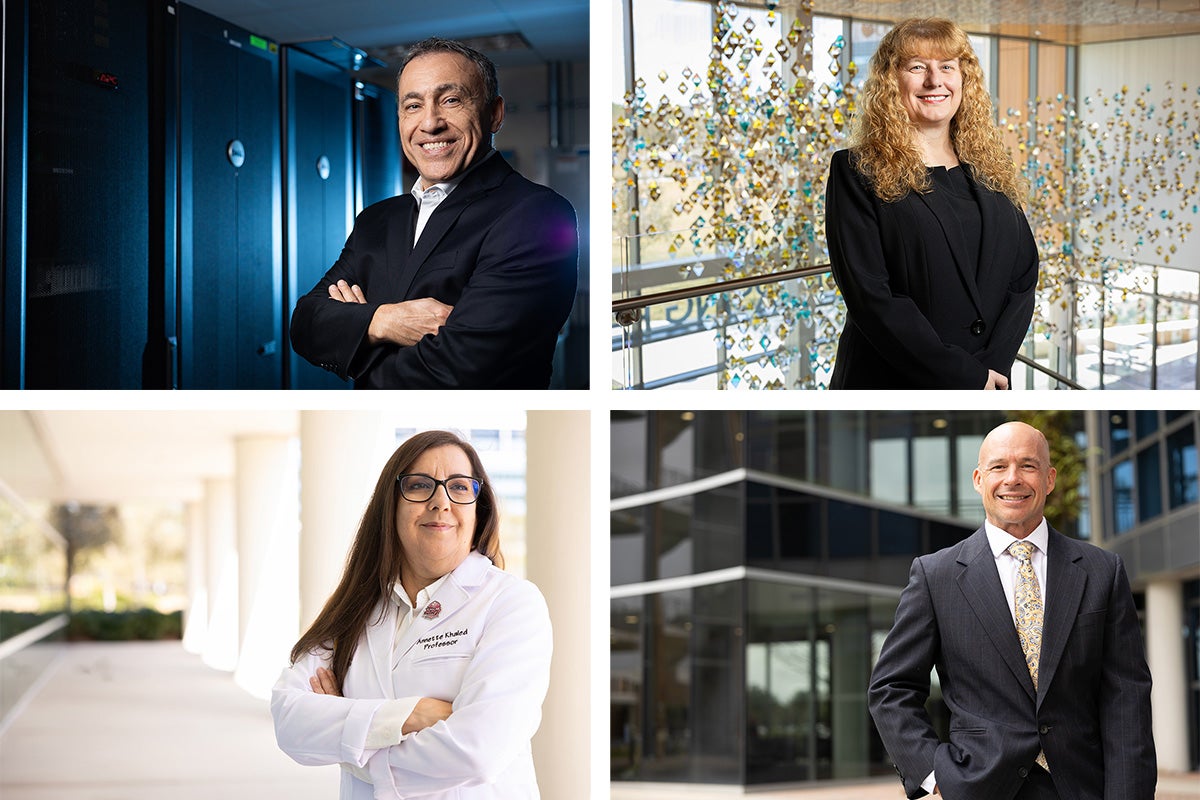
The most exceptional among them are recognized annually with the distinction of the university’s highest honor, the Pegasus Professor award. This year, Hassan Foroosh (College of Computer Science and Engineering); Carmen Giurgescu (College of Nursing); Annette Khaled (College of Medicine); and Matthew Morino (College of Community Innovation and Education) become the newest inductees of this esteemed group.
Their work and research have been motivated by a pursuit to positively impact society — redefining our capabilities with artificial intelligence (AI) systems; improving pre-term birth outcomes for mothers and their babies; curing cancer; and enhancing quality of life for people with disabilities.
Each will be recognized during Founders’ Day, which is April 1 this year and receive $5,000.
Meet the UCF Pegasus Professors for 2026:

Hassan Foroosh
CAE-Link Professor of computer science
Director of the Computational Imaging Laboratory
One day your research will solve:
My goal has always been not to solve one specific problem but build a machine that is the problem solver. I work with explainable AI and efficient or high-performance AI. My goal is to build general-purpose machines, whether in robotics or autonomous driving or data analytics, etc. I have always thought that there is a way to find a general solution to almost any problem. We just then have to specialize the machines and models to solve specific problems.
What motivates you to pursue this line of research?
I was fascinated by sci-fi movies as a kid. Not many people know this, but I’m a Trekkie. What always fascinated me were the technologies in that world — tele-transportation, warp speed, and others. I had not even seen a computer as a kid. Because back then, computers fit in rooms five times the size of my office. I was always interested in electronics and building things. In 1992, I moved back to France to do my Ph.D. and my advisor pushed me in the direction of AI and it’s been that ever since.
What makes UCF the right place to do what you do?
When I first came to UCF 24 years ago, I saw opportunity for growth, and I saw all the industries around here. I saw Kennedy Space Center next door. I like to build partnerships. I like to see my research used in practice. UCF has given me the ability to do that throughout my career.
What has been your favorite moment as a professor?
There are many I can think of. But, once I was vacationing with my family in North Carolina about 10 years ago or so. We were in a mall, and this young man ran toward me. I said, “What’s going on?” He shook my hand and said, “Dr. Foroosh! I wanted to thank you. You affected my life.” Back then I was teaching classes of 200 students every semester, so it wasn’t easy to build relationships with every student or remember everyone’s name. It felt humbling to know that he felt that way and that I impacted his life like that. It was a very good moment.
Carmen Giurgescu
Chatlos Foundation Endowed Chair in Nursing Associate Dean of Research
Professor of nursing
One day your research will:
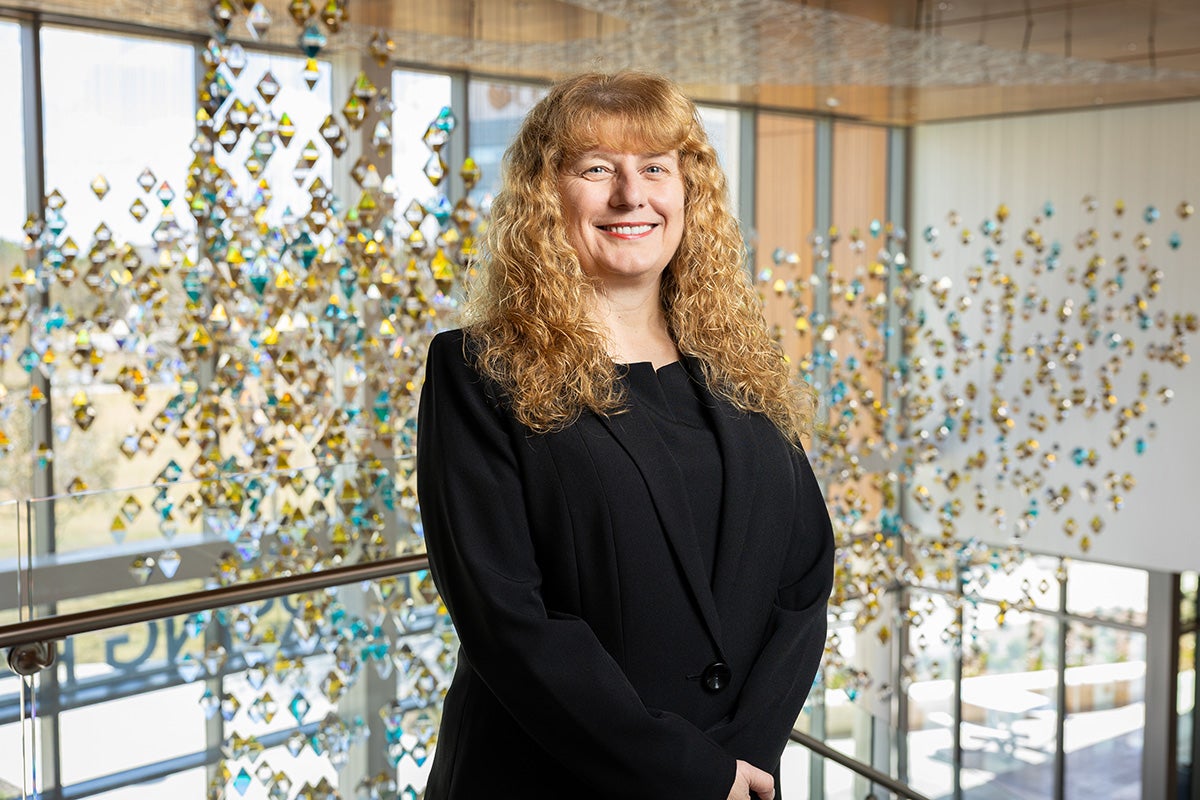
Reduce the rate of pre-term births. For the past 20 years, my research has been examining how social determinants of health influence maternal health and birth outcomes, including preterm birth. Pre-term infants, born at less than 37-weeks gestation, are more likely to have developmental delays, hearing problems and blindness than infants born at term. Their mothers are more likely to have stress, depression, and anxiety. I am focused on improving the health of mothers and their babies.
What motivates you to take this on?
I’ve always been passionate about obstetrics, even since childhood. One of my aunts was pregnant with my cousin when I was a young child, and she was a physician, so she felt comfortable telling me about fetal development. I came to the United States in 1990, and I started working in a mother-baby unit. I had the opportunity to talk with mothers and provide care for their babies. And that put me on the trajectory and my passion for pregnancy and birth outcomes.
In what ways do your students inspire you?
They come up with new, innovative ideas that I never thought of. It’s not a matter of just them learning from me, but me also learning from them. When I see their passion for what they are doing and when I see them being successful, it drives me to be more innovative, to keep pursuing opportunities, and be more resilient.
What contributions at UCF are you most proud of?
I came here in fall of 2019, and back then the College of Nursing had $1.7 million in research funding. In the 2024-25 academic year, we had $3.8 million. That’s a 124% increase in funding in five years. I am really proud of the commitment of our faculty and the interprofessional collaboration that has increased research and advanced scholarship in our college.
Annette Khaled
Professor of Medicine Cancer Division Head
Assistant Dean for Faculty Affairs
One day your research will solve:
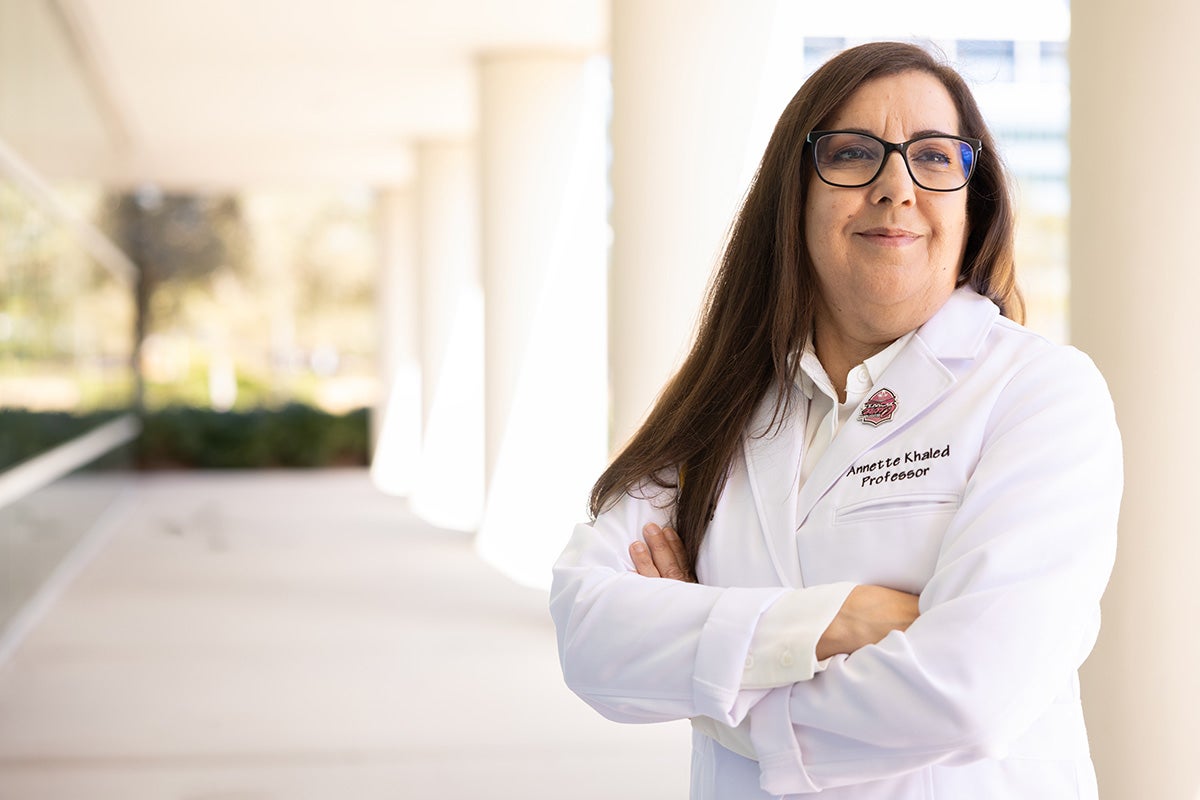
Cancer. Today, even if you treat it, the patient isn’t sure if it will come back. Cancer diagnosis is almost like a lifetime death threat. I want to get to a place where, much like when we have a cold and take an antibiotic, I want people to be able to say, “I have cancer, take my medicine, I’m done. It’s not going to come back. It’s not going to kill me.”
What motivates you to take this on?
I grew up in California, and my grandparents visited us when I was a teenager. I remember my grandfather asked, “What do you want to do?” And I told him, “I want to cure cancer.” I think for some reason my whole life I’ve been aware of this deadly disease. I want to help people. I want to make a difference.
What are you most proud of during your tenure at UCF?
I think the resiliency. We are a young college and have struggled with the ups and downs that the world throws at you. Sometimes you won’t have funding, sometimes you will have tons of funding. Sometimes things go your way with your studies, but this might be after 20 years of doing experiments that didn’t work. So I think what I’m most proud of is that I haven’t given up, and I still see that there’s an optimistic future.
What’s next?
Cancer is a really difficult disease because everybody’s cancer is different. But personalized drug therapies — although good in theory — is very hard to implement because you would have to have 100 different drugs for each person. That’s how complicated it is. Our research and method take a different track.
We’ve found that all cancer cells share something in common, a protein-folding complex. With this insight we developed a drug that we’re partnering with the Orlando VA Healthcare System, thanks to the generous support of Orlando Sports Foundation and Alan Gooch ’84 ’89MA, to test with patient specimens. We have a lot more to do — this is very preliminary. But I am so pleased with the data. I want to eventually get this into clinical trials and get this into the hands of people.
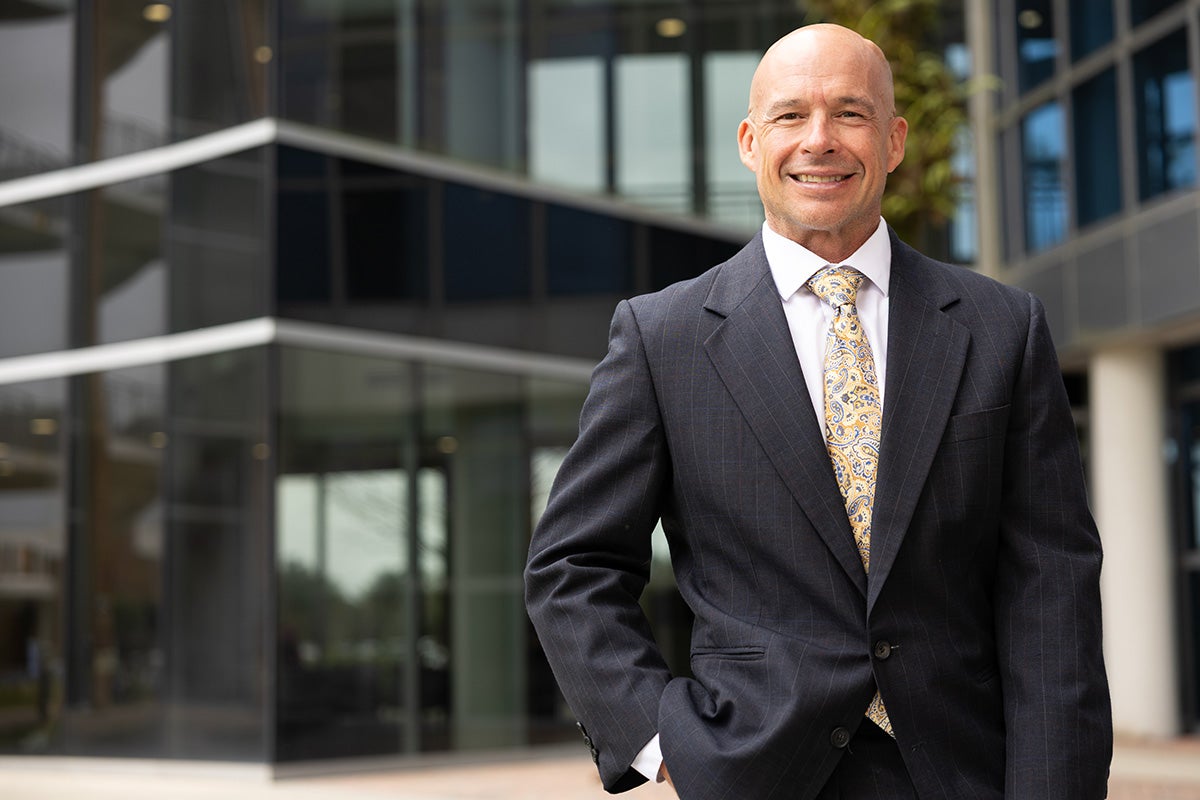
Matthew Marino
Professor of Exceptional Student Education
Director of the Toni Jennings Exceptional Education Institute (TJEEI)
One day your research will:
Empower independence for people living with disabilities. People with disabilities struggle to find and maintain employment. A recent study by the U.S. Department of Labor noted a workforce participation rate of just 42% for people with disabilities, compared to 78% for those without. This lack of employment leads to downstream effects such as the inability to live independently. Our dynamic team is utilizing an interdisciplinary approach to leverage emerging technologies in a way that enhances the lives of people with disabilities across our community.
What motivates you to take this problem on?
When I was in college, I suffered a severe spinal cord injury while playing rugby. I had no idea what a disability was prior to that event, but when you are confined to a wheelchair, you quickly learn how challenging life can be. It took me years of rehabilitation to recover from the injury. I have been working to improve the lives of people with disabilities who are less fortunate than me ever since. My goal is to help them find the tools to open the doors of employment.
What makes UCF the right place to do what you do?
The work we do at TJEEI is based on interdisciplinary partnerships and efficient, effective teamwork. I have traveled to universities throughout the country and have not found an institution where there is more ambition to change the world for the better, technology resources to make the change, and collaborative vigor to make it happen than there is at UCF. We are truly blessed to work in this environment.
What’s next?
When we published our first article on AI for people with disabilities no one was talking about the impact it would have on education. AI has tremendous potential for people with disabilities, which is something we are actively exploring at the National Center on Innovation, Design, and Digital Learning, where I am a co-principle investigator. I’m not sure where it will take us, but I am extremely optimistic that it can enhance the lives of people with disabilities while improving employment and independent living outcomes.