Highlights
-
The 2026 Reach for the Stars award recipients — Assistant Professors John Bush, Ana Carolina de Souza-Feliciano, Shyam Kattel, Kevin Moran, Soyoung Park and Hao Zheng — are recognized for conducting impactful research and creative activity with national and international reach.
-
The prestigious award is UCF’s second-highest faculty honor and provides each recipient with a $10,000 annual research grant for three years.
-
The UCF community is invited to celebrate the honorees from 3-5 p.m. Wednesday, April 1, in the Student Union Pegasus Ballroom during the 2026 Founders’ Day Faculty Honors Celebration.
Big ideas don’t wait — and neither do the researchers behind them.
The 2026 Reach for the Stars honorees — six UCF assistant professors — are already making a substantial impact on their respective fields through meaningful research and creative work that extends far beyond campus, with national and international influence.
Across disciplines, their work and research reflect a shared mission to advance ideas into impact — uncovering what shapes ethical decision-making in the workplace; exploring the origins of our solar system; developing computational solutions to meet future energy demands; designing more intuitive and reliable software experiences; strengthening education for students with disabilities; and engineering faster, more energy-efficient artificial intelligence (AI) systems.
Together, this brilliant group represents the kind of bold, forward-thinking innovation UCF continues to champion.
Each year, the Reach for the Stars awards recognize early-career faculty opening new doors for what’s possible across their fields. The prestigious award is second only to Pegasus Professor as UCF’s highest faculty honor.
In recognition of their achievements, each honoree will receive a $10,000 annual research grant for three years in addition to the distinction of being an award recipient.
The UCF community is cordially invited to come and congratulate the recipients from 3-5 p.m. Wednesday, April 1, in the Pegasus Ballroom at the Student Union as part of the 2026 Founders’ Day Faculty Honors Celebration.
This year’s Reach for the Stars honorees are:
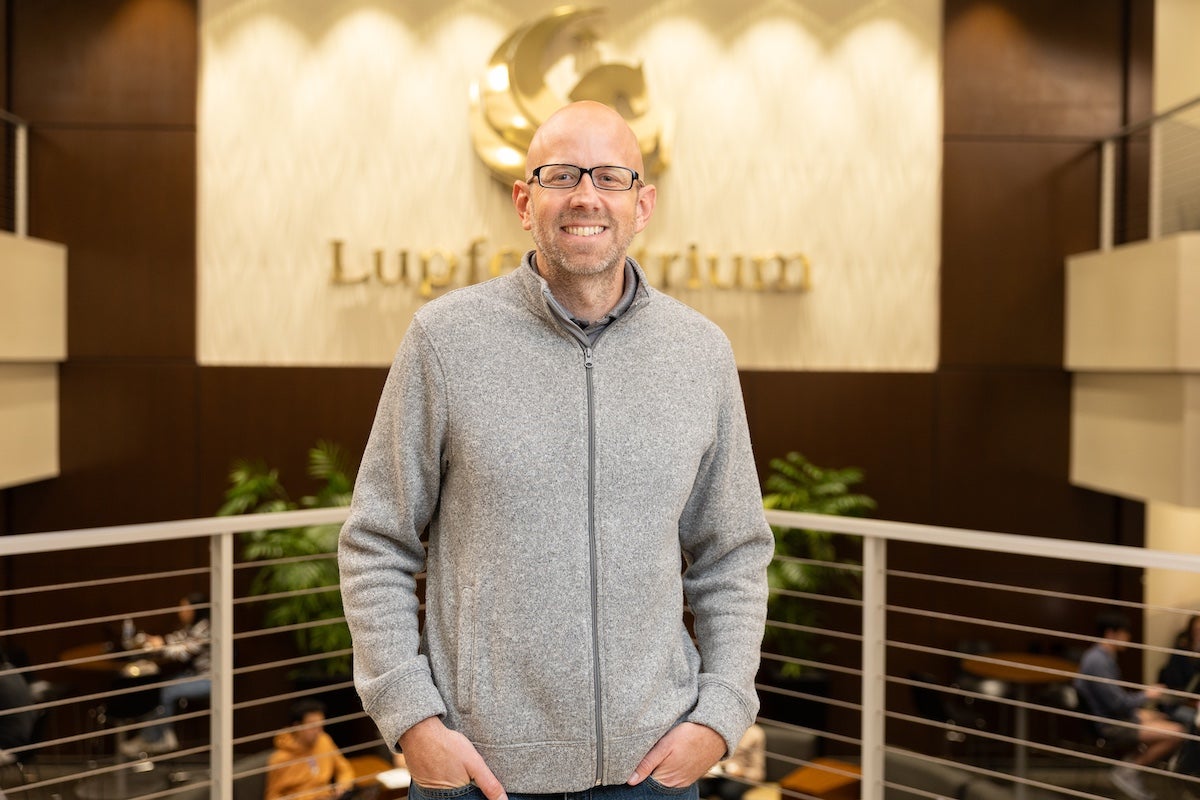
John Bush
Assistant professor of management in the College of Business
What’s something few people know about you?
Working at UCF is a homecoming for me. Growing up in Florida, I had the opportunity to experience all the great things this state and its universities have to offer. And while my younger self might not have predicted I’d end up in Black & Gold, UCF and Orlando have been incredible homes.
What does your research focus on?
I study when, why, and how employees cross ethical lines, and what role leaders, management policies, and organizational systems play in those decisions. A big part of what makes my work unique is that I focus on an important puzzle: how things we typically think of as “good” can promote unethical behavior. We tend to assume that well-intentioned management practices will always lead to good outcomes. However, my research shows that’s not always the case, and the unintended consequences can be significant.
What drives you to take on this challenge?
Before I entered academia, I worked in corporate finance and accounting. That experience meaningfully shaped how I think about ethics in organizations.
There’s a common assumption that unethical behavior is a “bad apple” problem, or rather, that it comes down to an individual’s character or integrity. But as my work has shown, it’s often a “bad barrel” problem. The environments organizations create, the systems they put in place and the ways managers approach leadership profoundly influence how people behave.
What makes UCF the right place for you to do this kind of work?
I’m a firm believer that the people make the place — and the faculty, staff and students of UCF are truly what make it such a great place to be. The College of Business has a management department full of colleagues who are both excellent scholars and genuinely collaborative people.
What’s next for you or your research?
I’m excited about several new directions, each of which builds upon my existing work. I’m particularly interested in examining more nuanced, less studied drivers of ethical decision-making. For example, what happens when someone becomes an accidental witness to unethical behavior? How does that experience shape what they do next and the moral burden that’s placed on them?
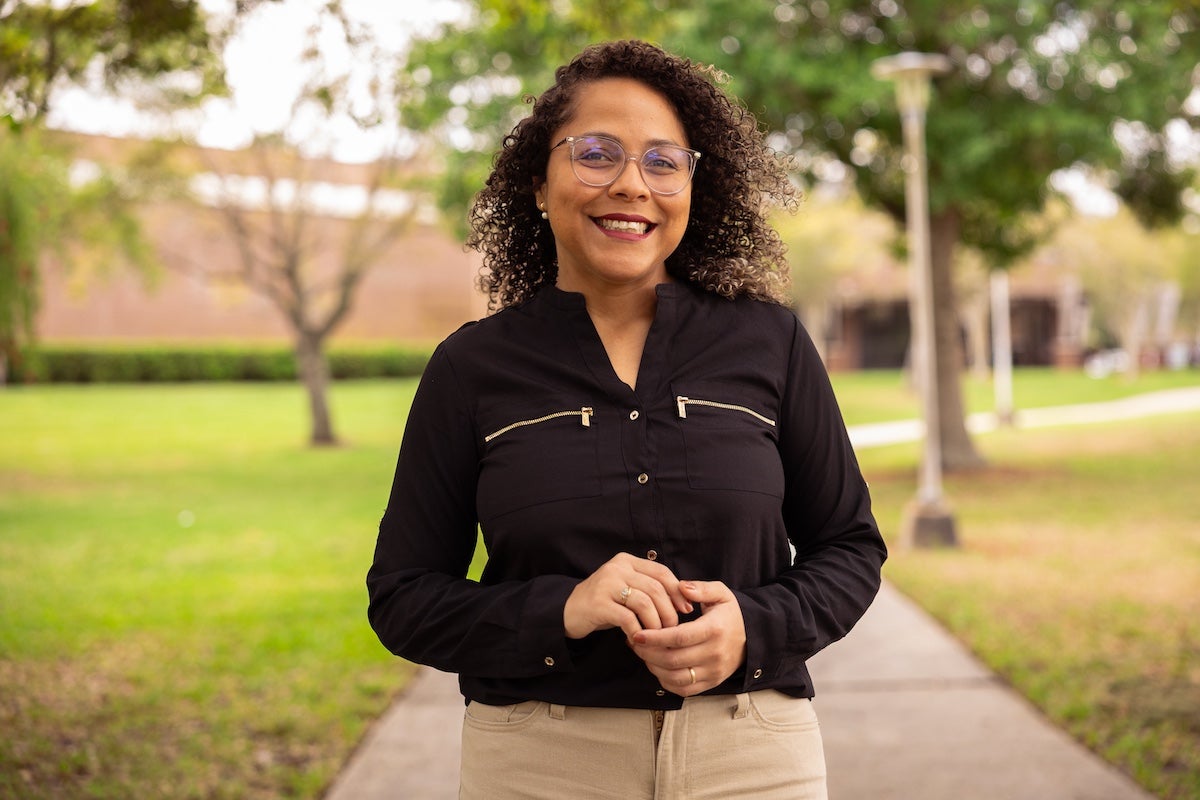
 Ana Carolina de Souza-Feliciano
Assistant professor at the Florida Space Institute
What’s something few people know about you?
While many people know I’m not afraid to face challenges, few know that I’m afraid of roller coasters.
What does your research focus on?
I study the small bodies of our solar system (objects such as asteroids, Trojans and trans-Neptunian objects) from an observational perspective to try to understand how our planetary system formed and evolved. The small bodies that remain from the early solar system still preserve clues about the materials and conditions that existed when planets formed. By observing their surfaces, compositions and physical properties, we can piece together the history of how the solar system came to be.
What drives you to take on this challenge?
The solar system still holds many unanswered questions, and every observation has the potential to reveal something completely new about its history. I’m especially motivated by the idea that these small and distant objects preserve a record of the earliest stages of planetary formation, and since we still don’t know much about them, we need to better characterize these groups to have a chance of getting closer to important scientific answers.
What makes UCF the right place for you to do this kind of work?
UCF provides a dynamic research environment with strong collaborations and access to facilities that help me achieve my scientific goals.
What’s next for you or your research?
I aim to expand my research group and continue developing new projects exploring the composition and physical properties of small bodies in the outer solar system.
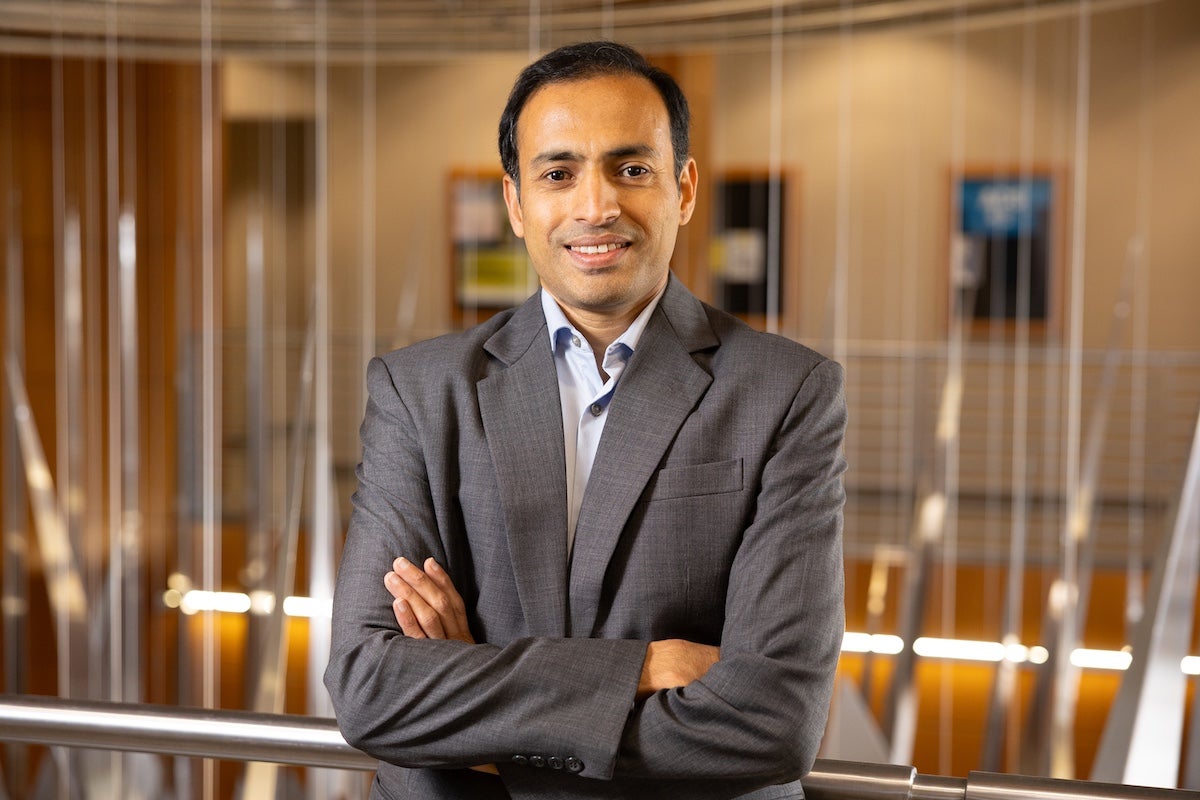
Shyam Kattel
Assistant professor of physics in the College of Sciences
What’s something few people know about you?
I enjoy long, quiet walks or runs. It’s when I do my best thinking and come up with new ideas for teaching and research.
What does your research focus on?
My research group is interested in understanding chemical processes through computer simulations. These chemical processes are central to many energy and fuel generation and energy conversion processes. We are exploring the design of catalytic materials that selectively convert abundant small molecules, such as CO2, N2, NO3, O2 and H2O, to a wide variety of synthetic chemicals and fuels in a carbon-neutral way to fulfill the growing energy demand of the future.
What drives you to take on this challenge?
I’m a huge advocate of sustainability. I’m fascinated by the rapid development and advancement of modern computers, machine learning (ML) and AI, which have enabled us to understand complex science on a time scale that’s impossible with traditional trial and error methods. This unique opportunity to utilize supercomputers with ML and AI to tackle energy and sustainability challenges keeps me awake at night.
What makes UCF the right place for you to do this kind of work?
By training, I’m a physicist, but my research focuses on looking into chemical reactions. UCF’s physics department is among a handful of institutions in the U.S. with a very strong catalysis program. This allows me to collaborate within the department and teach a physics course, which I enjoy. Additionally, the university’s large size and research facilities present opportunities to recruit the best students and to collaborate both within and beyond the department.
What’s next for you or your research?
My lab is developing capabilities to integrate ML and AI into our methods for understanding structure-materials property relationships across a large set of materials, driving the development of the next generation of clean and sustainable energy and fuel generation technologies. Our goal is to develop an integrated materials design framework that anyone can use for their research and for teaching research-based undergraduate and graduate courses.
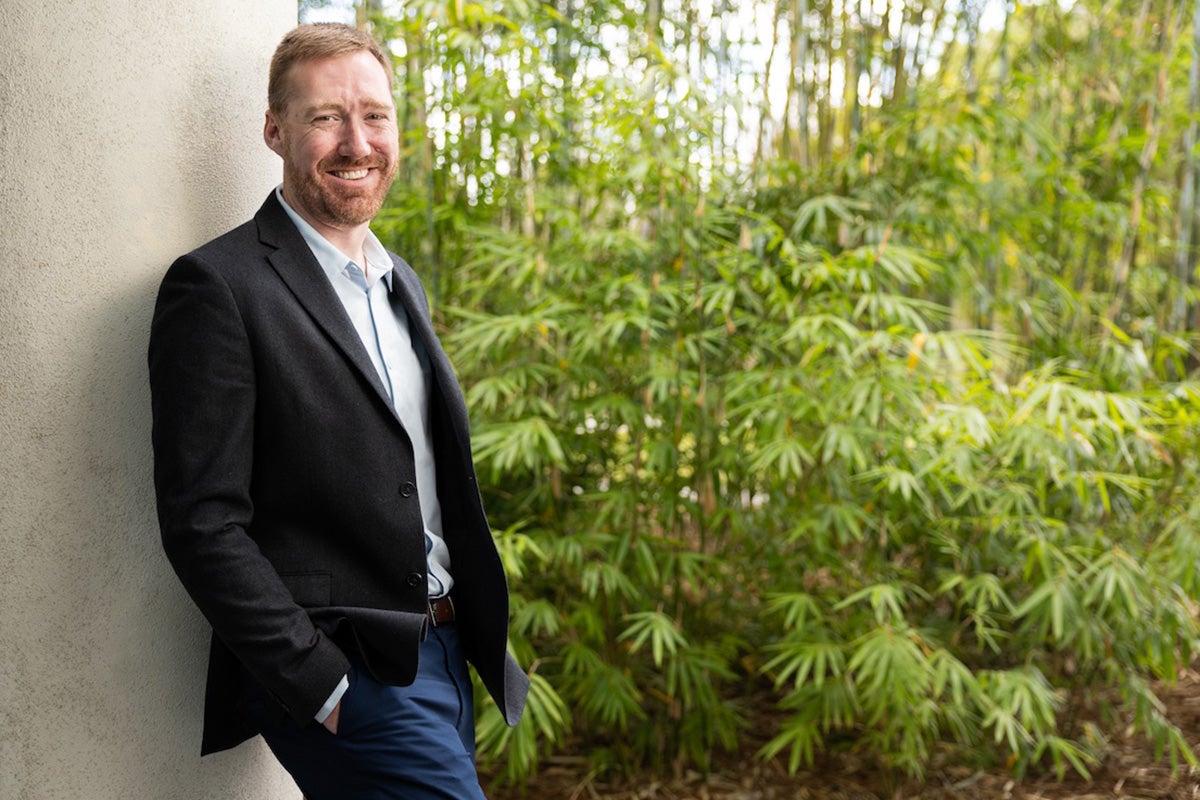
Kevin Moran
Assistant professor of computer science in the College of Engineering and Computer Science, director of the Software Automation, Generation and Engineering Research Lab and affiliate of the Cyber Security and Privacy faculty cluster initiative
What’s something few people know about you?
I was a Division 1 rower as an undergraduate at the College of the Holy Cross. Our team competed in the national championship regatta my senior year and was ranked among the top 20 teams in the country.
What does your research focus on?
If you’ve ever been frustrated by glitches in apps or websites, my students, collaborators and I aim to give engineers the tools they need to build more reliable software. My group has pioneered work in user interface engineering, focusing on user-facing systems and making software easier to use.
What drives you to take on this challenge?
Since I was young, I’ve enjoyed building things, taking them apart and understanding how they work. I view software as the ultimate engineering medium, where abstract ideas can quickly become reality. What excites me most is tackling the complexity of modern software systems by developing tools that engineers can easily adopt. Seeing those tools save engineers hours or days of time is truly fun.
What makes UCF the right place for you to do this kind of work?
UCF has been an excellent place to grow as an early-career researcher. I’ve received invaluable mentorship from department and college leadership, as well as senior faculty. The university’s connection to the local tech industry is also exciting, and I look forward to forming connections with local companies to put our tools into practice.
What’s next for you or your research?
Software engineering is rapidly shifting toward agentic workflows, where AI-powered agents perform engineering tasks autonomously. While this increases speed, it also introduces complex errors that are harder to spot. My lab aims to understand these software engineering agents, improve their reliability and create tools that help developers use them effectively.
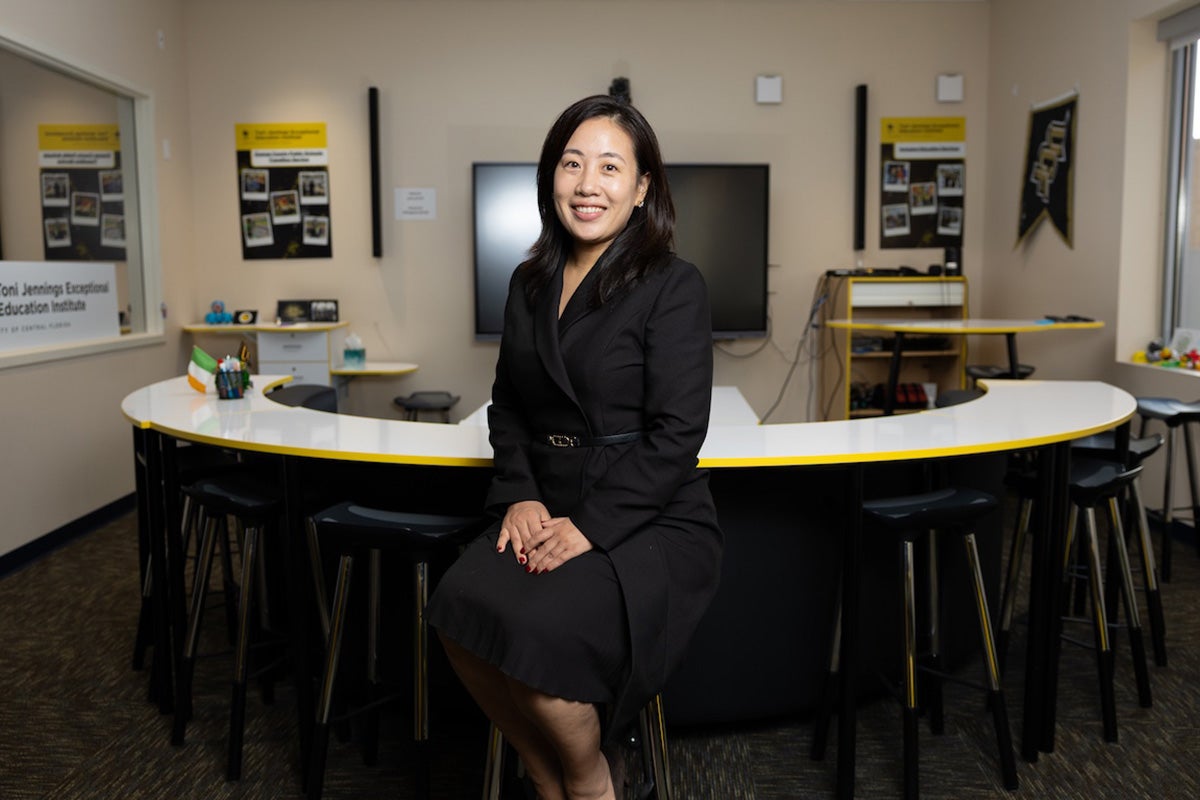
Soyoung Park
Assistant professor of teacher education in the College of Community Innovation and Education (CCIE)
What’s something few people know about you?
When I travel for conferences, I love to explore local bookstores and cafes.
What does your research focus on?
My research focuses on transforming educator preparation to better support students with disabilities. Supported by more than $3.75 million in U.S. Department of Education funding, my work prepares special education teachers, speech-language pathologists and school psychologists to serve students with autism spectrum disorders and high-intensity needs. I also develop evidence-based mathematics interventions for students with learning disabilities.
What drives you to take on this challenge?
Mathematics remains an area where both research and practice need stronger alignment. Teachers need accessible, evidence-based guidance on how to teach effectively, but it isn’t always easy to find or interpret. Students need consistent access to high-quality instruction that meets their individual needs. I’m interested in helping bridge that gap so that research can better support educators and the students they serve.
What makes UCF the right place for you to do this kind of work?
UCF’s strong infrastructure for research and collaboration further amplifies my work. Support from the Office of Research has been instrumental in advancing my research development, grant capacity and interdisciplinary collaboration. As a CCIE research fellow and affiliated faculty member at the Toni Jennings Exceptional Education Institute, I have valuable opportunities to engage in interdisciplinary collaboration across colleges.
What’s next for you or your research?
Our next project focuses on synthesizing large data sets to help educators identify mathematics interventions that align with their students’ needs. We’re also exploring how AI can support this process through pedagogical AI chatbots and interactive web-based platforms that guide educators in interpreting and applying research evidence in practice. Ultimately, this work aims to strengthen both instruction and student outcomes at scale.
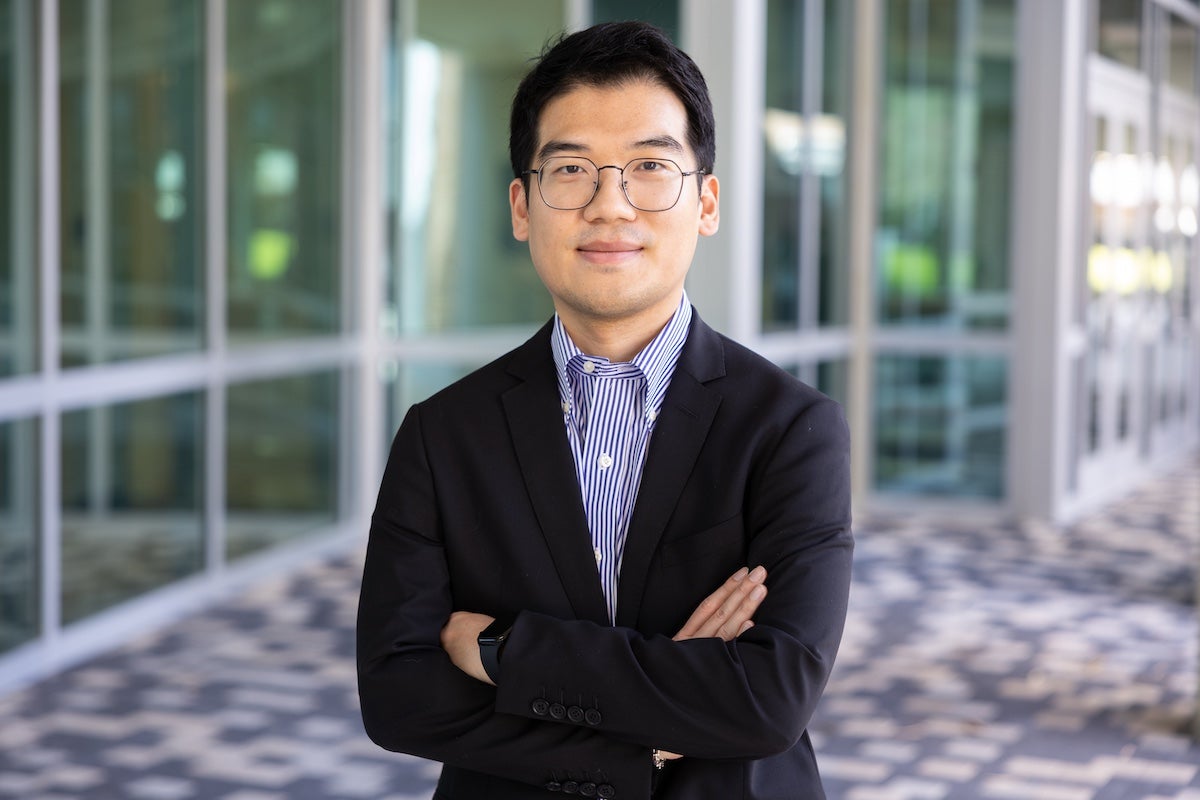
Hao Zheng
Assistant professor of electrical and computer engineering in the College of Engineering and Computer Science
What’s something few people know about you?
I enjoy traveling, especially visiting national parks and exploring new cities. Each trip helps me recharge, and I often come back with fresh perspectives and new ideas.
What does your research focus on?
My research focuses on making today’s AI systems faster, more energy-efficient and more reliable by bridging the gap between algorithms and hardware. AI has reshaped daily life, but behind the scenes, modern AI models require enormous amounts of computation and energy. My work explores new ways to co-design hardware and software so AI can run efficiently, especially for irregular or sparse data structures, such as graphs.
What drives you to take on this challenge?
I’m driven by both the importance and the difficulty of the problem. We’re at the turning point of rethinking future computing systems. Defining a new computing paradigm, despite its challenges, can have a far-reaching impact across society. Our research can fundamentally reshape how future computers are designed and how AI is deployed at scale.
What makes UCF the right place for you to do this kind of work?
UCF is an ideal place to pursue bold research ideas, supported by strong momentum in engineering, computing and interdisciplinary collaboration. The university also offers an exceptional and supportive community of mentors and collaborators, including students, who set a high bar for excellence. I’ve been fortunate to work with many outstanding colleagues, and those experiences have shaped how I think about building a high-impact research program and growing as a scholar.
What’s next for you or your research?
Next, we’re expanding our work toward real-world deployments, including applications in healthcare and robotics. We’re also continuing to strengthen our research in building processors for AI and scientific computing so that our ideas can translate into improvements in performance and energy efficiency.