Highlights
-
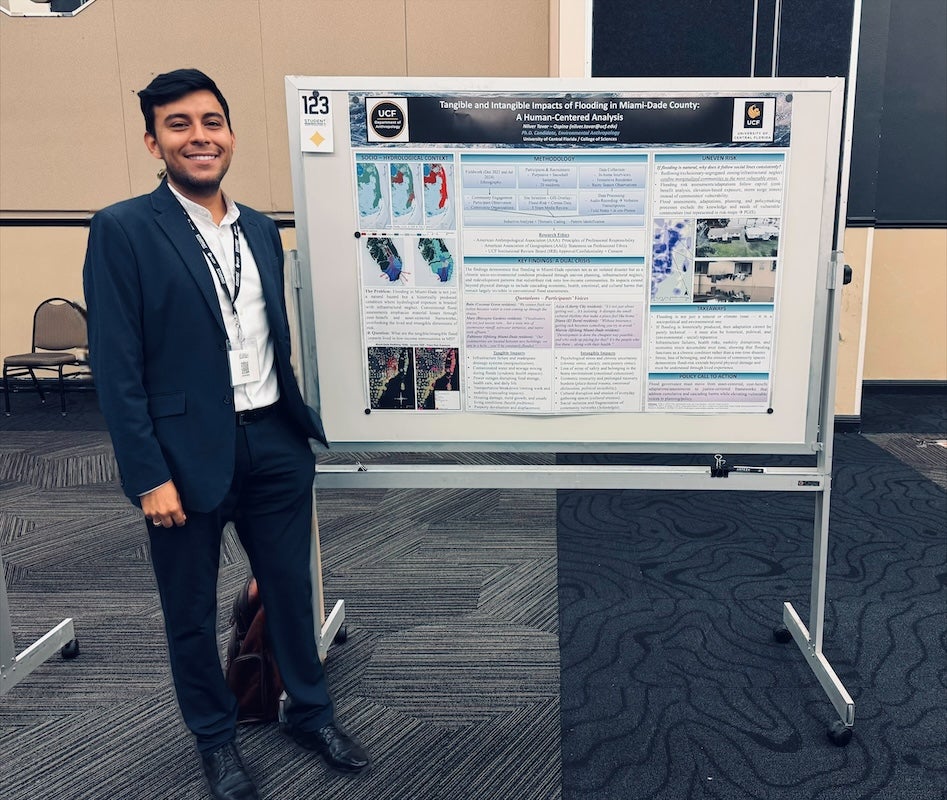
Nilver Tovar-Ospina ’26PhD is the first graduate of UCF’s integrative anthropological sciences doctoral program, with a concentration in environmental anthropology. His research examines how flooding and sea-level rise affect communities in South Florida.
-
Tovar-Ospina’s work examines flooding as a condition shaped by history, infrastructure, environmental transformation and funding. Combining ethnography, interviews, participant observation, participatory mapping, historical research and GIS to connect residents’ experiences with the broader trends that shape flood vulnerability.
-
Through his research, Tovar-Ospina has been honored with multiple academic awards including the Judges’ Choice Award at UCF’s 2026 Student Scholar Symposium and the Best Paper Presentation Award at the International Conference on Environmental Anthropology and Sustainability in Paris.
When Nilver Tovar-Ospina ’26PhD came to UCF to pursue a doctorate in environmental engineering, he expected to continue studying the environmental challenges he had explored in Colombia during his graduate studies. Instead, the Colombian native opened a new avenue of research in UCF’s Department of Anthropology.
In Summer 2026, Tovar-Ospina became the first graduate of UCF’s integrative anthropological sciences doctoral program with a concentration in environmental anthropology. His research in environmental engineering examines how flooding and sea-level rise affect vulnerable communities in South Florida.
Tovar-Ospina found that while high-income, tourist-focused areas received substantial flood-protection infrastructure, historically lower-income communities continued to experience recurrent flooding that, in some places, had persisted for decades. He connected these contemporary disparities to earlier drainage and canalization projects, environmental changes and uneven infrastructure investment.
“Understanding what these communities are experiencing today is essential for developing more equitable risk assessments and adaptation strategies,” he says.
From Colombia to UCF
Tovar-Ospina’s interest in the field began years ago while working for a company that conducted environmental studies in Neiva, Colombia. His experience evaluating how hydrological companies, construction and projects can impact biodiversity and societies dependent on biodiverse resources deepened his interest in how environmental and social changes affect communities. It prompted him to explore these connections further from home, which led him to the UCF Global Intensive English Program and eventually his doctoral program.
Focus of Research
During his doctoral studies, Tovar-Ospina began examining how flooding and sea-level rise affect communities in Miami-Dade County and why flood vulnerability is distributed so unevenly. Through UCF Coastal, one of UCF’s Faculty Cluster Initiatives (FCI), he connected his anthropological research with broader interdisciplinary conversations about coastal vulnerability and climate adaptation.
“I wanted to go beyond conventional flood-risk models and understand how flooding is actually experienced by the people living with it,” Tovar-Ospina says. “That meant combining ethnography and community knowledge with historical research, participatory mapping and GIS to understand not only where flooding occurs, but why vulnerability is so uneven.”
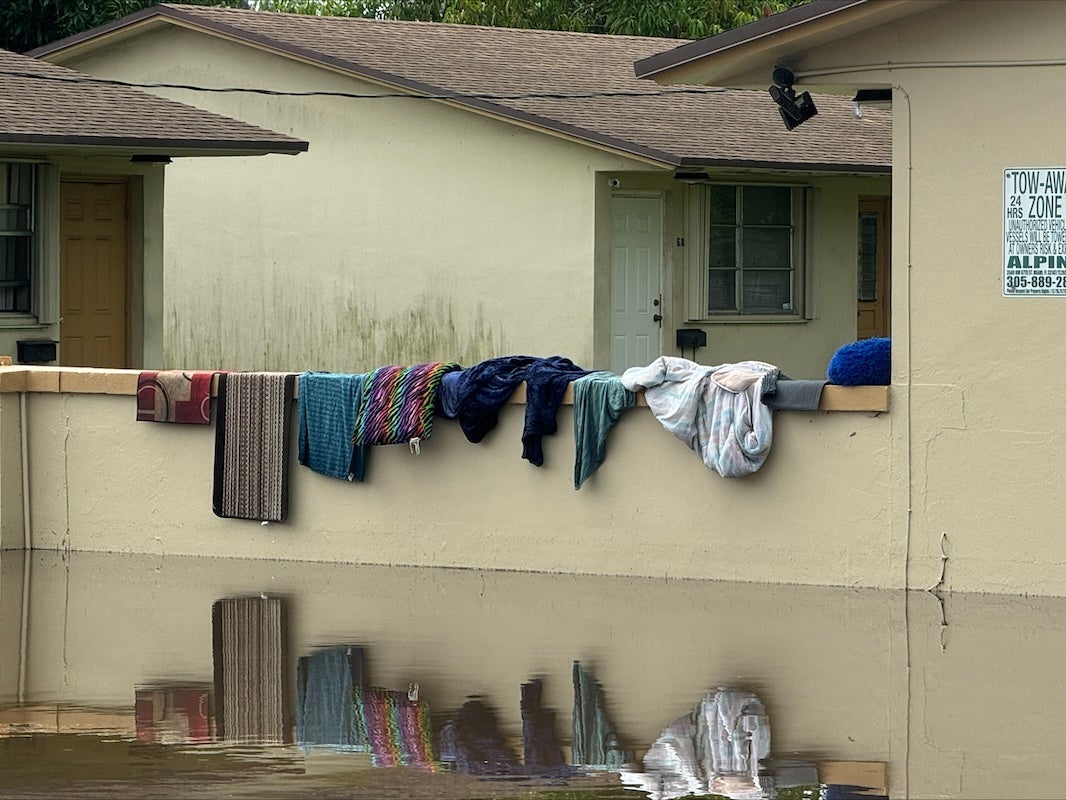
Tovar-Ospina’s dissertation, Architectures of Flooding: History, Power, and the Production of Flood Risk in Miami-Dade County, examined flooding not simply as a natural hazard but as a condition shaped by history, infrastructure, environmental transformation and funding. His research combined ethnography, interviews, participant observation, participatory mapping, historical research and GIS to connect residents’ lived experiences with the broader processes that have shaped flood vulnerability across Miami-Dade County.
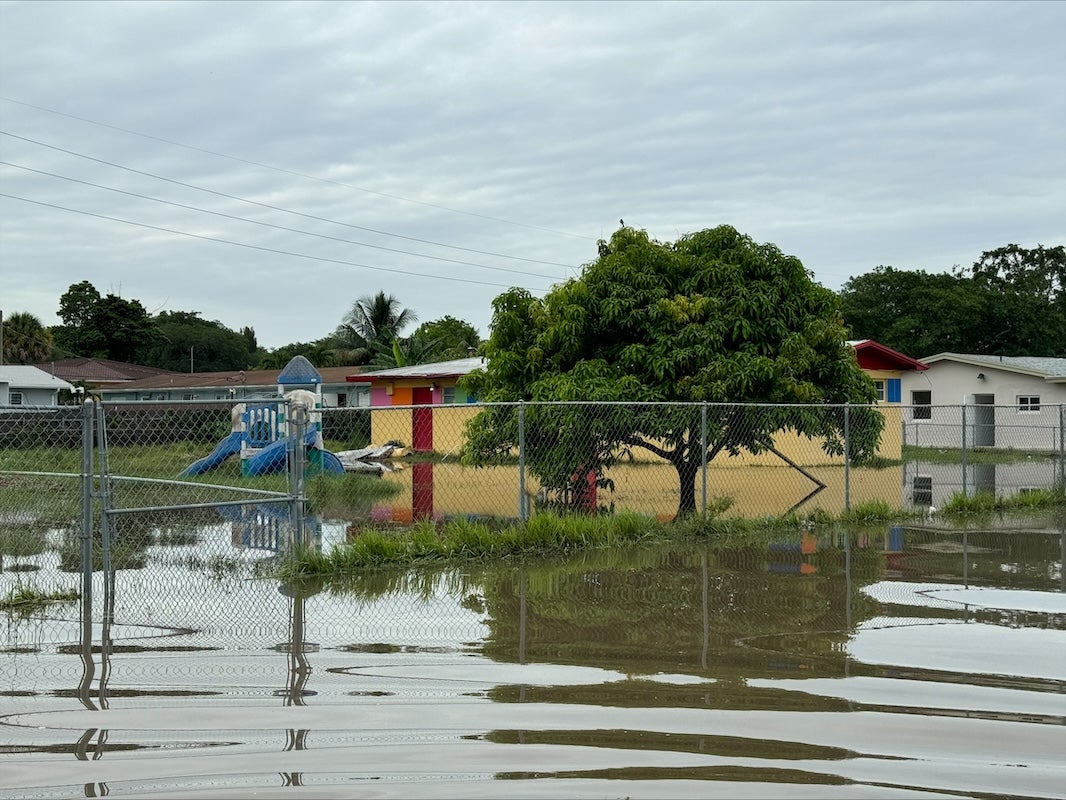
To his surprise, some communities identified as highly exposed by conventional flood-risk models reported relatively limited experiences with recurrent flooding. Sea walls, coastal barriers and improved drainage systems helped protect some coastal communities, revealing a disconnect between modeled flood exposure and the lived experiences of residents.
Farther inland, Tovar-Ospina found lower-income communities experiencing recurrent flooding, including residents still recovering from hurricanes of the previous years. These experiences showed that elevation or proximity to the coast alone could not explain how flood risk was lived across Miami-Dade County.
Through participatory mapping, residents identified places where they repeatedly experienced flooding, allowing Tovar-Ospina to compare community knowledge with official representations of flood risk. The maps revealed recurrent flooding, drainage problems, mobility disruptions, and household impacts that conventional assessments did not always capture.
“Living with these low-income communities, I learned that residents were often offered ‘palliative solutions’ or short-term responses, like sandbags and water bottles, while they continued to call for longer-term adaptation strategies and infrastructure that could better protect them,” Tovar-Ospina says.
Awards and Accolades
Over the course of his doctoral program, Tovar-Ospina built an exceptional record of research and scholarship, receiving recognition at the university, national and international levels.
In 2026, his peer-reviewed article, “Tangible and Intangible Impacts of Flooding in Miami-Dade County: A Human-Centered Analysis,” was published in Human Ecology. He also received a Judges’ Choice Award at UCF’s 2026 Student Scholar Symposium and the Best Paper Presentation Award at the International Conference on Environmental Anthropology and Sustainability in Paris.
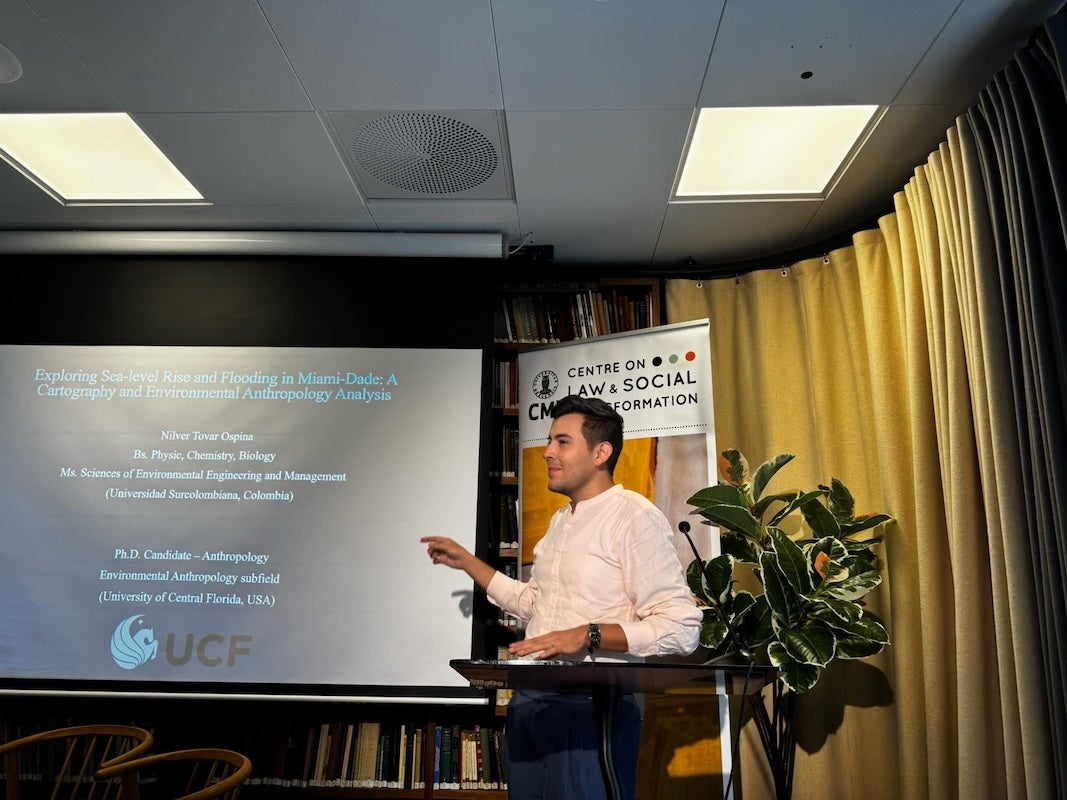
Among his other recent accomplishments, he received the 2026 Laura Bassi Scholarship for his book manuscript, Architectures of Flooding: Unequal Ground in a Drowning County and was selected as one of nine international participants for the 2025 Climate Politics and Autocratization Conference at the University of Bergen in Norway.
A Pathway to Strengthen Florida’s Coastal Communities
Tovar-Ospina hopes his work will help direct greater attention and resources to those most affected.
“Communities need to be included in discussions, studies and assessments when developing climate-related policies to ensure their concerns are understood and addressed,” he says.
Tovar-Ospina also feels proud for paving the path for future students who are interested in environmental anthropology at UCF.
“Florida and other coastal areas have been affected by hurricanes and flooding,” he says. “We need more environmental anthropologists to ensure the knowledge and experiences of the most impacted communities are part of how these challenges are understood and addressed.”