Highlights
-
After finding his way into teaching through a College of Community Innovation and Education initiative funded by the U.S. Department of Education, Will Furiosi ’13 ’14MAT has created a juggernaut research program at Oviedo High School.
-
Furiosi took over the program in 2017 and grew it from four students to 46, with alums who have gone on to top research institutions including Harvard, MIT, Columbia, Stanford, and of course, UCF.
-
Backed by UCF associate professors Ellen Kang (physics) and Candice Bridge ’07PhD (chemistry) and researcher Max Kuehn ’22 (Exolith Lab), three of Furiosi’s students earned recognition this year as the top projects at Seminole County’s regional science fair for their innovations in robotics, mental health and agriculture.
-
The trio competed against against more than 1,700 high schoolers from across the globe at the Regeneron International Science and Engineering Fair (ISEF) and combined to take home several prizes, including one of the EU Contest for Young Scientists Awards.
Some of the nation’s most promising scientists can be found in Will Furiosi ’13 ’14MAT’s Oviedo High School classroom.
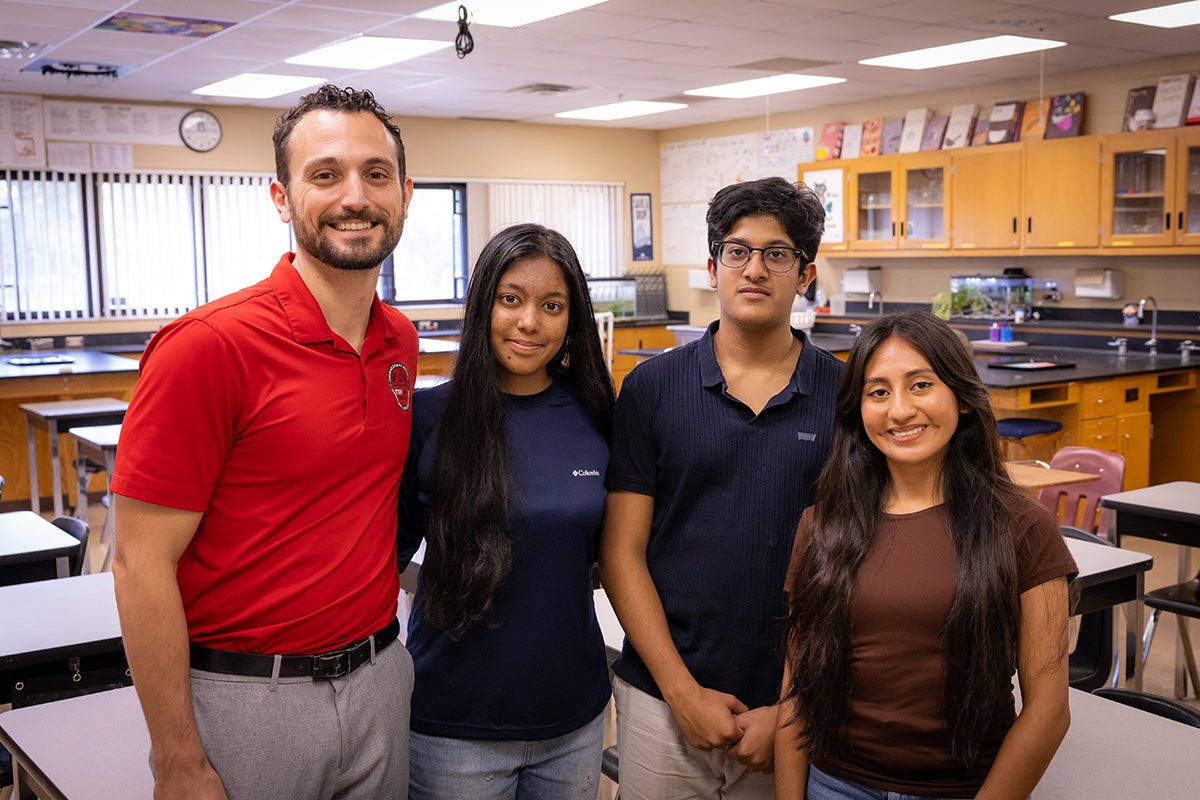
Spend five minutes talking to Ankan Das, Angela Calvo-Chumbimuni and Moitri Santra about their research innovations in robotics, mental health and agriculture, and one truth becomes quite clear: These teens are the real deal.
Backed by UCF associate professors Ellen Kang (physics and NanoScience Technology Center) and Candice Bridge ’07PhD (chemistry) and researcher Max Kuehn ’22 (Exolith Lab), the Oviedo High trio recently earned recognition as the top three projects at Seminole County’s regional science fair.
With Oviedo’s proximity to main campus, the collaboration highlights UCF’s steadfast commitment to supporting STEM education across Central Florida.
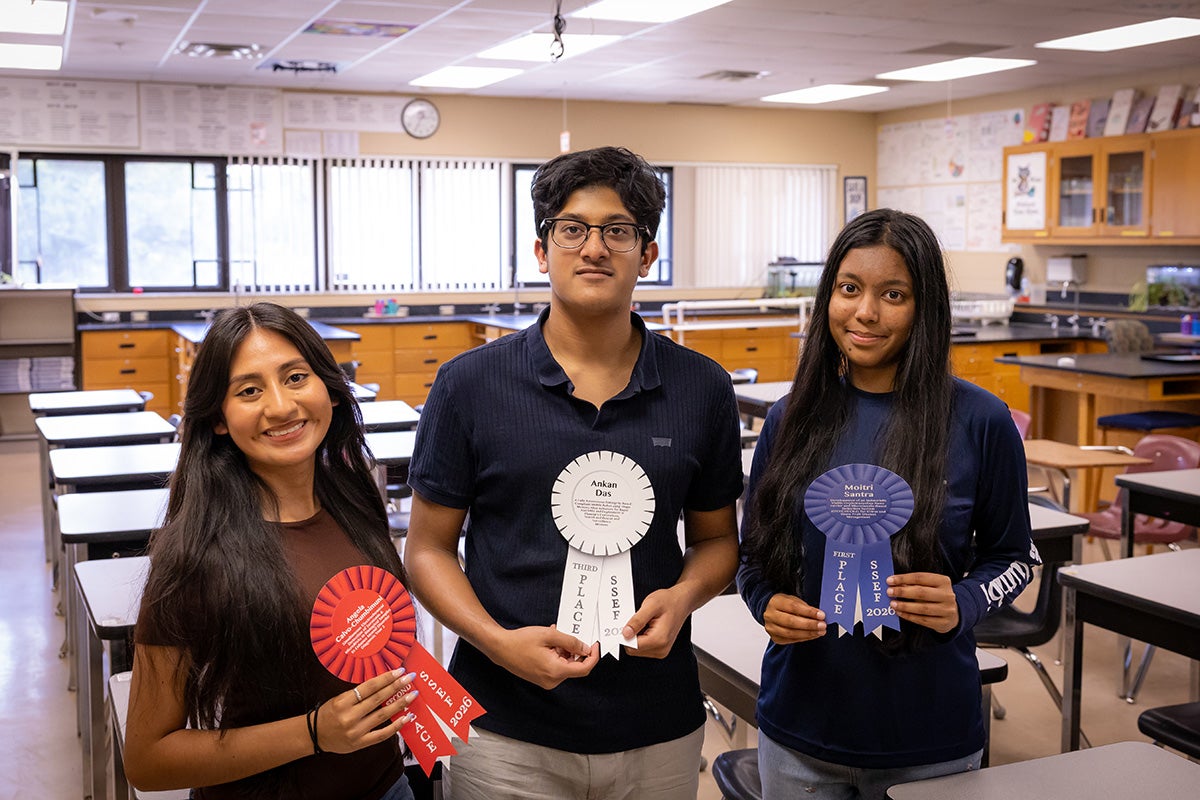
They went on to represent the county admirably at the Regeneron International Science and Engineering Fair (ISEF) in Phoenix, where they took home several prizes against more than 1,700 high schoolers from around the globe.
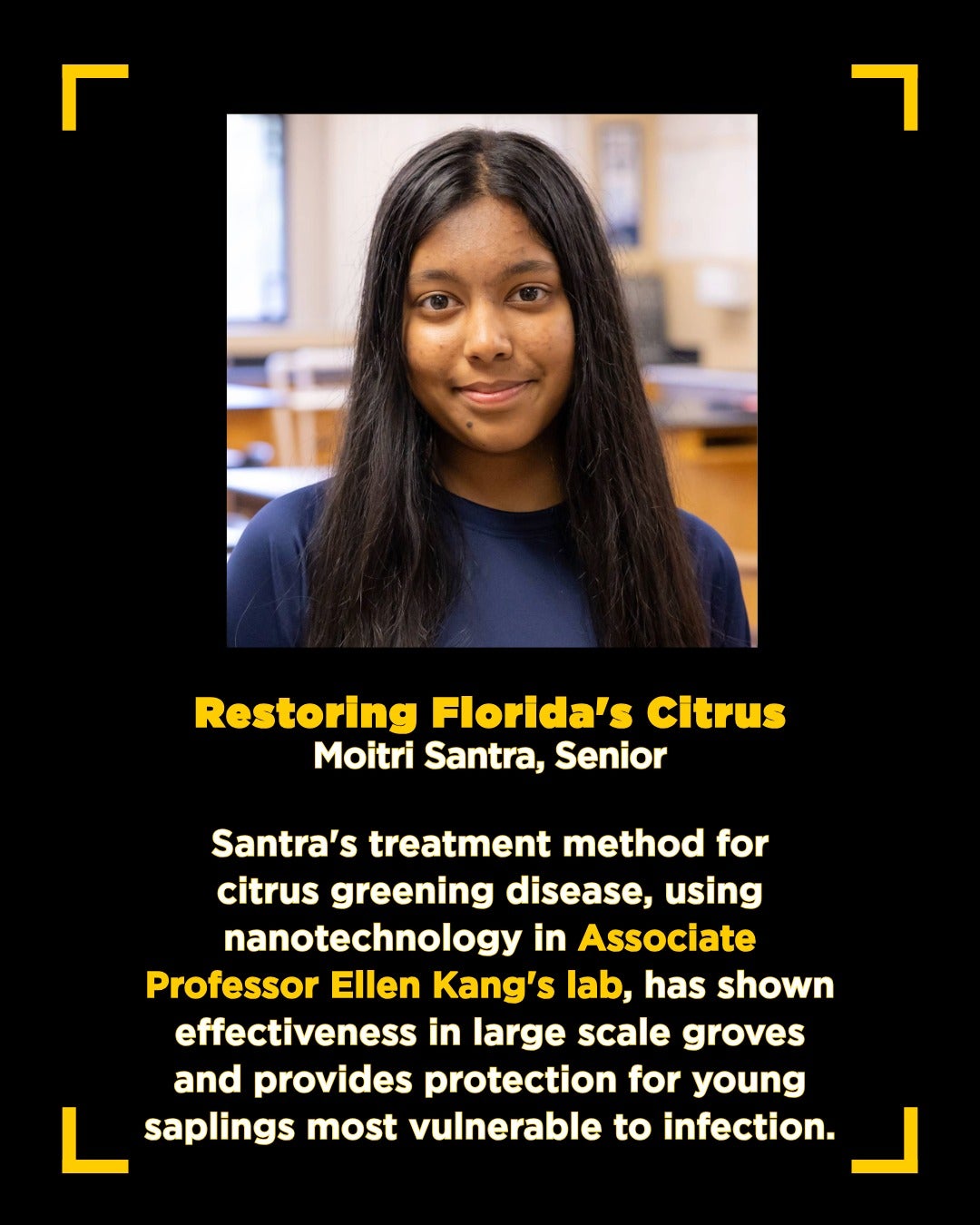
Most notably, Santra took home first place and $6,000 in the Plant Sciences category and received the EU Contest for Young Scientists Award. She will represent Regeneron ISEF at the EU Contest for Young Scientists to be held this September in Kiel, Germany.
“Working in Dr. Kang’s lab played pretty big role in choosing materials science and engineering as my major for college because I was exposed to just how many different things someone can do in the area I work with, nanotechnology,” says Santra, a senior bound for Stanford who has worked with Kang since she was a freshman. “The lab provided a lot of resources — not just the instruments, but also mentorship, advice and support.”
A Will to Succeed
The hallway leading to Furiosi’s classroom is decorated with rows of blue, red, white, green, yellow and pink paper accomplishment ribbons. More ribbons, pennants and certificates adorn his walls, along with eight Science and Engineering Fair of Florida best-in-fair grand award senior division trophies — more than any other high school in the state.
During his own primary education, Furiosi attended eight schools over 12 years. As a seventh-grader at Stone Magnet Middle School in Brevard County, he was initially prohibited from participating in science fair because officials couldn’t verify Furiosi was capable of the coursework from his transfer transcripts. He would later go on to earn Order of Pegasus as a Burnett Honors Scholar majoring in biomedical sciences before earning his master’s degree in teacher education.
Every day, he saw a wall of ribbons, much like the ones in his classroom now. And every day he would tell himself, “I want to be one of those kids.”
That experience fundamentally shaped how the UCF grad runs his program today.
“What keeps me motivated is knowing that I have the opportunity to get people to be really prepared, informed citizens who are good thinkers, and who, when faced with a problem, smile and tackle it instead of running away,” Furosi says.
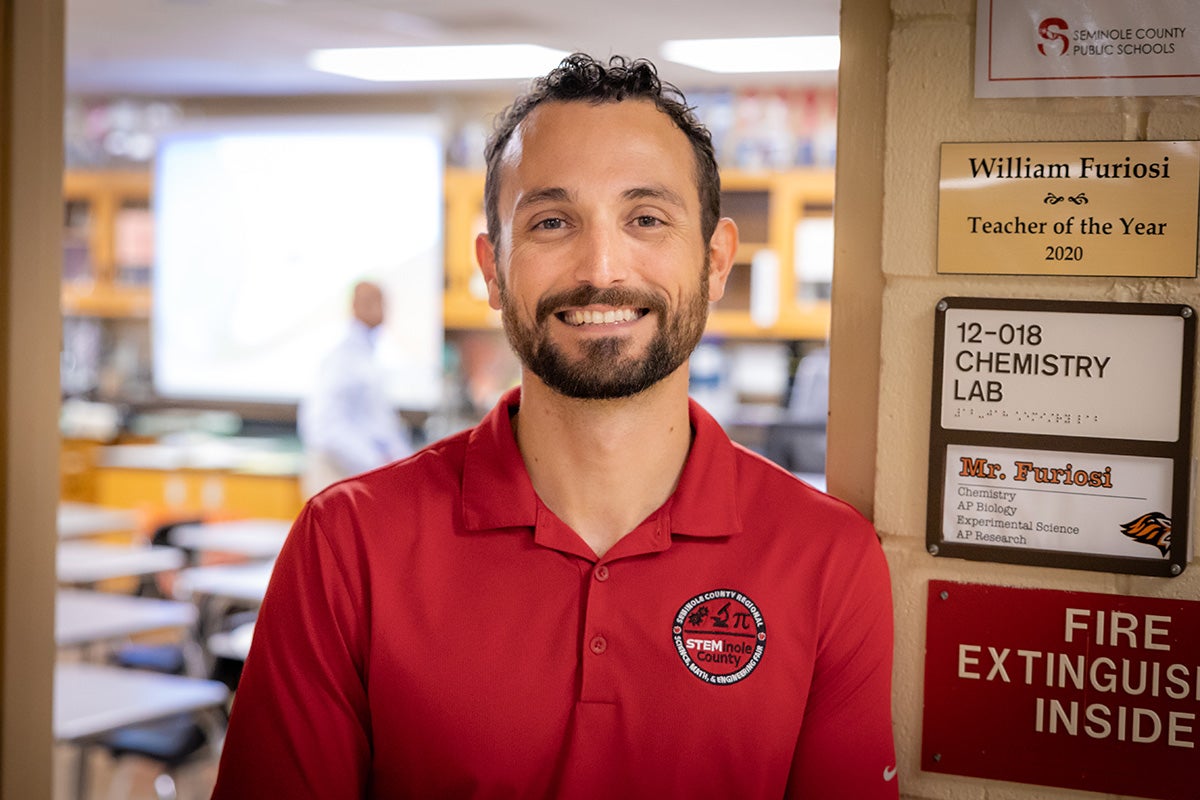
Infusing Life into Science
Furiosi began teaching at Oviedo High School in 2013 as he pursued his accelerated master’s degree, made possible by the College of Community Innovation and Education’s Resident Teacher Professional Preparation Program. The program, funded by a U.S. Department of Education grant, was created in response to the growing need for skilled workers in science, technology, engineering and mathematics.
Four years later, he took over the school’s science fair program and was determined to breathe new life into it, which at the time involved just four kids.
He cold called students in his AP Biology and Honors Chemistry courses, begging anyone who had shown a glimmer of interest during class to sign up so they wouldn’t have to fold the program.
Today, he’s at 46 students, with some, like Calvo-Chumbimuni, interested in joining the program as soon as they arrive at Oviedo High.
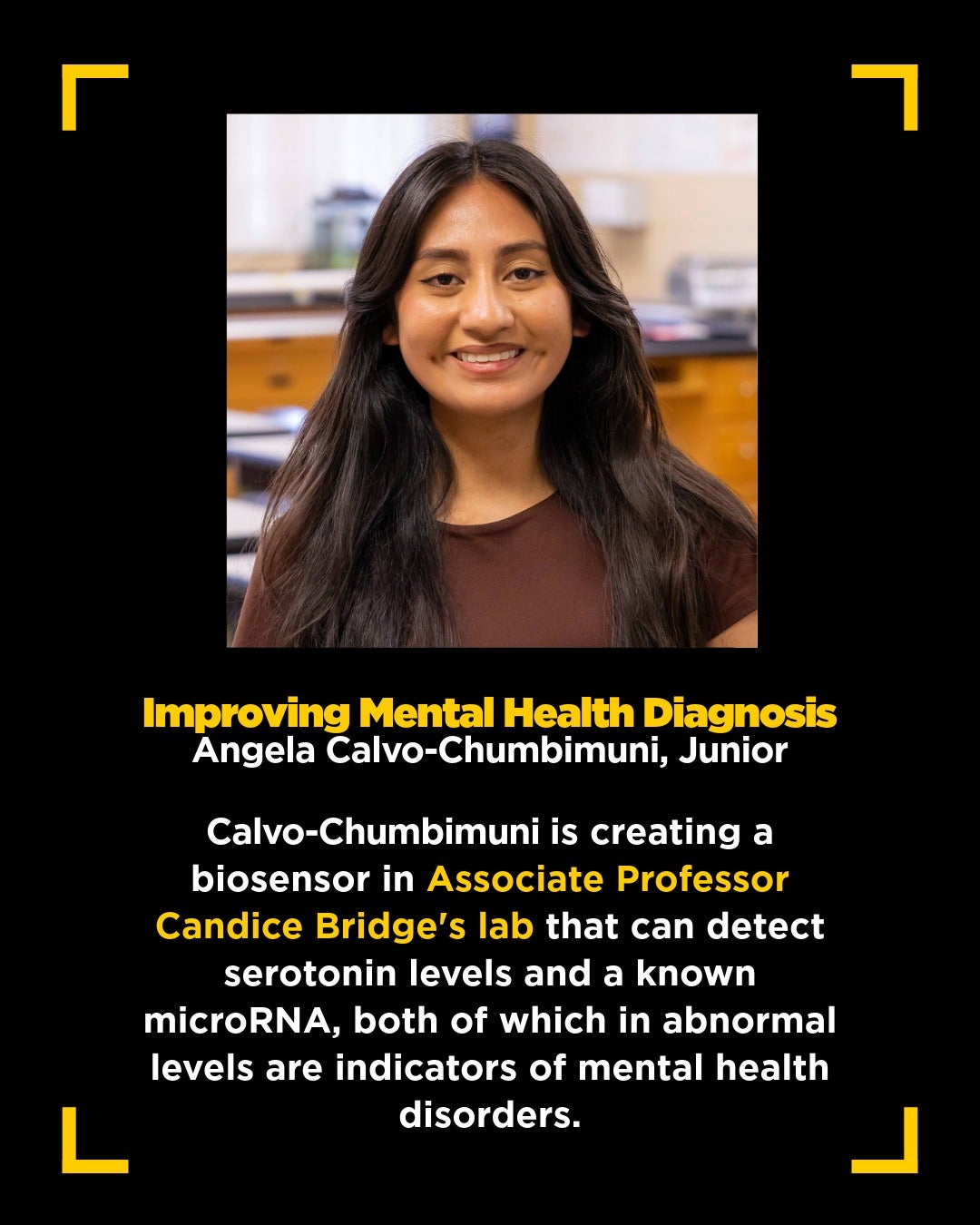
“My seventh grade science fair teacher knew Mr. Furiosi and spoke highly of him,” says Calvo-Chumbimuni, who earned fourth place ISEF’s biochemistry category this year. “When I came to Oviedo High and met him, I immediately understood why. The research program stood out to me as a valuable opportunity.”
Furiosi fosters a safe space to fail, learn and grow from the research. There are no barriers to entry; no project deemed too insignificant. And he stresses the merits of high-quality mentorship, like the ones Das, Santra, and Calvo-Chumbimuni formed with UCF faculty and STEM labs.
Some of his students have earned thousands of dollars in prizes — one alone pulled in $70,000 and is now studying at the University of Glasgow — at prestigious competitions sponsored by some of the tech industry’s biggest names, including Regeneron and Lockheed Martin, a UCF Pegasus Partner.
His alums have gone on to top research institutions including Harvard, MIT, Columbia, Stanford, and of course, UCF. One of those Knights is aerospace engineering grad Daniel Dyson ’21 ’22MS ’25PhD, who studied in Professor of Mechanical and Aerospace Subith Vasu’s lab and now works for Relativity Space at NASA’s Stennis Space Center, America’s largest rocket propulsion test site.
“Mr. Furiosi really pushes you toward excellence,” says Das, a sophomore building a tensegrity robot with shape memory alloys that he tested at UCF’s Exolith Lab.
Supporting Excellence
An award-winning researcher who has been supported by the U.S. National Science Foundation, Kang is not easily impressed. Still, Santra made an immediate impression as an eighth grader when she first popped up Kang’s inbox, asking if she could present her idea on a nanoparticle treatment for citrus greening disease in Florida.
“I could clearly see that she had a firm understanding of the material and just thought, ‘Wow, she is really a force.’ I actually wanted to have my undergrad students see her presentation because of how professional she was, even at that young age,” Kang says. “She has this creativity, passion, persistence and resilience — all the key elements that you need as a successful STEM field researcher.”
Similarly, Bridge immediately noticed Calvo-Chumbimuni’s persistence and go-getter attitude when she initially connected with her two years ago. Driven by her interest in the intersection of neuroscience, psychology and analytical chemistry, Calvo-Chumbimuni pitched her idea to develop an electrochemical sensor and biosensor to improve diagnostic methods for mental health disorders.
“I’ve always appreciated her sense of humanity,” Bridge says. “I thought, ‘If you can foster someone who has this sort of compassion already, there are infinite possibilities for what they can do to benefit the community.’ ”
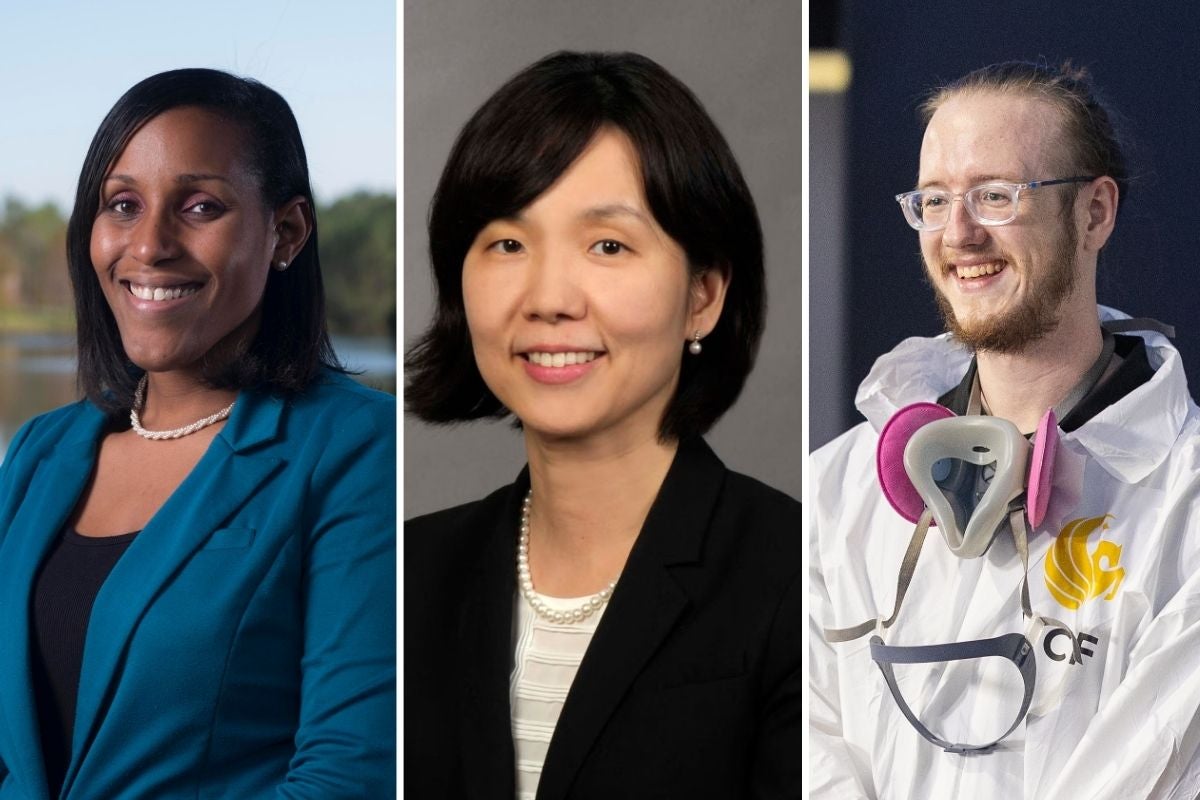
The two have been dedicated, active participants in their labs, regularly conducting research multiple days per week during the school year and, at times, daily over the summer.
The faculty and their doctoral students have mentored the high schoolers through instrumentation methods, analyzing data, the literature review process and their presentations.
Both presented continuations of their projects at ISEF — Calvo-Chumbimuni for her second-straight year, Santra for her third — while Das made his first time at the competition memorable with his fourth-place finish in the engineering technology: statics and dynamics category.
Kuehn, who is an engineer at Exolith Lab, is accustomed to working with a variety of researchers and scientists who test their experiments and equipment at the Highland Regolith Test Bin. He says he was quickly intrigued by Das’ project, a lightweight and nimble robot that can expand, contract and move through electric current.
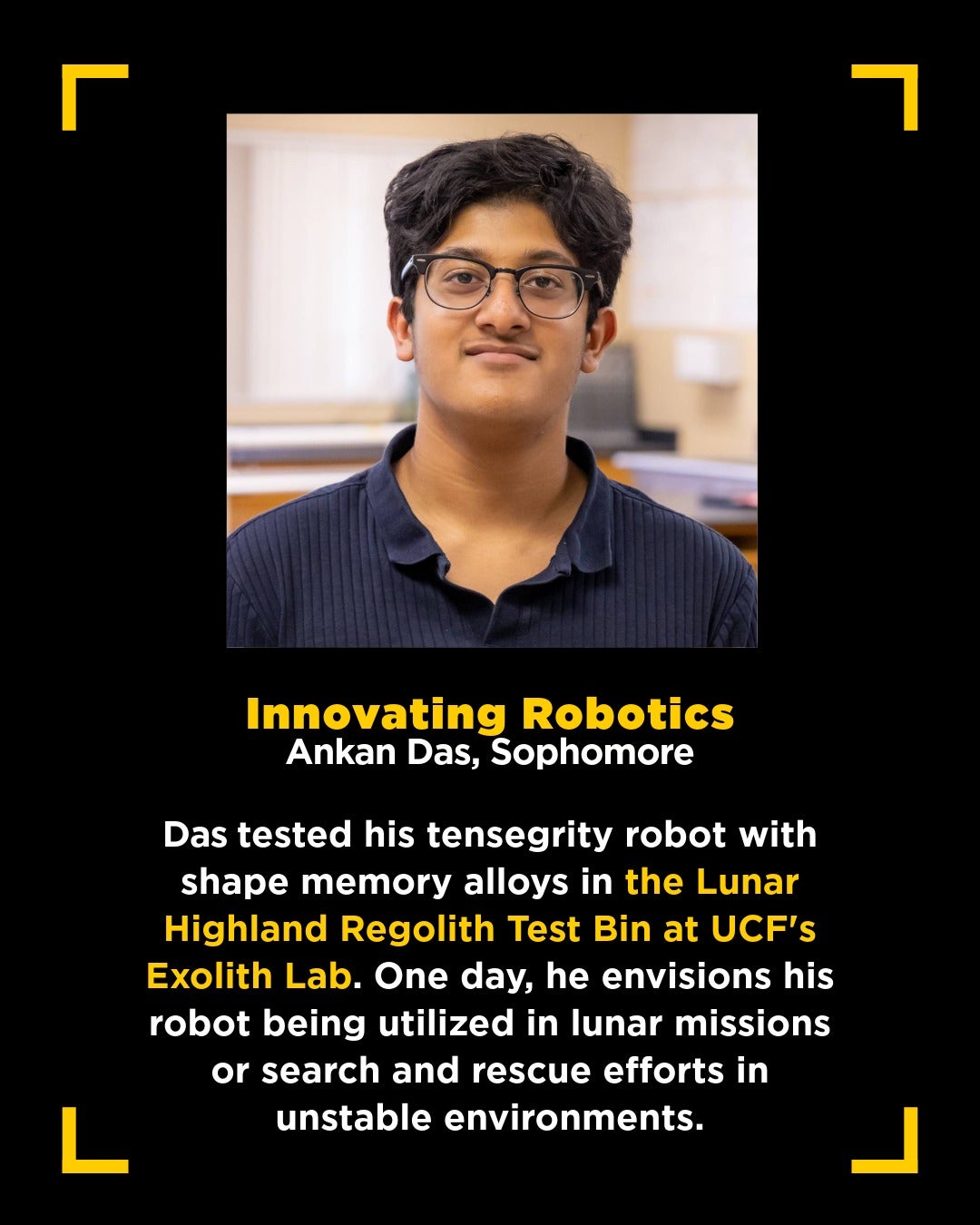
Das wanted to test the robot in lunar regolith — simulated moon dirt — because he envisions the tech behind his robot one day being utilized in lunar missions or search and rescue efforts in unstable environments.
“Max noticed that sometimes the motion was a little slow, so he gave some suggestions,” Das says. “Working in the lunar regolith chamber was a very insightful and eye-opening experience. I know I’m still in high school, but I’ve learned I want to do research for as long as I can because I really find this interesting.”
Which, at the end of the day, has been Furiosi’s mission all along.
“Research is not just in science. It is in all disciplines. There’s a lot of cool things that need to be discovered in all fields,” he says. “UCF’s expertise has been so invaluable in preparing my students for the future. A lot of these kids have wonderful ideas, and I really hope we can continue growing more professional support for them in any capacity.”