Landing humans on the moon was just a dream when UCF was founded in 1963. But we dared to believe — developing the talent and inventing the technologies to make it reality. That same spirit still drives us today.
We are America’s Space University. And we celebrate UCF Space Week to honor our origin as we dare to build what’s next.


Where Global Leaders Unite to Forge the Future of Space
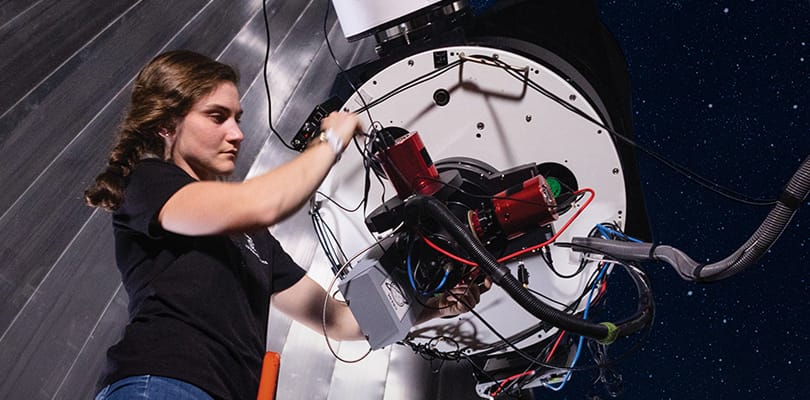
With world-renowned faculty, hands-on learning experiences and a location less than an hour from Florida’s Space Coast, UCF continues to prove why it’s America’s Space University — where education, industry and exploration unite to shape the future of space.
Oct. 25 marks the start of the second UCF Space Week, a university-wide celebration of all the ways Knight Nation boldly pushes space forward. The observance highlights UCF’s vital role in advancing space research, supporting Florida’s fast-growing space economy, and preparing the next generation of explorers, engineers, and entrepreneurs.
Here are a few key reasons why we celebrate UCF Space Week and how SpaceU is launching the next era of space innovation.
A Legacy in Fueling the Space Industry’s Talent Pipeline
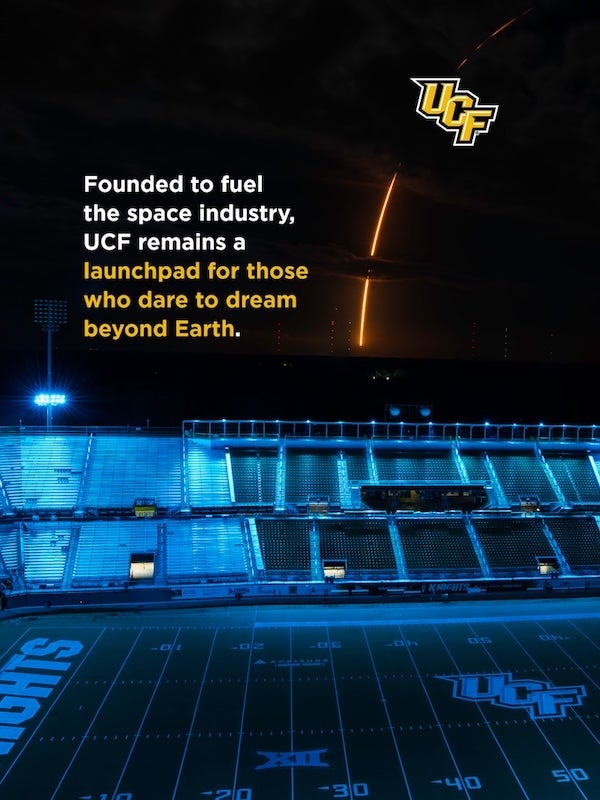
When the university first opened in 1963, landing humans on the moon was a dream that seemed out of reach. Yet UCF dared to believe — and take action — by supplying talent and research to the nearby space industry based on the Space Coast just 35 miles east. UCF’s purpose has only grown stronger more than six decades later as space exploration fuels transformative innovation here on Earth.
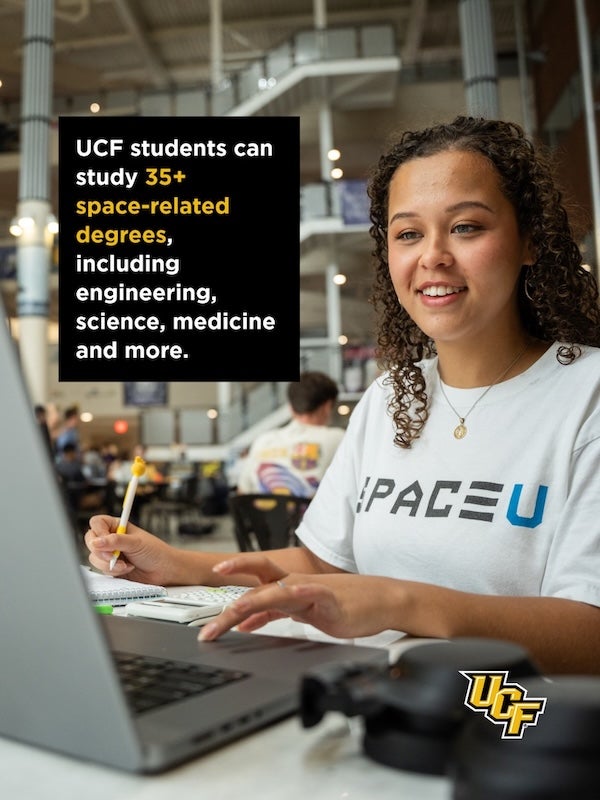
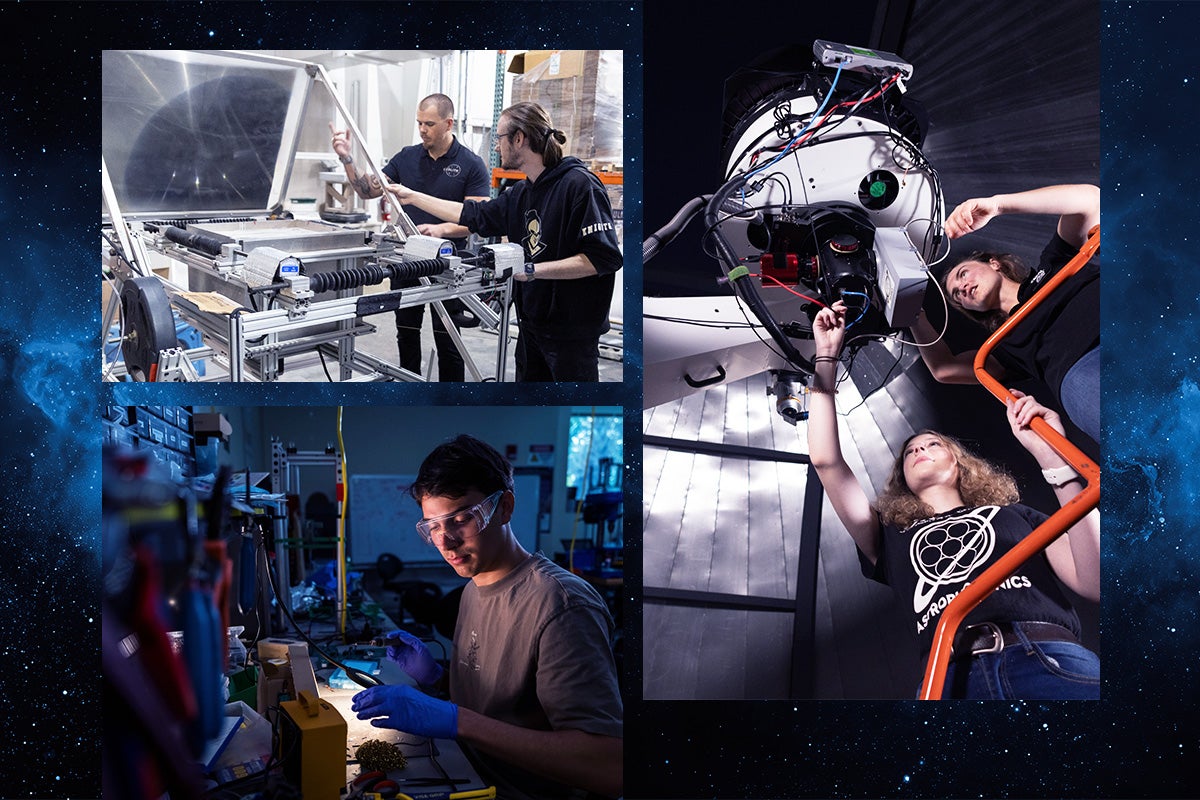
Every year, thousands of students gain real-world experience, conduct interdisciplinary research and participate in programs — including the aerospace medicine program — directly connected to industry, preparing them for in-demand roles across the space sector.
The university’s excellence in providing talent is supported by data, as the American Society of Engineering Education consistently ranks UCF in the top five nationally for awarding bachelor’s degrees in (2025):
- Aerospace engineering (No. 4)
- Mechanical engineering (No. 5)
- Computer science (No. 5)
- And No. 10 for awarding engineering bachelor’s degrees overall — the highest in Florida
Advancing Research That Reaches New Frontiers
When visionaries look to the future, they also look to UCF — a leader in space research, innovation and education with 14 experiments sent to space aboard commercial rockets since 2016. UCF Space Week spotlights these breakthroughs, connecting the community with the pioneering work happening right on campus.
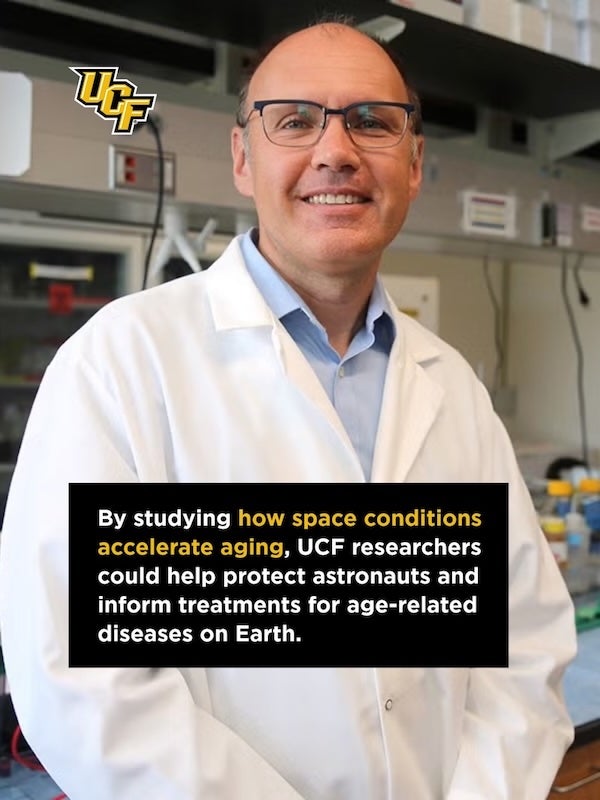
Studying Aging in Space
Researcher: Professor Michal Masternak, College of Medicine
Project: Masternak and his team study how the extreme conditions of space affect human aging and health. By simulating microgravity and space radiation, the researchers identified molecular changes associated with accelerated aging, offering insights that could help protect astronauts on long-duration missions and inform future therapies for age-related diseases on Earth.
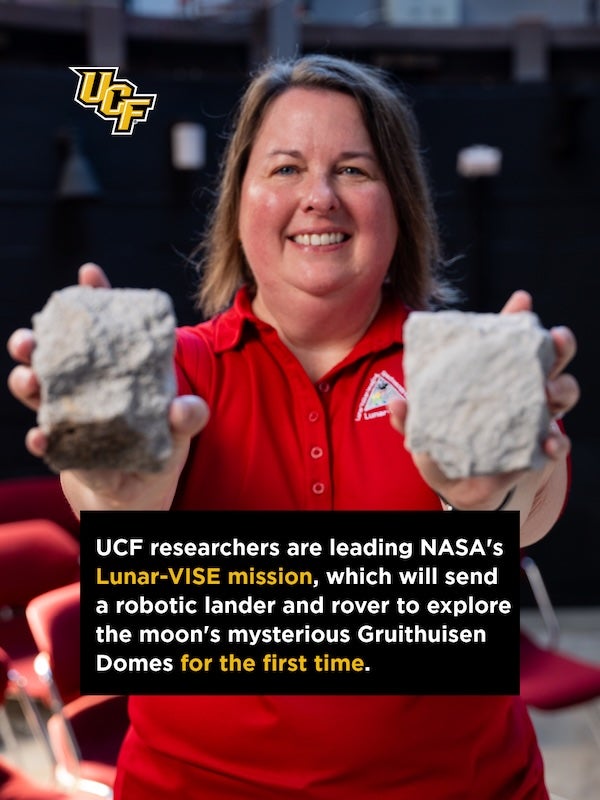
Unlocking Lunar Resources
Researchers: Planetary Geologist and Associate Professor Kerri Donaldson Hanna and Interim Department Chair of Physics and Associate Professor Adrienne Dove
Project: Donaldson Hanna and Dove are leading NASA’s Lunar-VISE (Lunar Vulkan Imaging Spectroscopy Explorer) mission, which aims to uncover clues about an unexplored part of the moon and potential insight for deeper space exploration.
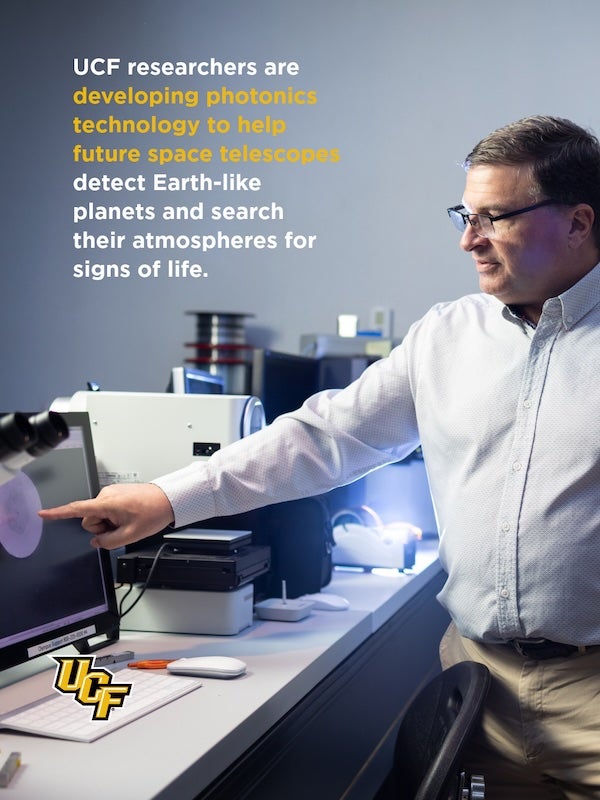
Detecting Habitable Worlds
Researcher: Professor Stephen Eikenberry, College of Optics and Photonics
Project: Eikenberry and his team are developing advanced photonics technology to help future space telescopes detect Earth-like planets hidden by the brightness of nearby stars. The NASA-funded project could improve scientists’ ability to directly observe potentially habitable worlds and search their atmospheres for signs of life.
Building Partnerships That Propel Discovery
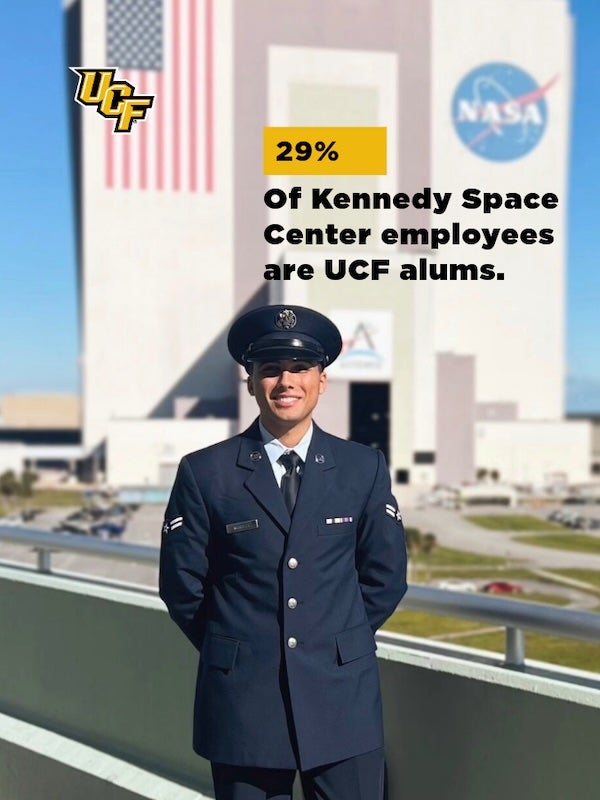
UCF Space Week highlights these crucial collaborations with support from Blue Origin, KPMG, Lockheed Martin, Verizon, Space Florida and SpaceX.
At the heart of UCF’s success is collaboration. The university works closely with NASA, government agencies, private companies, and research institutions to create opportunities that bridge education, research, and real-world application. These partnerships help students gain experience and industry insight while advancing technologies that will define the next phase of space exploration.
On Sept. 9, UCF partnered with the U.S. Space Force’s innovation enterprise to launch the SpaceWERX East Coast Innovation Gateway. The effort strengthens connections between government, academia, industry and entrepreneurs to help promising ideas move faster from research to real-world capability.
UCF is also helping space‑related research, innovation and workforce development across through the Florida Space Research Consortium. Alain Berinstain, who joined UCF in January as director of the Florida Space Institute, now leads the eight-university initiative — underscoring UCF’s leadership and expertise in this evolving field.
Powering Florida’s Space Economy
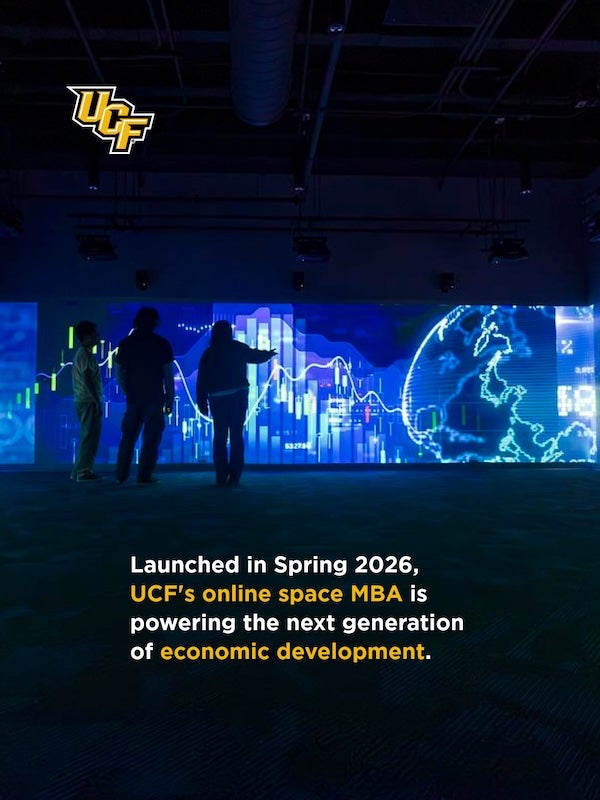
Space is no longer just a frontier — it’s the future. With the global space economy projected to reach $1.8 trillion by 2035, UCF is preparing the visionaries who will fuel discovery and shape that growth.
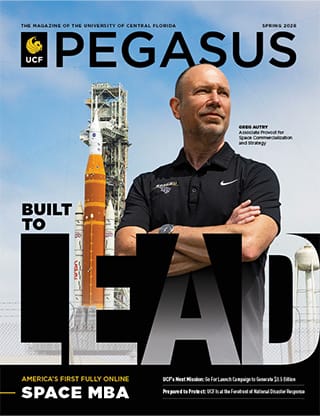
Now expanding its impact into the business of space, UCF is helping lead the business of space under the direction of Space Commercialization and Strategy Program Director Zaheer Ali . His work is building a pipeline of leaders ready to drive innovation, strengthen national security and unlock opportunities that will advance humanity’s future beyond Earth.
Reaching for What’s Next
UCF Space Week isn’t just about looking back at past achievements — it’s about imagining what comes next. With a legacy built on exploration and a community fueled by curiosity, UCF continues to inspire students and researchers to reach higher, think bolder and push the boundaries of what’s possible.
Because at UCF, space isn’t the final frontier — it’s just the beginning.