Key Takeaways
- Space food evolved from survival rations to diverse, culturally inspired meals.
- Microgravity changes taste and eating habits, driving new food innovations.
- Space dining now blends science, sustainability and sensory design.
- Hydroponic systems and bioregenerative solutions enable long-term, self-sustaining space missions.
- Space tourism is turning meals into luxury experiences in orbit.
- UCF Rosen College leads research and education in space hospitality.
The Evolution of Space Dining
What was the first food eaten in outer space? In 1961, cosmonaut Yuri Gagarin became the first person to eat in space, squeezing beef and liver paste from aluminum tubes. Early meals like this marked the beginning of space history, prioritizing food safety over satisfaction. Today’s International Space Station emphasizes psychological comfort, offering more than 200 items, including thermostabilized foods, dehydrated foods and culturally diverse dishes.
Understanding the Concept of Space Food
Space food must be lightweight, compact, nutritious, shelf-stable and safe in confined environments. Due to these challenges, modern space food has evolved from freeze-dried food and rehydratable foods into a diverse menu that represents a fusion of science, engineering and hospitality, designed to fuel bodies and maintain morale.
The Science of Eating in Microgravity
The complexity of space food can be understood through microgravity. The apparent weightlessness it causes leads to peculiar issues:
- Crumbs can damage equipment and enter airways, which has led astronauts to consume tortillas instead of bread.
- Liquids float in spheres rather than pouring, requiring specialized packaging and delivery systems.
- Space congestion, caused by fluids shifting upward in the body, dulls taste and smell.
These constraints demand advanced food technology, which Rosen College is leading the field in.
Designing for the Senses
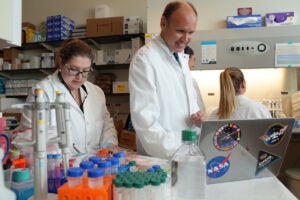
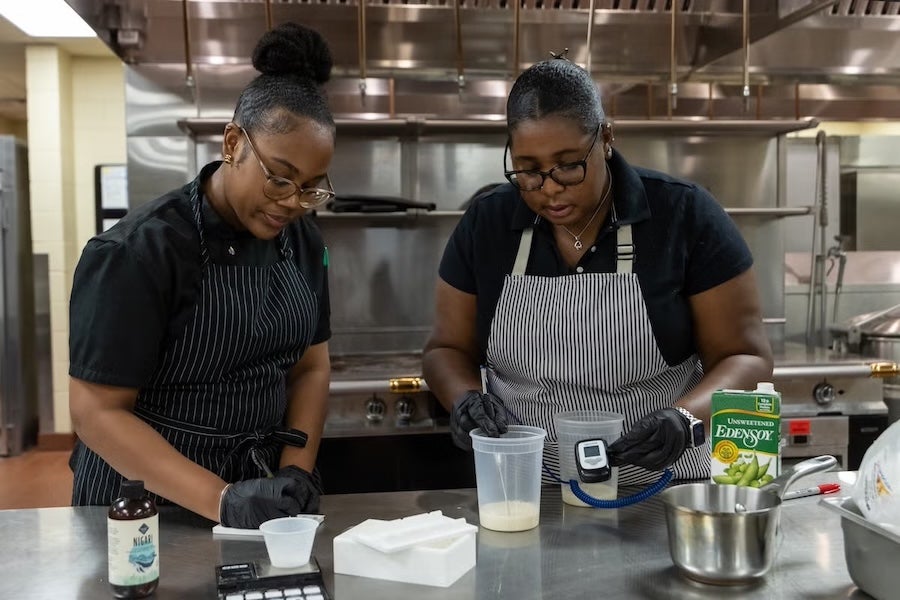
Given these challenges, food scientists and designers, like those working in the sensory evaluation center at NASA’s Food Systems Laboratory, work to enhance flavor, aroma and texture for astronauts. Beyond sustenance, these enhancements boost morale and appetite for crew. Professor Amy Gregory notes that food represents “nourishment, medicine and community all in one.” Sensory experiences are thus transformed into proponents of astronaut well-being and, for future space tourists, guest satisfaction.
Producing Food for Space
Distinct engineering challenges also shape space food production. No open flames mean convection heating replaces conduction ovens. Limited water requires efficient hydration stations. Long shelf life demands irradiated foods or freeze-dried foods. In such limited environments, food safety, waste management and space sustainability must drive every design decision.
Sustainability and Space Agriculture
Newer developments in space food include hydroponic systems, aeroponic platforms and bioreactors, which enable the recycling of air, water and nutrients to produce fresh food. In 2015, NASA’s “Veggie” experiment led to the first space-grown crop eaten in orbit. These food innovations reduce dependence on resupply missions while advancing sustainability back on Earth.
The Human Side of Space Food
Food is more than nutrition — it offers psychological and cultural anchors during isolation. Familiar meals promote mental health and social bonding among astronauts. Sharing meals provides a source of connection and comfort among crew, even 250 miles above Earth.
The Future of Space Dining
Space dining has evolved from sustenance to experience design, with a focus on luxury, flavor and culture. Commercial space tourism companies like SpaceX, Blue Origin and Virgin Galactic have captured this demand by exploring luxury dining concepts. Future plans include orbital restaurants, 3D-printed meals and personalized nutritional needs. These trends point to an imminent need for space hospitality management.
Intersecting Space Food and Space Tourism
Innovations in food preservation, systems and sensory design directly support the growing space tourism economy. As access to orbit expands, space dining will become part of the guest experience. Future trends in space hospitality include personalized nutritional needs in microgravity and zero-waste systems for recycling. As these fields emerge, so will the demand for leaders in them.
Rosen College and the Future of Space Hospitality
UCF Rosen College ranks #1 in the United States and #2 globally in hospitality and tourism management, according to ShanghaiRanking’s 2025 Global Ranking of Academic Subjects. Part of what sets us apart is our goal to redefine hospitality by integrating space tourism research into curriculum.
UCF leads more than 40 NASA-affiliated projects. We partner with Disney, Universal and other global partners to advance hospitality insights. Combining space logistics with tourism operations enables us to train the next generation of space hospitality leaders — professionals who will determine how humans eat, live and connect beyond Earth.
Opportunities in Space Food and Tourism
The expansion of space tourism calls for professionals with degrees that connect hospitality innovation with space research. Rosen offers an array of degrees prioritizing this combination:
- Event Management degrees focus on the logistics and financial planning for executing events, from current NASA conferences to future space weddings.
- Hospitality Management degrees provide the blend of business and tourism-related skills necessary for a successful business, whether on Earth or in space.
- Lodging and Restaurant Management degrees equip students to oversee hotel operations, no matter the location.
Rosen students gain experience through real-world projects and internships, preparing them for careers with aerospace firms, luxury travel brands and sustainability research labs.
“[UCF’s] location in Central Florida gives students an edge.”
Find Your Degree Program
Or Browse Degrees:
Rosen’s Research Context
UCF Rosen integrates AI, automation, sustainability and destination resilience into hospitality research. Located 35 miles from Cape Canaveral, Rosen connects directly to the nation’s leading aerospace companies and space agencies. This geography, combined with interdisciplinary collaboration, positions Rosen College to lead space tourism education.
Space Food and Tourism
Space food transformed from survival to science, sustainability and sensory design. As dining innovations advance, space tourism grows from niche luxury to accessible adventure. UCF Rosen College prepares students to shape this future, teaching the next generation to create experiences that nourish humanity beyond Earth. Wherever humans advance to, hospitality will be there — with Rosen College ensuring it will remain rooted in connection.
FAQs
No. NASA astronauts are federal employees earning salaries of approximately $152,258. Commercial astronauts working for private space companies negotiate their own compensation packages.
The space food market is expanding rapidly as commercial space tourism grows. While traditional astronaut food serves government space programs, emerging commercial ventures create demand for luxury dining experiences.
Astronauts eat thermostabilized entrees, freeze-dried fruits and vegetables and rehydrated meals. Modern astronauts aboard the International Space Station choose from over 200 items, including culturally diverse dishes, condiments and beverages.
Astronauts frequently request shrimp cocktail, spicy foods and items with bold flavors to compensate for dulled taste perception in microgravity. Fresh fruit, when available, is highly valued.
In 2022, three businessmen from the U.S., Canada and Israel paid $55 million each to go to space. The price tag included the ride, accommodations and space dining.
Feeding an astronaut is expensive due to specialized packaging, rigorous safety testing, nutritional analysis, shelf-life requirements and transportation costs. Every pound launched to orbit costs thousands of dollars.
UCF Missions Forging the Future of Space