Key Takeaways
- Space tourism is the emerging industry of recreational space travel. It includes suborbital flights to future interplanetary missions.
- Companies like SpaceX and Blue Origin are leading innovation in the space industry, with rocket launches and programs that bring commercial space travel closer to reality.
- The future holds potential for lunar and interplanetary tourism, creating new opportunities for society, the economy and careers within the space industry.
- Students pursuing a Space MBA can position themselves at the forefront of the rapidly growing business of space which includes space commercialization and space tourism.
What Is Space Tourism
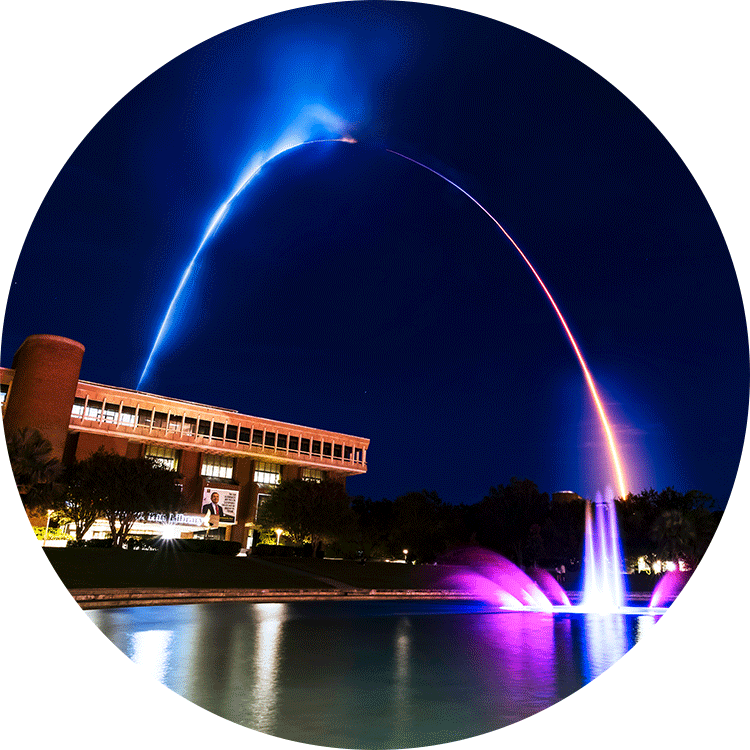
Space tourism represents the commercial practice of traveling beyond Earth’s atmosphere for recreational, leisure or adventure purposes rather than scientific research. This emerging industry transforms what was once an exclusive domain of highly trained astronauts into an experience accessible to civilians. This shift creates new possibilities for exploration, economic growth and a rapidly expanding workforce. As the industry evolves, so does the need for leaders with specialized business expertise, which is why UCF developed the Space MBA.
The Evolution of Space Tourism
The journey toward commercial space flight began long before the first paying customer reached orbit. Throughout the 1960s and 1970s, space exploration remained the exclusive territory of government programs, with civilians unable to access travel reserved only for military pilots and scientists.
The first true space tourist was American businessman Dennis Tito, who paid approximately $20 million to visit the International Space Station in 2001. Tito’s eight-day mission proved that private individuals could safely travel to space given proper training and resources.
Development accelerated in the 2010s as SpaceX demonstrated reusable rocket technology. By 2021, SpaceX, Blue Origin and Virgin Galactic had successfully flown civilians to space, signaling that space tourism had moved from experimental concept to operational reality.
Different Types of Space Tourism
Space tourism encompasses several distinct categories, each offering different experiences, altitudes and durations. Understanding these variations helps clarify the range of options developing within the commercial space industry and the technological requirements each demands.
- Suborbital flight represents the most accessible form of space tourism. It propels passengers above the Kármán line (which marks the boundary between Earth’s atmosphere and outer space) for 10 to 15 minutes. Blue Origin and Virgin Galactic specialize in this category.
- Orbital space tourism is a more technologically advanced and costly form of space tourism. It enables passengers to continuously circle Earth for days or weeks. Examples include SpaceX’s Crew Dragon on Inspiration4 and Axiom Space’s private astronaut flights to the ISS.
Beyond current operational categories, the industry envisions lunar tourism and interplanetary travel as future offerings. There remains a significant commercial interest in deep space tourism, despite the substantial, technical and financial challenges involved.
Leading Companies in Space Tourism
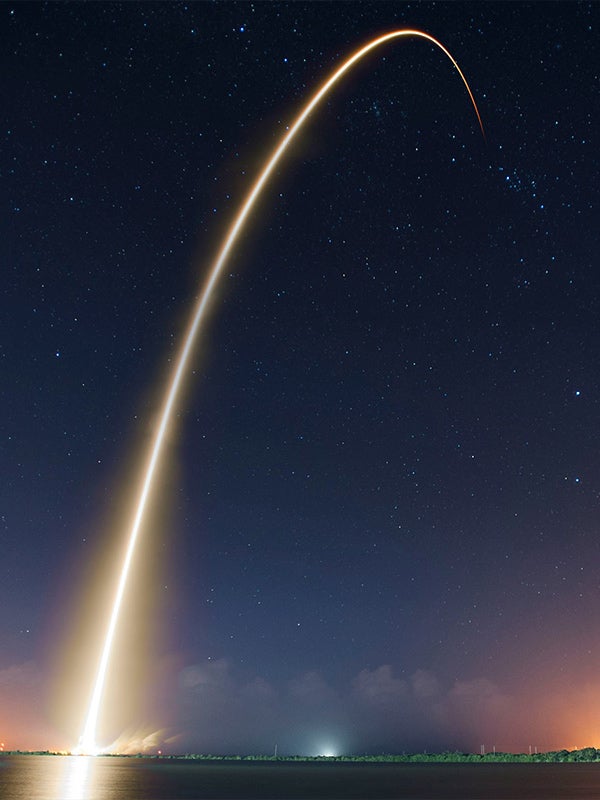
Several aerospace companies have emerged as frontrunners in transforming space tourism from concept to operational business. Three space tourism companies have distinguished themselves through successful crewed missions: SpaceX, Blue Origin and Virgin Galactic. Beyond these leaders, private companies like Axiom Space focus on building commercial space stations, while others develop specialized services ranging from space hotels to lunar landers.
As one of the nation’s leading suppliers of aerospace and defense talent, UCF plays a pivotal role in supporting this new era of commercial space travel. Located near Florida’s Space Coast, the university collaborates closely with NASA, Blue Origin and SpaceX, helping develop the next generation of engineers, scientists and mission specialists driving innovation in both orbital and suborbital flight. To meet the growing demand for skilled leadership in the space sector, UCF offers the Online Space MBA program.
SpaceX
Elon Musk founded SpaceX in 2002, revolutionizing spaceflight through reusable rocket technology. SpaceX launched the first all-civilian orbital mission, Inspiration4, in September 2021, sending four private citizens on a three-day journey. SpaceX is developing Starship, a fully reusable spacecraft designed for both Earth orbit missions and interplanetary travel.
UCF’s strong relationship with SpaceX and NASA has opened research and internship opportunities for students—many of whom contribute to propulsion, materials science and microgravity research that informs commercial spaceflight safety and sustainability.
Blue Origin
Founded by Jeff Bezos in 2000, Blue Origin focuses primarily on suborbital tourism through its New Shepard vehicle. Blue Origin space tourism operations began with Bezos flying on the first crewed mission in July 2021. The company is developing New Glenn, an orbital-class rocket and Blue Origin’s Blue Moon, a lunar lander for NASA’s Artemis program.
With nearly a third of Kennedy Space Center’s workforce made up of UCF alumni, the university’s impact extends directly to Blue Origin’s growing presence on the Space Coast. Through partnerships and research centers like the HyperSpace Center, UCF supports advancements in propulsion systems and hypersonic technologies that shape the future of commercial and exploratory missions.
How Much Does Space Tourism Cost?
The financial barriers to space tourism remain substantial, though costs have decreased significantly compared to early missions.
- Suborbital Flights: Around $500,000 per seat with companies like Virgin Galactic and Blue Origin.
- Orbital Missions: Around $200 million to charter a capsule with SpaceX.
Despite improvements from the 2000s, space tourism remains accessible only to extremely wealthy individuals or those funded by sponsors and organizations. The industry recognizes that achieving mass-market appeal requires further cost reductions through continued technological innovation.
Is Space Tourism Safe?
Safety represents the paramount concern for commercial spaceflight operations. Since any accident could undermine public confidence and invite regulatory restrictions, safety protocols are approached from multiple areas, including vehicular testing, passenger training and national regulations like the Federal Aviation Administration.
As the industry matures, more comprehensive safety standards will likely emerge based on operational data and lessons learned from early missions. If product performance catches your attention, consider UCF’s Quality Assurance Certificate.
The Business of Space Tourism
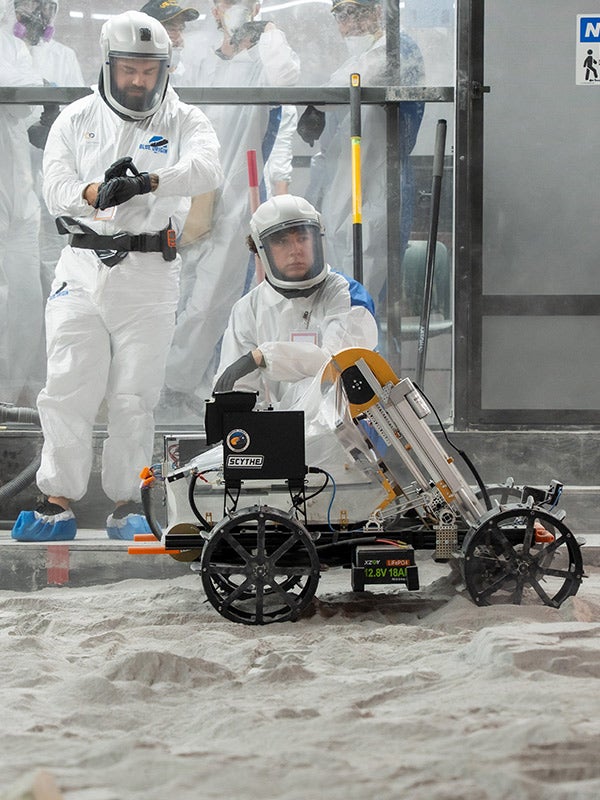
The new space age is being built by two equally vital forces: the engineers designing the technology that makes commercial spaceflight possible, and the business leaders shaping the strategies that make it sustainable. Together, they are driving the business of space tourism, a sector where innovation and economics must advance in lockstep.
Aerospace engineers develop reusable, cost-effective spacecraft that reduce manufacturing costs while upholding the highest standards of safety and performance. Meanwhile, business leaders evaluate markets, manage investment risk, build partnership models and determine how space ventures can operate profitably at scale.
In this rapidly commercializing industry, success hinges on collaboration between the builders and the planners who turn technical possibilities into economic reality. Learn how UCF equips both professionals and students through programs that prepare them to lead in every dimension of the space economy.
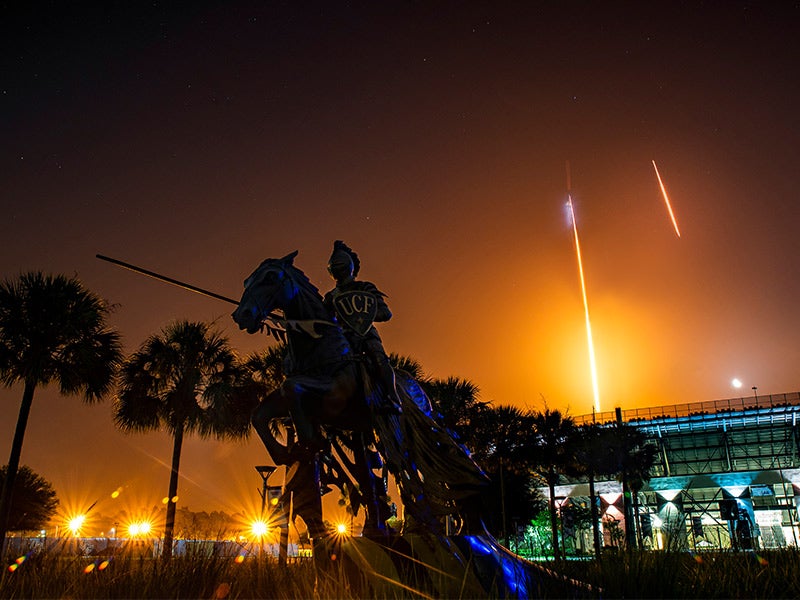
Space Business Leadership With UCF Online
The commercialization of space has created unprecedented demand for leaders who can navigate markets, manage investment and guide organizations toward sustainable growth. As space tourism expands, companies need professionals equipped to make informed business decisions that support safe, profitable and scalable commercial space ventures.
Strategic Leadership
The next era of space tourism will be led by business strategists who understand how to build viable models, attract capital, manage risk and position companies in a rapidly growing market. Successful organizations require leaders who can integrate financial discipline, operational planning and strategic foresight. These skills are best grounded in advanced business education focused on the space economy.
Opportunities in Space Business
The commercialization of space creates diverse career opportunities beyond engineering roles. Space tourism companies, satellite operators and launch service providers require professionals in business development, operations management, financial analysis and strategic planning. Leadership roles exist across the industry, from startups to established corporations.
Aerospace Engineering in Space Tourism
The commercial space tourism industry has fundamentally transformed aerospace engineering priorities. While traditional government space programs emphasized performance above all else, commercial space tourism must focus on safety and cost-effectiveness.
Companies like SpaceX, Blue Origin and Virgin Galactic have invested in reusable systems that require engineering solutions to extend component lifespans and enable rapid inspection between flights. At UCF, researchers in the Astrodynamics & Space Robotics Laboratory focus on key areas such as guidance, control and vehicle dynamics, which underpin safer and more efficient spacecraft operations. The university’s Guidance Control and Dynamics Certificate is designed to “provide higher-level courses in the areas of guidance, navigation, control, and dynamics … [so] students will learn … to make an immediate impact in the aerospace … industries.”
Economic Impact
Commercial spaceflight is shaping a new global market where business decisions influence everything from pricing models to launch partnerships. As technology becomes more cost-efficient, a broader customer base emerges that drives flight frequency and revenue growth.
Analysts project that the space tourism market could reach $3 billion annually by 2030, a trajectory powered not only by engineering breakthroughs but by business strategies that scale operations, attract investment and build consumer trust. Growth in this sector relies on leaders who can balance risk, regulation, financing and market demand—which reinforces the need for space-focused business expertise.
Career Outlook
The commercial space sector is creating fast-growing opportunities for professionals in business, finance, operations and market strategy. Space tourism companies, satellite providers and launch firms increasingly rely on experts who can evaluate markets, negotiate partnerships, manage budgets and guide long-term growth. These roles benefit from advanced business education rooted in the nuances of the space economy.
- Computer and Information Systems Managers: Oversee cybersecurity, data infrastructure and mission-critical digital systems
National Median Salary (BLS): $171,200 - Financial Analysts: Evaluate investments, pricing and profitability for commercial space ventures
National Median Salary (BLS): $101,910 - Operations Managers: Coordinate supply chains, logistics and commercial launch planning
National Median Salary (BLS): $105,350 - Marketing Managers: Build customer acquisition strategies and commercial/government partnerships
National Median Salary (BLS): $159,660
Note: Salaries in the commercial space sector can exceed national medians due to industry specialization, private-sector competition and mission-critical responsibilities.
Advance Your Career
UCF’s Space MBA program offers a specialized pathway for professionals seeking leadership roles in the global space economy. Launching in Spring 2026, the fully online, part-time program spans 24 months and 39 credit hours, combining traditional business education with insights from the aerospace industry. Graduates gain advanced knowledge in space commercialization, business strategy and innovation, preparing them for executive positions across commercial space enterprises.
The program is designed for engineers expanding their business expertise, entrepreneurs launching space ventures and professionals transitioning from other industries. By blending business acumen with industry-specific knowledge, graduates position themselves at the forefront of one of the most dynamic and rapidly growing sectors in the world economy.
Greg Autry, Ph.D., UCF’s Associate Provost for Space Commercialization and Strategy, notes that the program reflects the university’s deep connection to the industry and its growing influence as “America’s Space University.”
As UCF shared during Space Week 2025, “The Space MBA gives a specialized focus on the economics, regulation and commercialization of space—the type of leadership training needed for the growing global space industry.”
The Future of Space Tourism
The next decades promise dramatic expansion in space tourism capabilities and destinations. Orbital space stations designed specifically for tourists represent a near-term development, with Axiom Space already contracted to build commercial modules attached to the ISS.
Subsequent developments could include lunar orbit stations and eventually interplanetary tourism. Still, landing missions require substantially more complex systems, like lunar descent vehicles and surface habitats.
The potential impact extends beyond individual experiences, influencing humanity’s perceptions of Earth and our place in the universe. Environmental considerations also require attention as launch frequency increases, with engineers exploring cleaner propellants like liquid hydrogen-oxygen combinations that produce only water vapor.
Frequently Asked Questions
Does space tourism exist now?
Yes, space tourism exists today with companies like Blue Origin and SpaceX offering commercial flights. Several paying customers have already traveled to space through suborbital and orbital spaceflights.
How much does it cost to go to space?
Suborbital flights with Blue Origin or Virgin Galactic cost around $500,000 per seat. Orbital missions with SpaceX cost significantly more, ranging in the millions of dollars per passenger.
What year will space tourism be possible?
Space tourism is already possible, having become operational as of 2021. Companies continue expanding their services and reducing costs to make space travel accessible to more people over time.
Will space tourism really lift off?
Space tourism has already launched with successful crewed missions from multiple companies. The industry continues growing as technology improves and costs gradually decrease.
What is the 25-year rule in space?
The 25-year rule refers to a regulatory guideline requiring space hardware or debris to be removed from orbit within 25 years after mission completion. This policy aims to reduce space debris and maintain orbital safety for future missions.
How much is a seat on Blue Origin?
Blue Origin space tourism seat prices have not been publicly disclosed for all flights, but early tickets sold at auction for millions of dollars. Current estimates suggest prices range from $200,000 to $300,000 per seat.
Do you get paid for going to space?
Space tourists pay to go to space rather than getting paid. Only professional astronauts employed by space agencies or commercial space companies receive compensation for space travel.
Source References
- Aerospace Engineers. (2025, August 28). U.S. Bureau of Labor Statistics. https://www.bls.gov/ooh/architecture-and-engineering/aerospace-engineers.htm
- Clough, R., & Grush, L. (2024, July 16). Musk to Move X, SpaceX Headquarters to Texas From California. Time. https://time.com/6999323/elon-musk-move-x-spacex-headquarters-texas-california/
- Computer and Information Systems Managers. (2025, August 28). U.S. Bureau of Labor Statistics. https://www.bls.gov/ooh/management/computer-and-information-systems-managers.htm
- Crowe, L. (n.d.). Space Tourism Prepares for Take Off. World Finance. Retrieved October 27, 2025, from https://www.worldfinance.com/markets/space-tourism-prepares-for-take-off
- Editors of Encyclopaedia. (n.d.). Dennis Tito. Encyclopædia Britannica. Retrieved October 27, 2025, from https://www.britannica.com/money/Dennis-Tito
- Johnson, E. (2018, July 12). Exclusive—Jeff Bezos Plans to Charge at Least $200,000 for Space Rides: Sources. Reuters. https://www.reuters.com/article/world/uk/exclusive-jeff-bezos-plans-to-charge-at-least-200000-for-space-rides-source-idUSKBN1K301W/
- Mechanical Engineers. (2025, August 28). U.S. Bureau of Labor Statistics. https://www.bls.gov/ooh/architecture-and-engineering/mechanical-engineers.htm
- NASA, Axiom Space Change Assembly Order of Commercial Space Station. (2024, December 19). NASA. https://www.nasa.gov/humans-in-space/commercial-space/leo-economy/nasa-axiom-space-change-assembly-order-of-commercial-space-station/
- Seedhouse, E. (2025, April 4). Space Tourism. Encyclopædia Britannica. https://www.britannica.com/topic/space-tourism
- Software Developers, Quality Assurance Analysts, and Testers. (2025, August 28). U.S. Bureau of Labor Statistics. https://www.bls.gov/ooh/computer-and-information-technology/software-developers.htm
- Strassmann, M., & Novak, A. (2025, April 14). Space Tourism Is Establishing a New Frontier in Travel. Here’s What to Know About Suborbital Flights. CBS News. https://www.cbsnews.com/news/space-tourism-suborbital-flights-blue-orgin-virgin-galactic-spacex/