
UCF IS AMERICA’S SPACE UNIVERSITY
In 1963, UCF was founded as Florida Technological University to train engineers and technical workers for the U.S. space program. Our first research grant, awarded in 1968, came from NASA — and we’ve received $204 million in NASA awards since 1991. UCF is also the closest public university to Florida’s Space Coast and Kennedy Space Center, where our alumni make up 29% of the workforce.
For more than 60 years, UCF has dared to build what’s next in space.
-
 Workforce
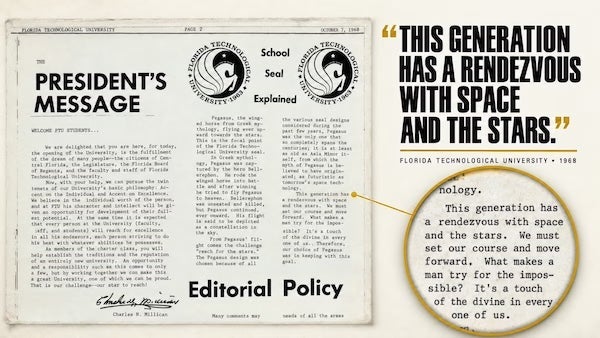
UCF Is Founded for the Space Race
1963: Florida Technological University, now UCF, is founded to provide talent for the growing space industry as the United States is challenged with landing a man on the moon before 1970.
As of 2026: UCF is named the No. 1 supplier of graduates to the nation’s aerospace and defense industries by Aviation Week. That impact is especially visible along Florida’s Space Coast, where 29% of Kennedy Space Center employees are UCF graduates.
-
 Disciplines
UCF Students Prepare for Roles of Tomorrow
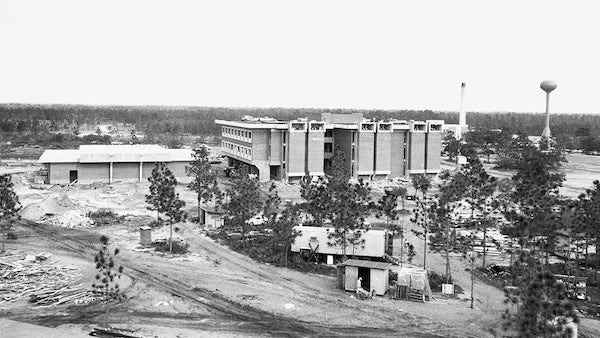
1968: Classes begin at UCF, with aerospace sciences among the university’s earliest degree programs.
As of 2026: Space extends far beyond a single discipline at UCF. Students can choose from more than 35 space-related programs spanning business, engineering, hospitality, medicine, planetary science, optics and policy.
-
 Research
UCF Earns Its First Research Grant
1968: UCF receives its first research grant — $12,500 from NASA — establishing an early connection between the university and the agency.
As of 2026: UCF has received $204 million in NASA awards since 1991, supporting work that advances planetary exploration, propulsion, space medicine and more.
-
 Workforce
UCF’s First Commencement Features an Astronaut
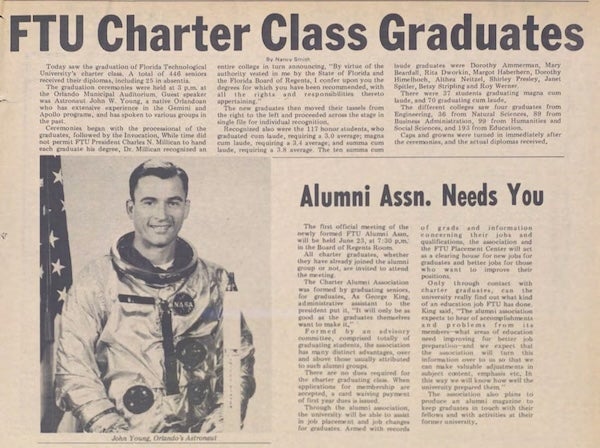
1970: Astronaut and Orlando native John Young speaks to UCF’s first graduating class. Two years later, he walks on the moon.
As of 2026: More than 30 UCF alumni at Kennedy Space Center work on NASA’s Artemis program, a multi-mission effort to return humans to the moon for the first time since Apollo 17 in 1972.
-
 Learning
UCF Student Talent Develops With NASA
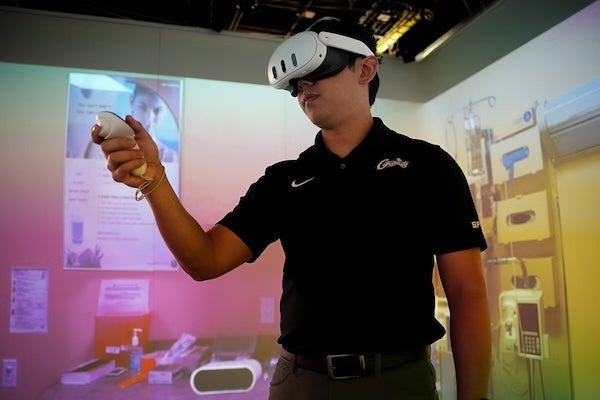
1971: NASA employs 18 students through UCF’s Co-Operative Education initiative, which leverages the university’s metropolitan location to let students alternate quarters of study with off-campus work in their academic fields.
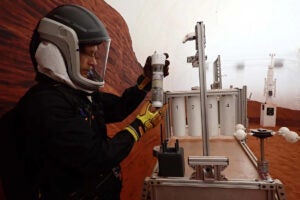
As of 2026: As NASA prepares to send astronauts back to the moon and on to Mars, UCF students are building simulated lunar landers for NASA, conducting hands-on research alongside Johnson Space Center astronauts and testing technology on the world’s largest simulated lunar surface at the Exolith Lab at UCF’s Florida Space Institute — developing workforce-ready skills and valuable connections.
-
 Medicine
A UCF Student Finds a New Way to Read X-Rays
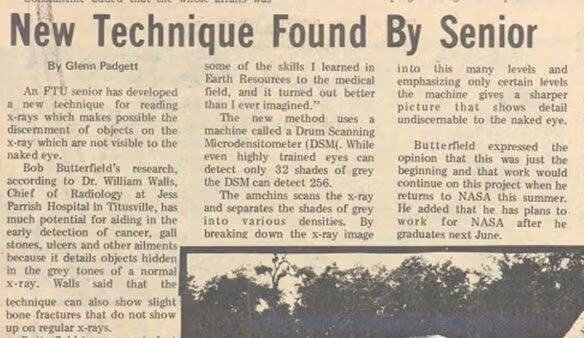
1974: On a NASA co-op assignment at Kennedy Space Center, electrical engineering student Bob Butterfield ’75 develops a new way to read X-rays, adapting methods built to analyze imagery from an Earth resources satellite and Skylab. The technique also shows promise for detecting cancer earlier.
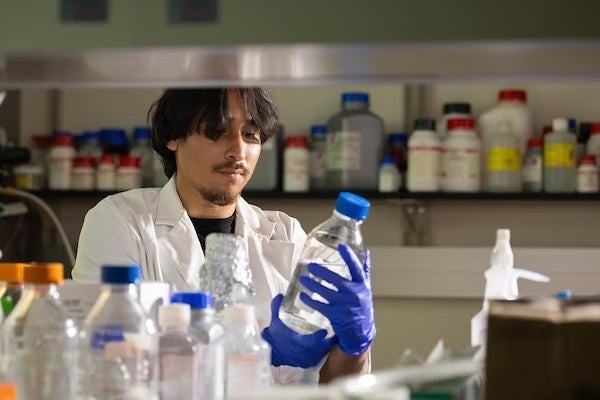
As of 2025: As a NASA fellow at Johnson Space Center, biomedical sciences graduate student Luis Jimenez-Chavez ’22 researches how spaceflight affects astronauts’ immune systems, which leads to a collaboration with cancer researchers.
-
 Disciplines
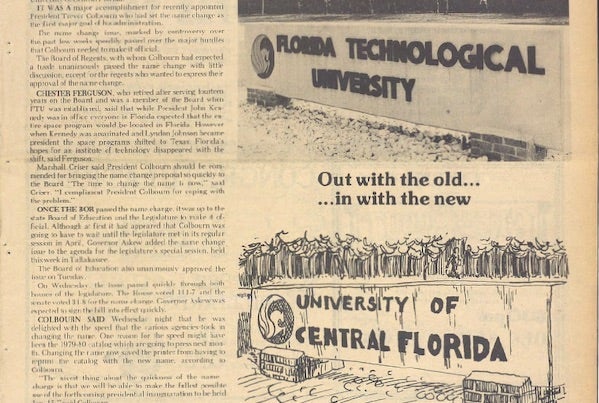
UCF Officially Gets Its Current Name
1978: With academic offerings expanding far beyond engineering and science, state legislation is signed to change the name from Florida Technological University to the University of Central Florida.
As of 2026: UCF offers 250 degree programs across 12 colleges, and the university’s technology roots are still strong. More than 16,500 students are enrolled in the College of Engineering and Computer Science, the largest UCF college.
-
 Medicine
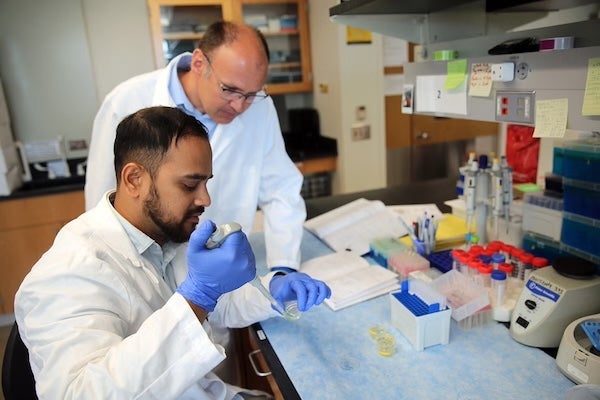
UCF Researchers Study Spaceflight’s Impact on the Body
1985: As rockets launch nearby, UCF respiratory therapy researchers, including Charles Gutierrez ’82 ’85MS, study how the sudden force of a rocket launch affects the lungs. They present their findings in The Physiologist.
As of 2026: Findings from College of Medicine researchers, led by Michal Masternak, suggest that simulated microgravity and space radiation may accelerate aging in the liver. Their work could help protect astronauts on long missions and speed up research on age-related diseases on Earth.
-
 Research
UCF’s Florida Space Institute Forms
1990: UCF establishes the Space Education and Research Center, now the Florida Space Institute (FSI) — a hub for space research, education and technology development for industry.
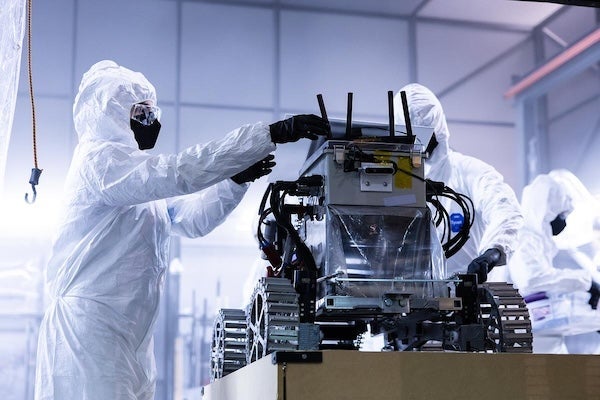
As of 2026: Led by director Alain Berinstain, FSI continues to position UCF, and the state of Florida, as a global leader in the space industry. Research ranges from studying the Earth’s upper atmosphere to the origin of the planets to propulsion technologies for aerospace vehicles. Facilities include the Exolith Lab, home to the world’s largest simulated lunar surface.
-
 Research
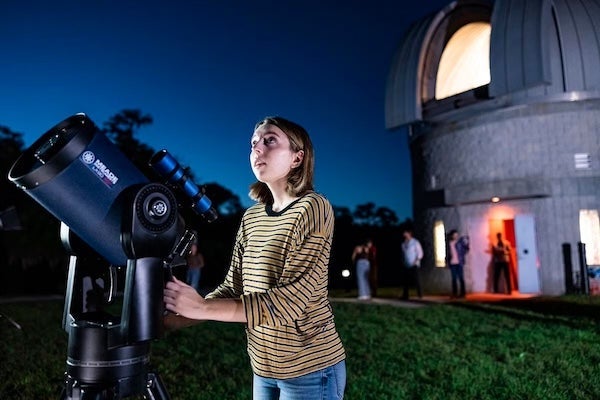
UCF’s Robinson Observatory Opens
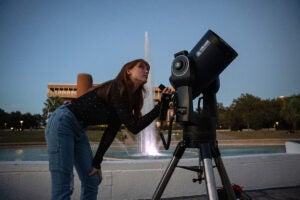
1996: UCF dedicates the Robinson Observatory on its main campus, giving students and faculty a place to study planetary systems, asteroids and more.
As of 2026: UCF researchers use NASA’s James Webb Space Telescope and the Gemini North telescope in Hawaii to study comets, asteroids and the origins of the solar system.
-
 Workforce
A UCF Astronaut Makes History
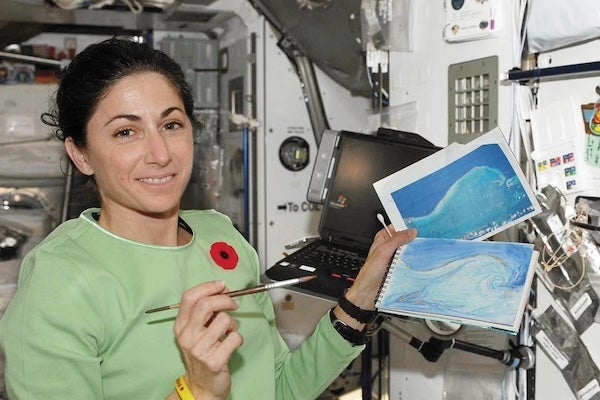
2009: Engineering management alum Nicole Stott ’92MS is the first UCF graduate to fly aboard a NASA shuttle, Space Shuttle Discovery, and live on the International Space Station. She earned her UCF master’s degree through classes taught at Kennedy Space Center while working there as a NASA operations engineer.
As of 2026: Seventeen years after a UCF graduate lived in orbit, another is helping NASA prepare for people to live on the moon. Teresa Kinney ’11MS — an industrial engineering alum and transportation office program lead engineer in NASA’s Moon Base Program — leads a team overseeing the systems that will deliver cargo and equipment to America’s first permanent lunar outpost.
-
 Disciplines
UCF Expands Space Education Beyond Engineering
2009: A team of UCF educators starts helping manage the Educator Resource Center at Kennedy Space Center, giving teachers materials to turn shuttle missions and space research into classroom lessons.
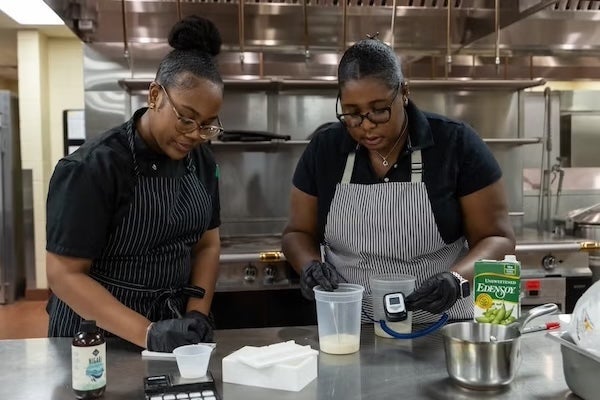
As of 2026: Space now reaches well beyond engineering at UCF. Rosen College of Hospitality Management students design hotel rooms for space stations and menus for space travelers. Plus, a fully online graduate course in space policy and management examines how presidents, Congress and NASA set the nation’s direction in space.
-
 Learning
UCF’s Center for Microgravity Research Opens
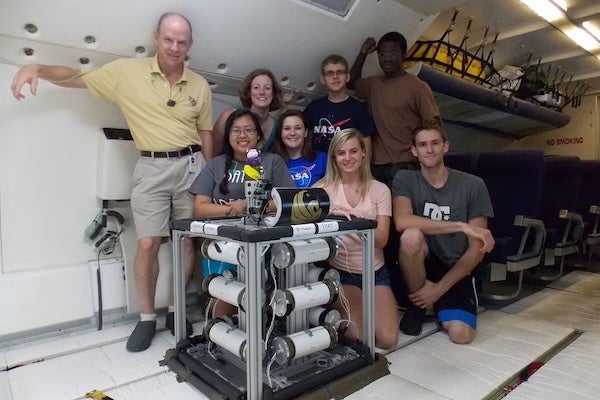
2012: UCF and Space Florida, the state’s aerospace economic development agency, establish the Center for Microgravity Research and Education to study how materials behave in low gravity, knowledge needed to safely land and operate equipment on the moon and asteroids.
As of 2026: Led by former NASA physicist Philip Metzger, the center lets students design and build experiments that travel on zero-gravity flights and commercial rockets, giving them valuable experience that few undergraduates outside of UCF have before launching space careers.
-
 Learning
UCF Flies New Shepard’s First Science Experiment
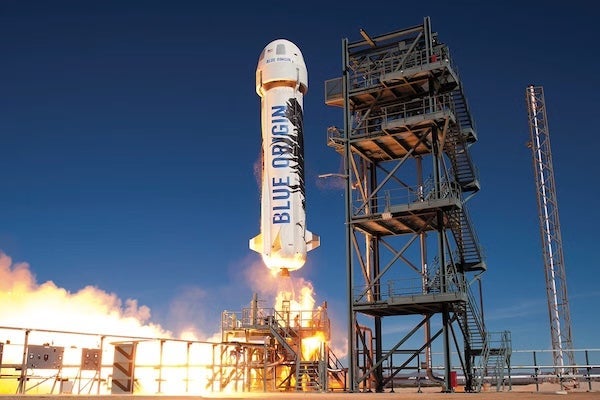
2016: UCF physics professor Joshua Colwell and a team of undergraduate students fly the first science experiment ever carried aboard Blue Origin’s New Shepard rocket. It studies how space dust clumps together to create planets, research that helps explain how planets like Earth form.
As of 2026: Commercial rockets now give UCF access to space on a regular basis. The university has sent 14 experiments aboard such rockets since 2016, studying topics from astronaut bone loss in microgravity to how asteroids respond to shaking.
-
 Disciplines
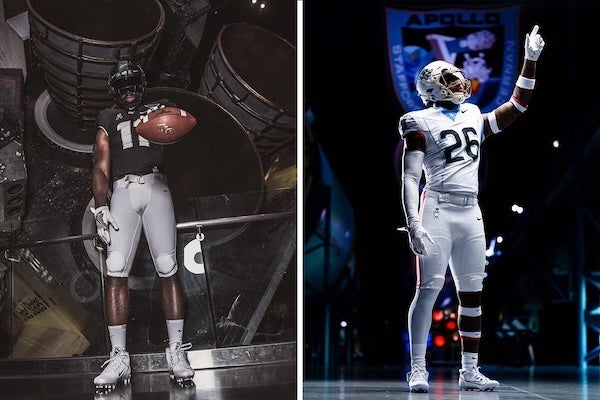
The UCF Space Game Kicks Off
2017: UCF Athletics debuts the Space Game during football season, complete with one-of-a-kind uniforms. The 50 yard line of Acrisure Bounce House matches the exact latitude as NASA’s historic Launch Complex 39A.
As of 2026: Now in its 10th season, the Space Game has crossed over into other sports at UCF. It’s a spectacular fan-favorite event that promotes our talented people and revolutionary contributions to space, laying the groundwork for what has become UCF Space Week, officially first held in 2025.
-
 Research
UCF’s Exolith Lab Creates Quality Space Soil
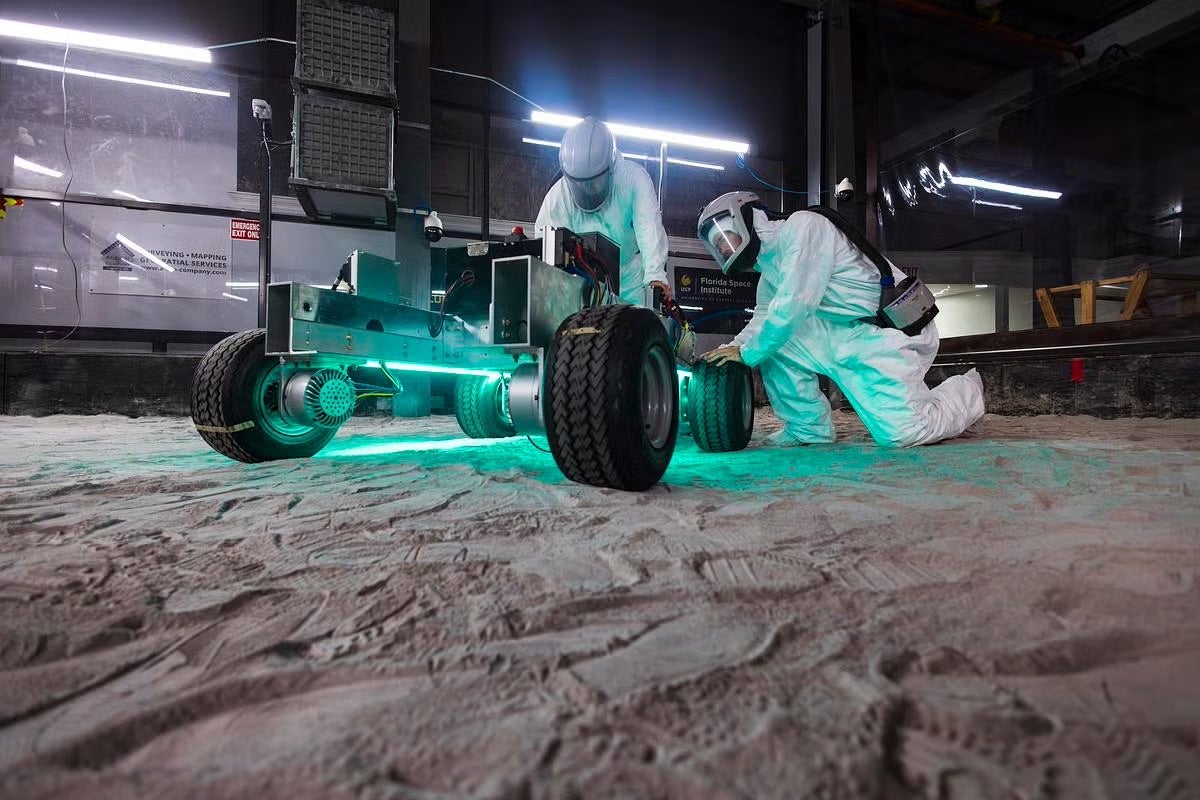
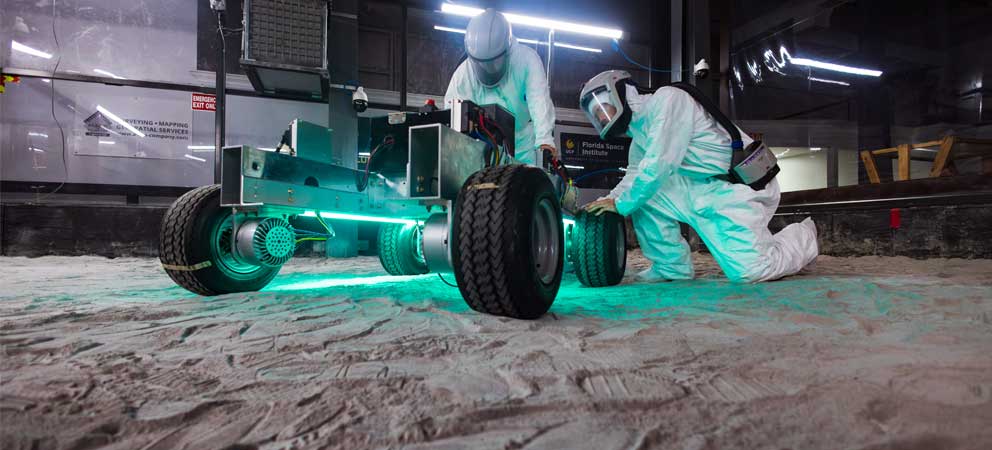
2018: Planetary scientist Daniel Britt and student Anna Metke found the Exolith Lab at UCF to design and manufacture simulated regolith, the loose soil and rock that covers the moon, Mars and asteroids. Because lunar dust is abrasive enough to damage spacecraft and harm astronauts’ lungs, engineers need realistic versions on Earth to test equipment before launch.
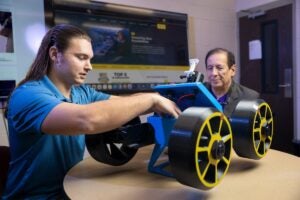
As of 2026: Students in the lab run a NASA-funded experiment that drives a wheel 500 laps a day over simulated lunar soil, testing which materials will hold up so rovers can keep working on the moon for years. Space Resource Technologies, founded by Anna Metke, now handles manufacturing the regolith.
-
 Research
UCF Research Propels the Space Industry
2019: UCF sends five research projects aboard SpaceX, Blue Origin and Virgin Galactic flights after launch activity resumes in full force following the conclusion of the Space Shuttle program.
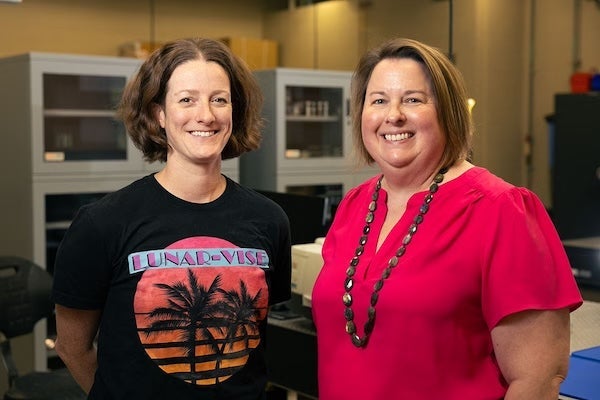
As of 2026: UCF has been involved in nearly 600 NASA projects since the 1990s, including the Lunar-VISE mission led by Associate Professor Kerri Donaldson Hanna and Department of Physics Chair Adrienne Dove. The $35 million project will land a spacecraft on a part of the moon never visited before: the Gruithuisen Domes.
-
 Workforce
UCF Launches an Aerospace Engineering PhD
2019: As companies like SpaceX and Blue Origin drive more demand for high-level research expertise, UCF creates a doctoral degree in aerospace engineering. The university already enrolls the most aerospace engineering undergraduates in the State University System of Florida.
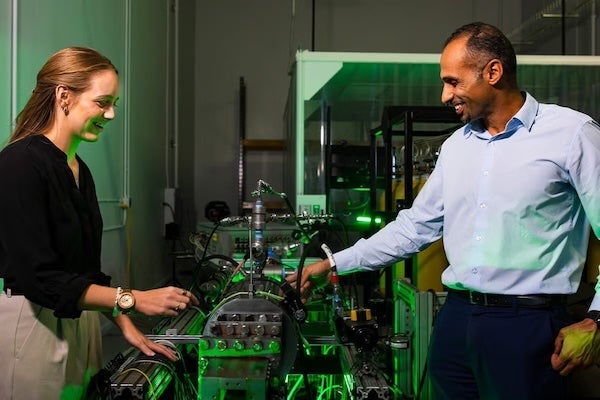
As of 2026: Rachel Hytovick ’20 ’24MS ’25PhD earned bachelor’s, master’s and doctoral degrees at UCF. She now researches hypersonic propulsion, technology for flight at six to 17 times the speed of sound, at UCF’s HyperSpace Center. She chose UCF after finding no other lab doing similar work.
-
 Research
UCF Opens the World’s Largest Simulated Lunar Surface
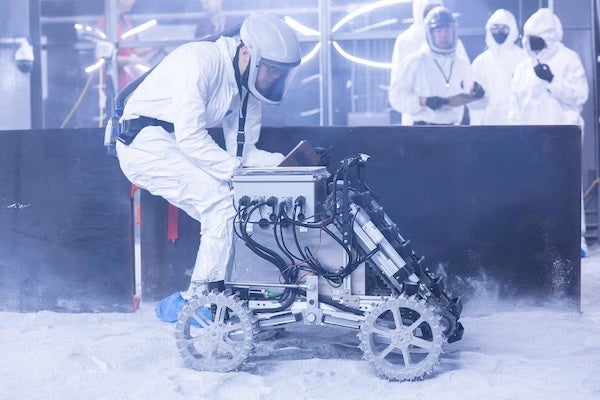
2024: UCF’s Exolith Lab opens its Lunar Highland Regolith Test Bin to test rovers and equipment on simulated soil like that at the moon’s south pole, where NASA plans to explore.
As of 2026: For the third year in a row, NASA holds the qualifying round of its Lunabotics Challenge in the bin, where college teams test robots designed to dig and build on the moon.
-
 Research
UCF Aims to Reach Mach 17
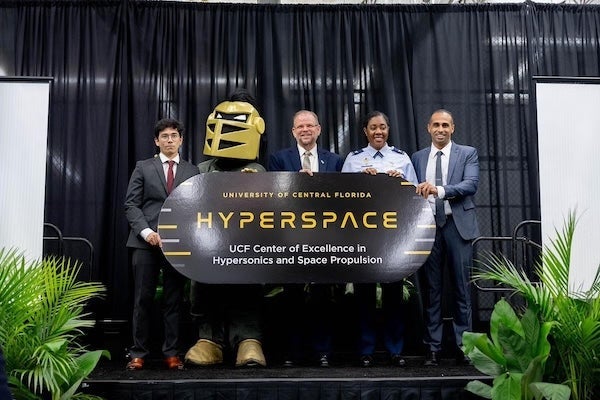
2024: UCF’s Center of Excellence in Hypersonic and Space Propulsion launches as a first-of-its-kind partnership with the U.S. Air Force Office of Scientific Research, addressing a national priority to advance hypersonic technology.
As of 2026: Led by Trustee Chair Professor of Mechanical and Aerospace Engineering Kareem Ahmed — who developed the first hypersonic detonation rocket engine in 2020 — the center involves nearly a dozen UCF faculty members, more than 60 graduate and undergraduate students, and five postdoctoral researchers.
-
 Disciplines
UCF Creates Florida’s First PhD in Planetary and Space Sciences
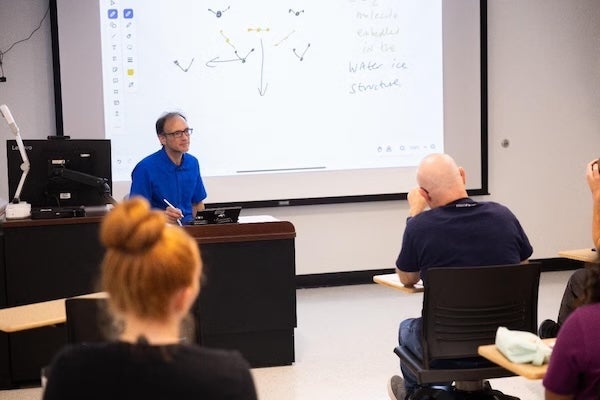
2025: As space missions send back growing volumes of data, people must learn to interpret it all. UCF creates Florida’s first and only doctoral degree in planetary and space sciences — combining astronomy, geology and physics with data science — to prepare students for careers at NASA, in the space industry and in research.
As of 2026: The program’s first students begin classes, coming from fields like geology, engineering, physics and data science, working with faculty members whose instruments have flown to space.
-
 Disciplines
UCF Develops an Online Space MBA
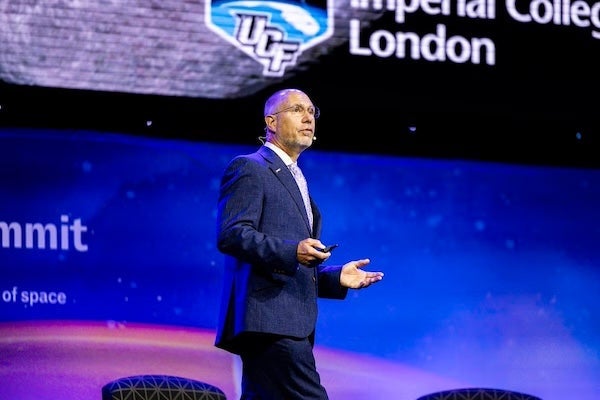
2025: UCF’s Space Commercialization MBA gives the people running space programs the business education many of them never had the chance to receive. Greg Autry, UCF’s associate provost for space commercialization and strategy, notes that scientists and engineers are often put in charge of billions of dollars with no management training, in a global space economy the World Economic Forum projects will reach $1.8 trillion by 2035.
As of 2026: The first students begin the fully online, part-time program, taking courses in space entrepreneurship, space finance and space leadership while working in the industry.
-
 Medicine
UCF Establishes an Aerospace Medicine Program
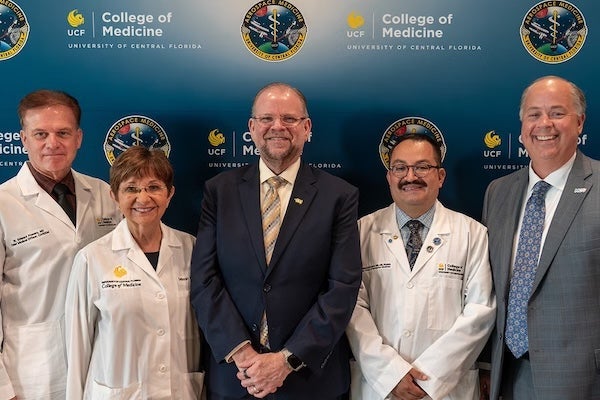
2025: As commercial spaceflight sends more people into space and missions grow longer, UCF forms the Center for Aerospace and Extreme Environments Medicine to study how microgravity, radiation and isolation affect the human body. This research could also help patients on Earth, including those receiving radiation therapy for cancer.
As of 2026: UCF moves to prepare the doctors who will keep people healthy on longer missions to the moon, Mars and beyond. Melchor Antuñano — longtime director of the Federal Aviation Administration’s Civil Aerospace Medical Institute — joins UCF to help create a master’s degree and residency program in aerospace medicine, and the center’s team opens a clinic that certifies astronauts and pilots.
Space Research and Faculty Excellence
Daniel Britt
Planetary Scientist
Driving Lunar Discovery
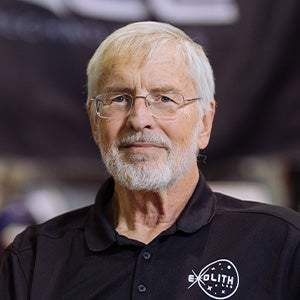
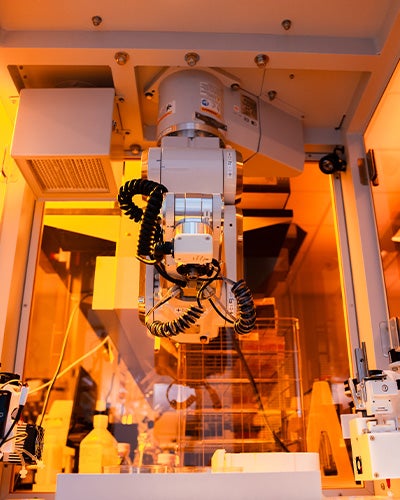
Pegasus Professor of Astronomy and Planetary Sciences Daniel Britt founded UCF’s Exolith Lab — a world-class facility for space hardware testing and regolith simulant research.
As the world’s largest simulated lunar surface, the lab’s Lunar Highlands Regolith Test Bin lets researchers, students and space organizations test rovers, tools and other technologies critical to humanity’s long-term presence in space.
Emmanuel Urquieta
Aerospace Medicine Expert
Preparing Tomorrow’s Space Doctors
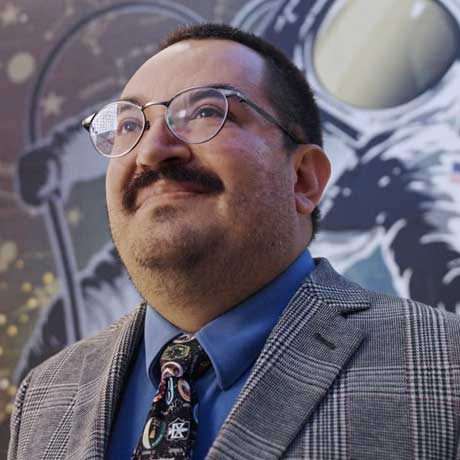
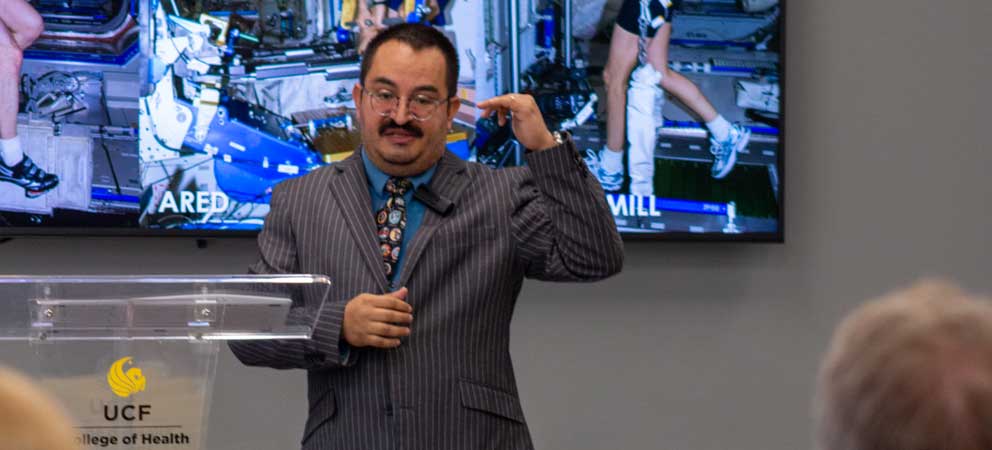
Led by Vice Chair of Aerospace Medicine Emmanuel Urquieta, UCF’s one-of-a-kind aerospace medicine degree and residency program will help define the future of the field — bridging medicine, nursing, engineering, computer science, and optics and photonics to remedy the health challenges of human space exploration.
The discoveries we make in aerospace medicine won’t just ensure the survival of humans in space. They will revolutionize healthcare on Earth — transforming the way we diagnose, treat and heal.
Kerri Donaldson Hanna
Planetary Geologist
Sustaining Life in Deep Space
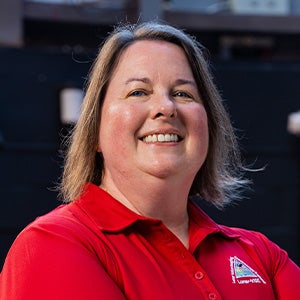
Associate Professor of Physics Kerri Donaldson Hanna is the principal investigator of NASA’s Lunar Vulkan Imaging and Spectroscopy Explorer (Lunar-VISE) mission to the never-before-explored Gruithuisen Domes. Data collected will help scientists better understand what resources the moon may hold for deep space exploration and sustaining human life off-Earth.
Missions like Lunar-VISE further position UCF as a critical partner in NASA’s effort to establish lasting activity on the moon and far beyond.
Melanie Coathup
Biomedical Engineer
Preventing Bone Loss in Space
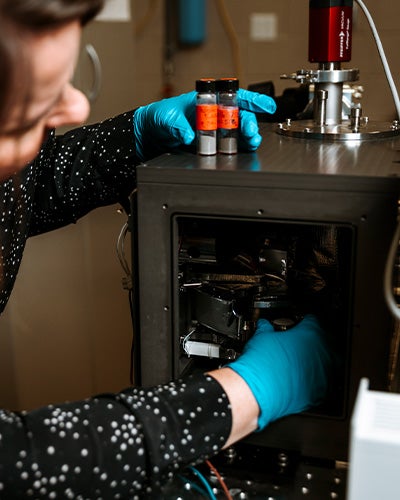
Microgravity- and radiation-induced bone loss is a serious concern for long-term space travelers, with a risk for bone fracture and early-onset spaceflight-induced osteoporosis.
Director of UCF’s Biionix Cluster, and Professor of Internal Medicine, Melanie Coathup is recognized for developing groundbreaking nanotechnologies and therapies to protect bones and repair damage due to radiation — a promising step for ensuring the safety of long-term space travelers, as well as cancer patients and members of the military.
Philip Metzger
Physicist and Planetary Scientist
Supporting Lunar Safety
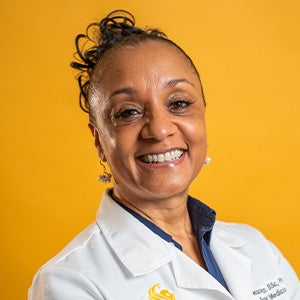
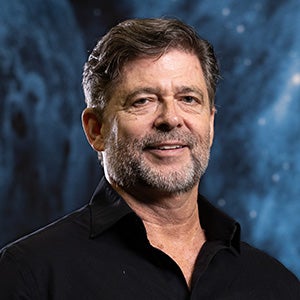
After two UCF degrees and a 30-year NASA career, Philip Metzger now directs UCF’s Stephen W. Hawking Center for Microgravity Research and Education. His revolutionary theory reveals how rocket exhaust erodes the lunar surface — something no previous model could adequately explain. Its first real-world test will be part of Artemis IV.
The researchers we attract, and the problems they solve, are why UCF ranks among the top 5% of NASA-funded universities nationwide (National Science Foundation).
Zaheer Ali
Space Commercialization Expert
Developing Next-Gen Leaders
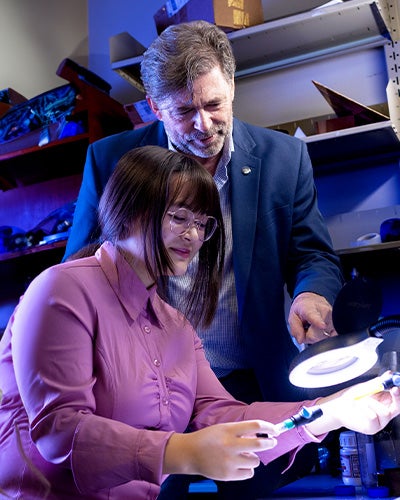
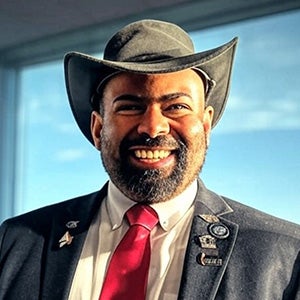
With a distinguished background in space technology, policy and innovation across academia, government, startups and global enterprises, Zaheer Ali serves as UCF’s program director of space commercialization and strategy.
He’s helping develop the next generation of space-focused business leaders to align with industry needs — and expanding UCF’s partnerships with industry and government to supply talent that will advance the state of Florida’s leadership in the space sector.


Powerful Space Industry Partnerships
As the closest public university to Florida’s Space Coast and Kennedy Space Center, UCF connects directly to America’s leading aerospace companies and space agencies. Our partnerships fuel research, technology and talent that strengthen Florida’s economy and shape the nation’s future across space sectors.
Notable Space Partners









In-Demand Space Graduates
UCF develops the talent that powers the space industry. Our graduates enter the workforce ready to lead — equipped with the skills, experience and ambition to drive discovery, exploration and progress at every level.
1 in 4 of Florida’s Engineering Graduates Come from UCF
Making UCF the driving force behind the state’s tech and space workforce
(State University System, 2025)
No. 1 Supplier of Talent to the Nation’s Aerospace and Defense Industries
Fueling innovation where it matters most
(Aviation Week)
Valuable Space-Related Degrees
The sky is no longer the limit for where a UCF degree can take you. Learn from global experts and gain hands-on experience through powerful industry partnerships at America’s Space University.
UCF’s in-demand graduates are well-prepared for the roles of tomorrow and tech-driven fields of the future.
Design Systems or Develop Tech
- Aerospace Engineering (BSAE)
- Electrical Engineering (BSEE)
- Electronic Parts Engineering Graduate Certificate
- Materials Science and Engineering (BS)
- Mechanical Engineering (BSME)
- Modeling and Simulation (MS)
- Nanotechnology (MS)
- Optics and Photonics (MS)
- Systems Engineering Graduate Certificate
- Systems Verification, Validation and Testing Graduate Certificate
Advance Innovation With Data
NEWS: WHAT’S NEXT IN SPACE